Templates
Ready-to-run GroupMap templates for brainstorming, prioritizing, and aligning your team.
62
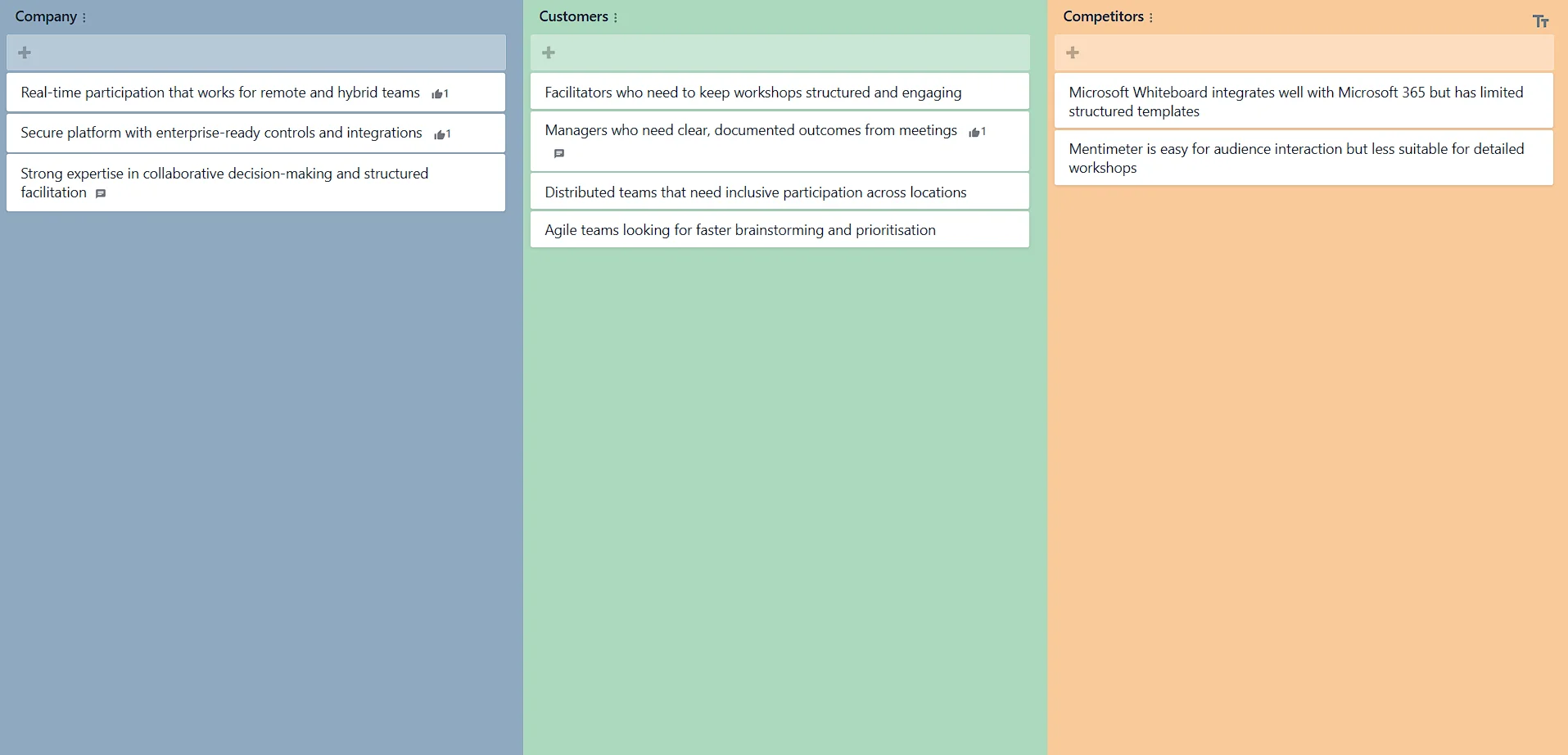
3Cs Framework
The 3Cs framework (Company, Customers, Competitors) finds the strategic sweet spot where you meet customer needs better than rivals. See an example.
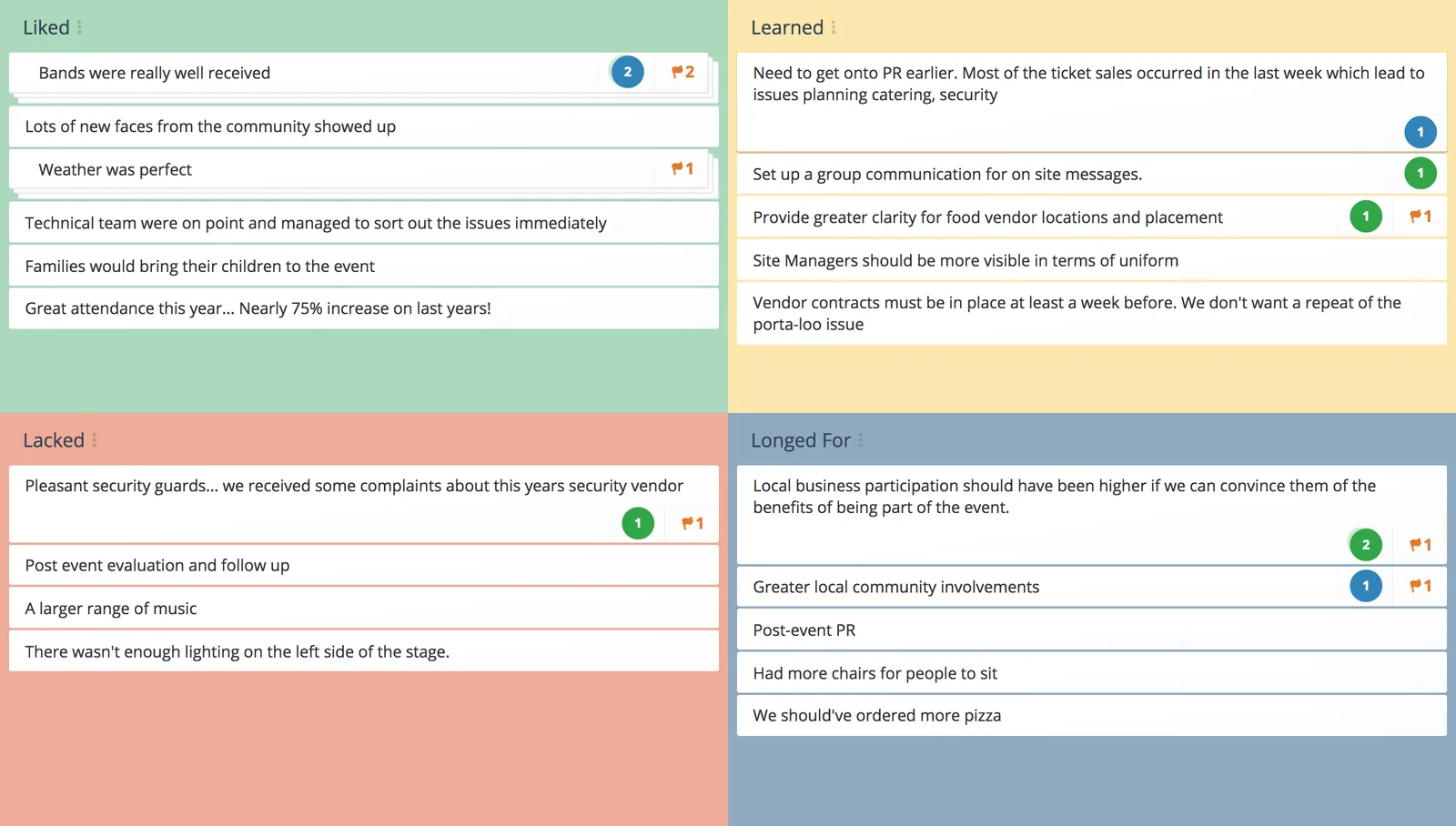
4Ls Retrospective
The 4Ls Retrospective is great tool for agile teams at the end of an iteration to identify opportunities for improvement via four simple questions.
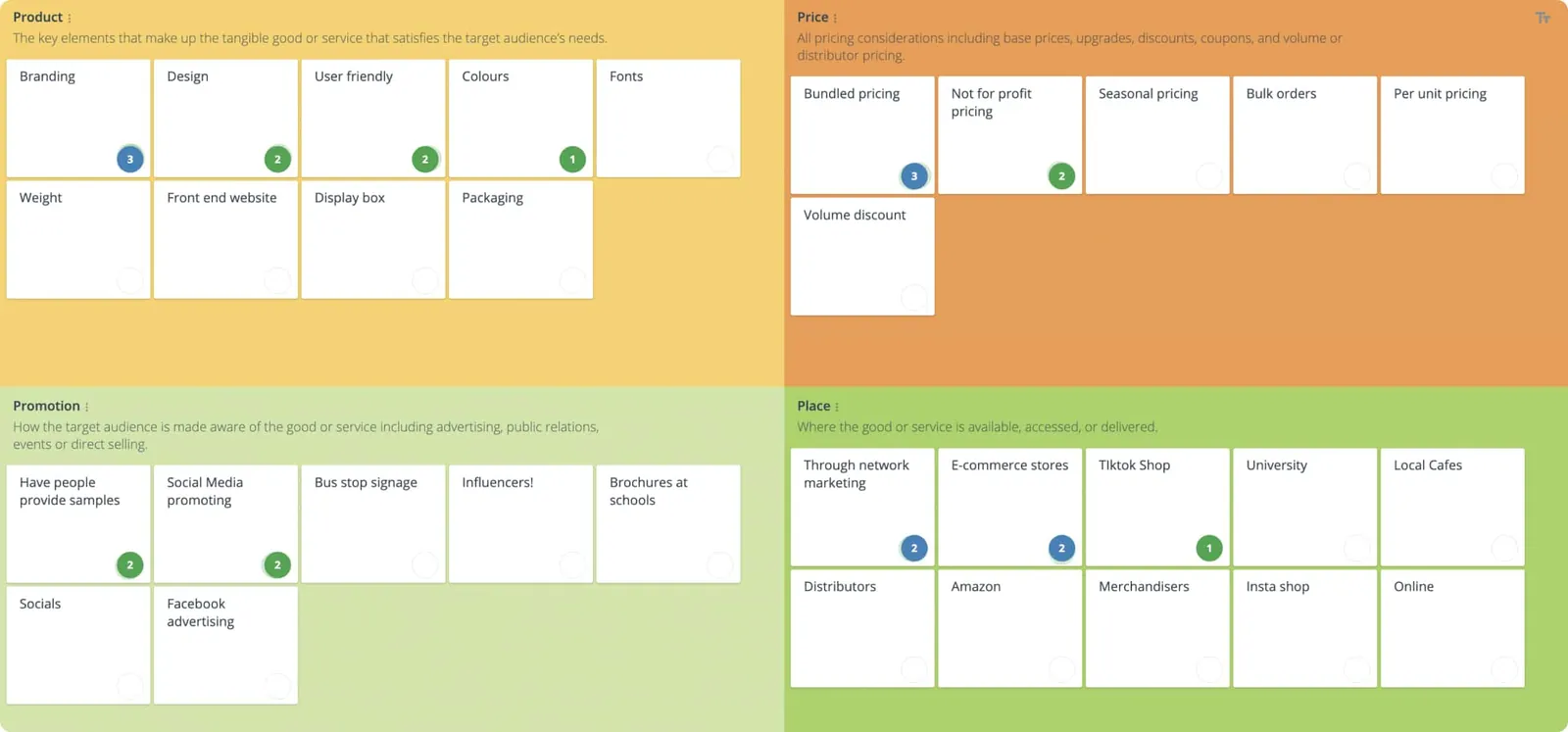
4P Marketing Mix
Discover the 4 key elements of a winning marketing strategy on our 4P Marketing Mix template.
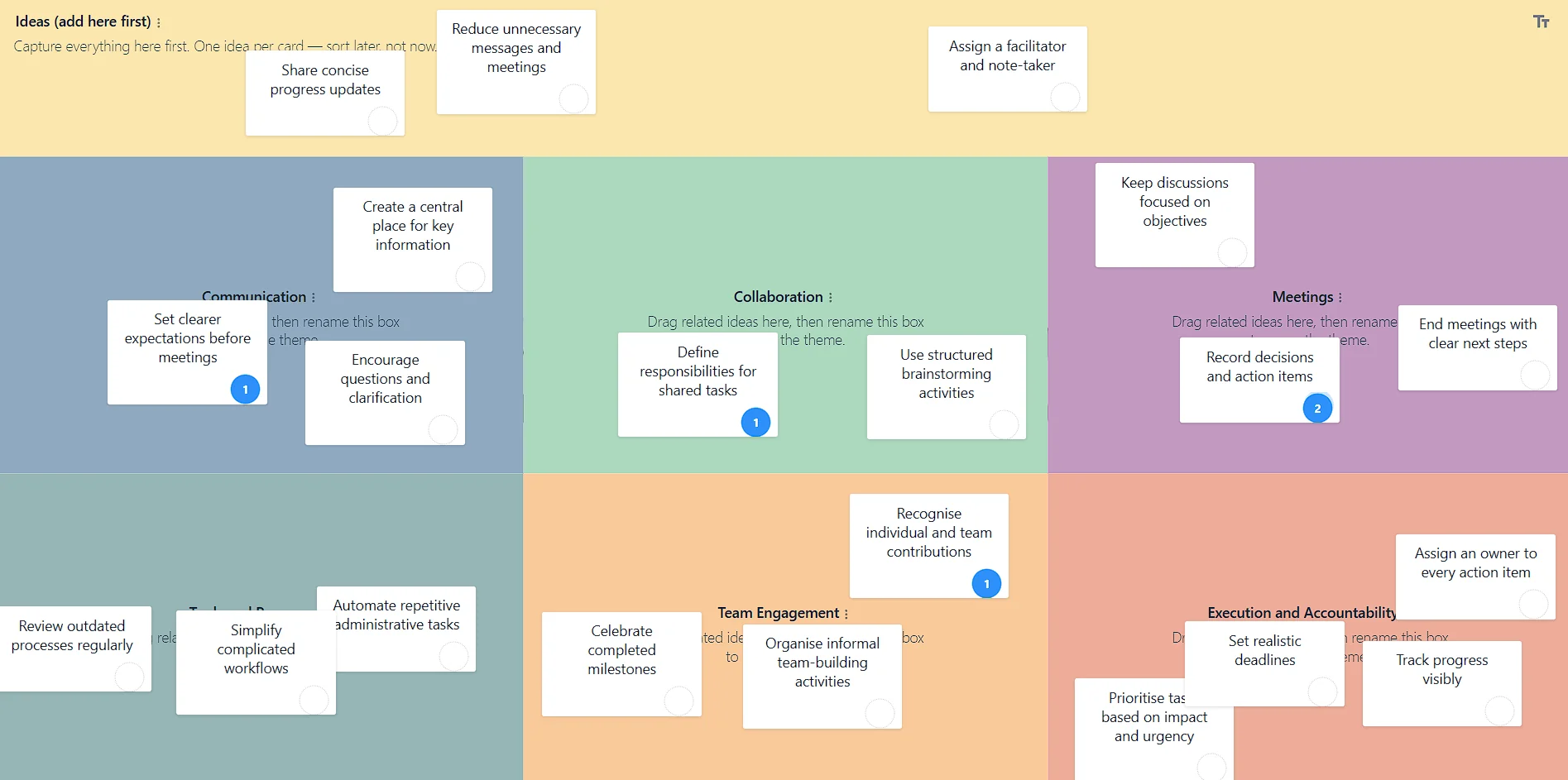
Affinity Diagram
An affinity diagram groups many ideas into natural themes. Learn how to run an affinity mapping session, see an example, and cluster ideas with your team.
Agile Retrospective
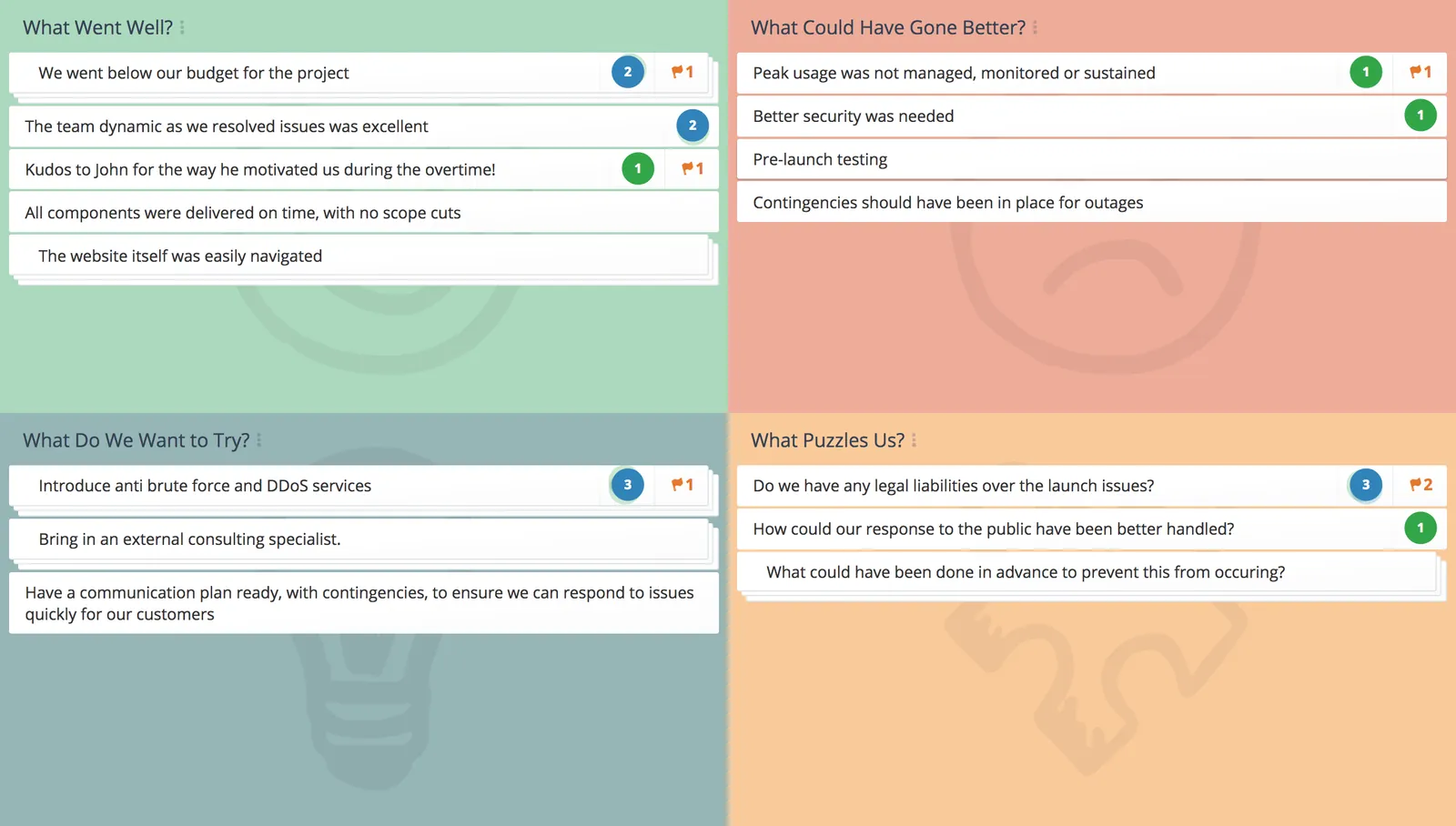
GroupMap’s online retrospective tool helps you identify what went well, not so well, puzzles and ideas. Get started with our Agile Retrospective Template.
Ansoff Matrix
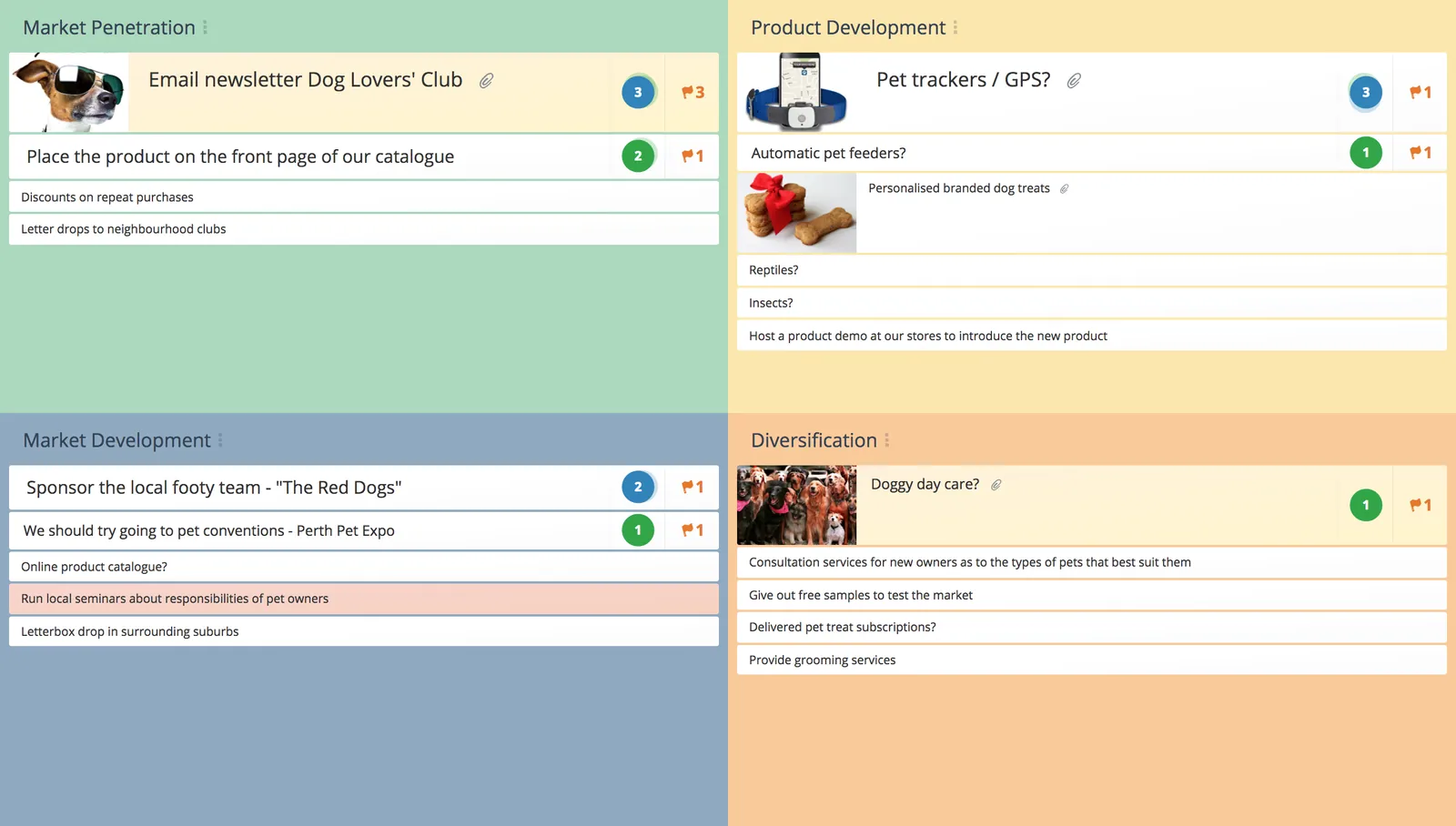
The Ansoff Matrix helps you strategies for future product growth, considering the market and product direction. Get started with our Ansoff Matrix Template.
BCG Matrix
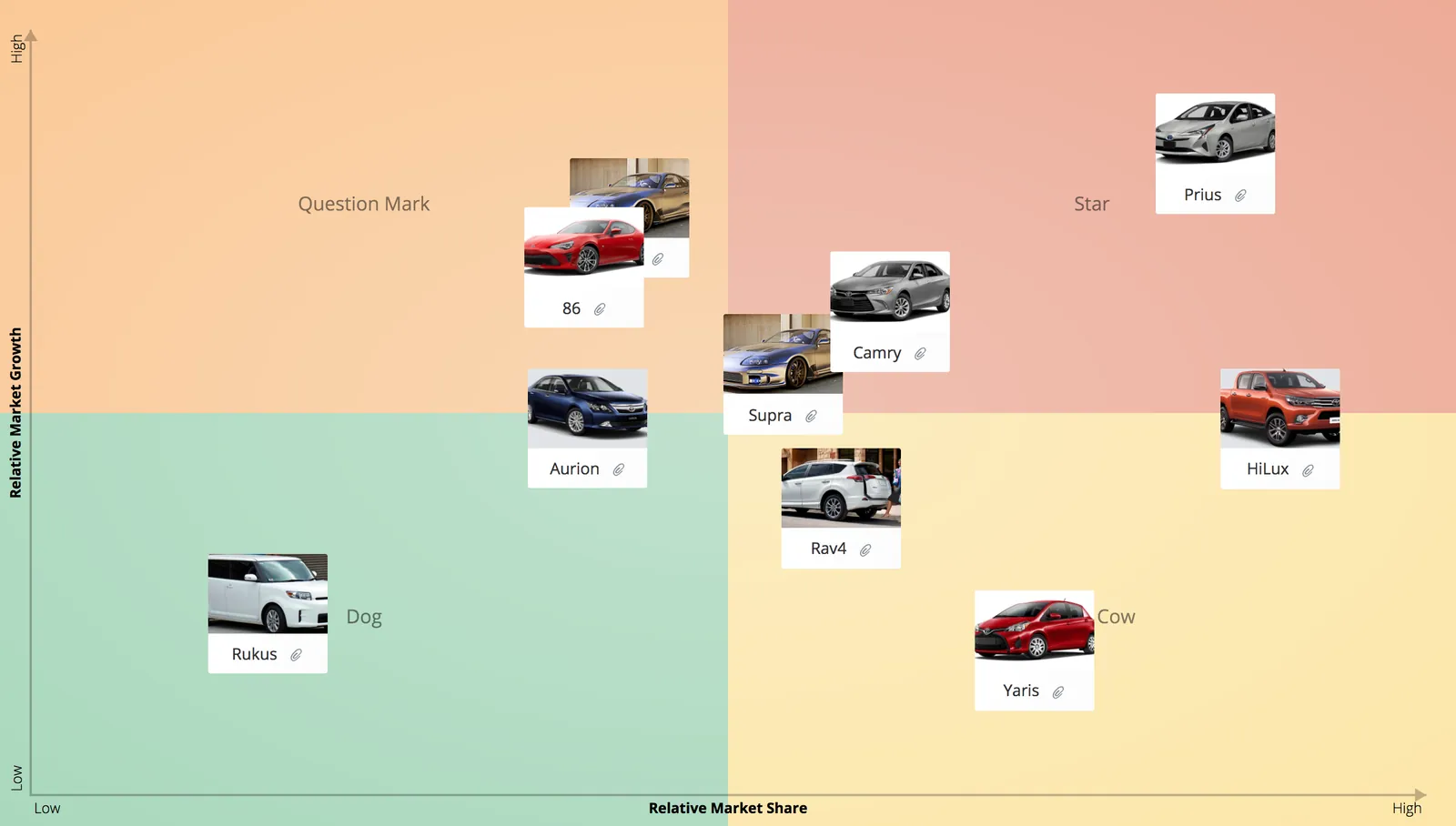
The BCG matrix (Boston matrix) sorts products into Stars, Cash Cows, Question Marks and Dogs. See a worked company example and build yours with our template.
Business Model Canvas
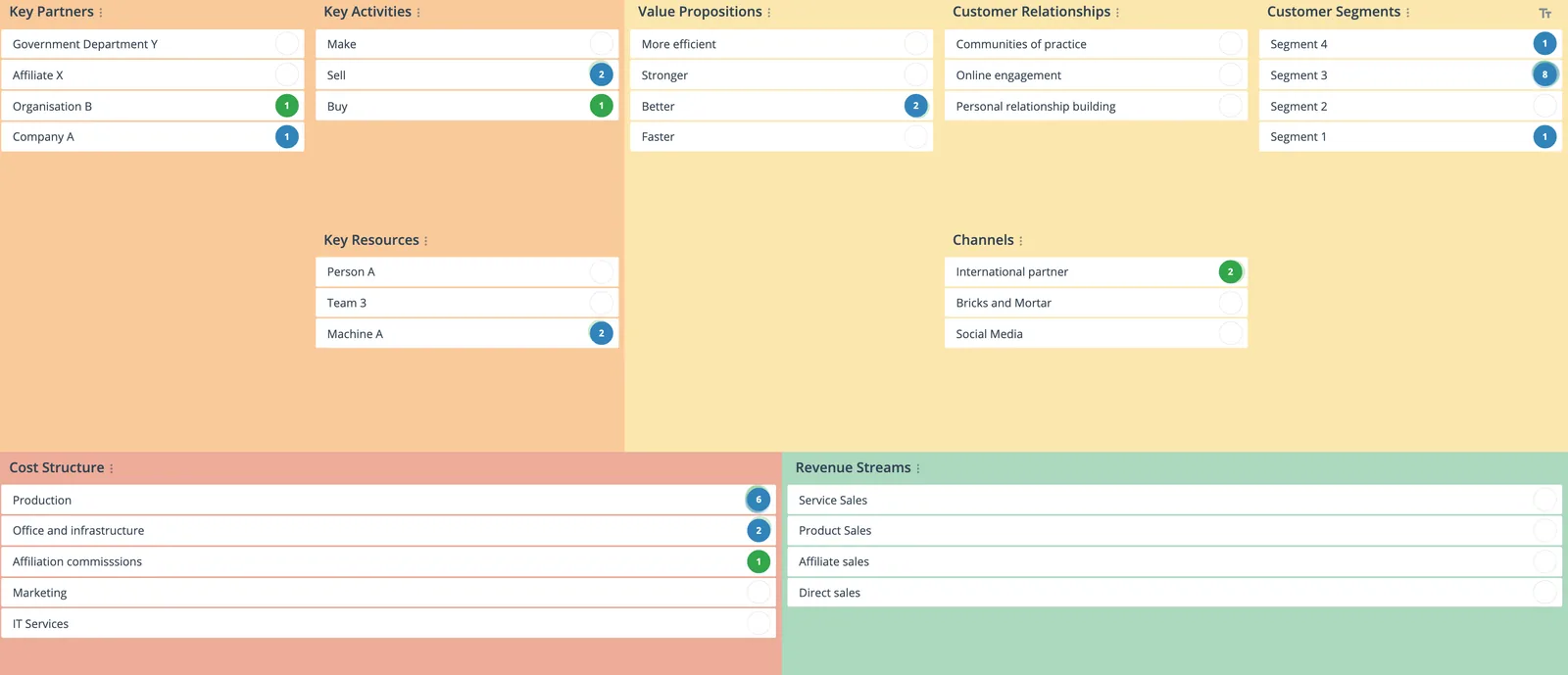
The business model canvas is a visual chart documenting key aspects of new or existing businesses, acting as an organizational blueprint.
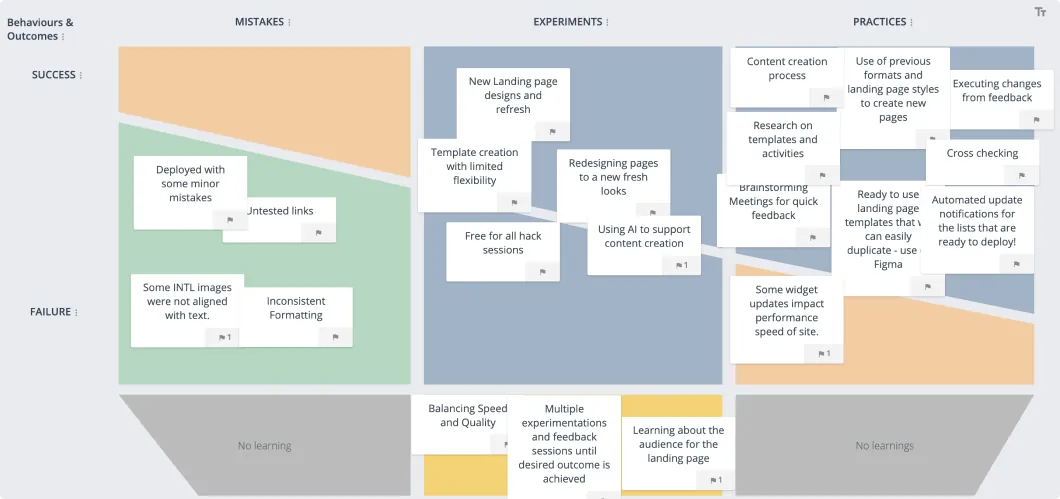
Celebration Grid (Management 3.0)
Use the Management 3.0 Celebration Grid to celebrate successes, recognize effort, and turn mistakes and experiments into shared learning with your group.
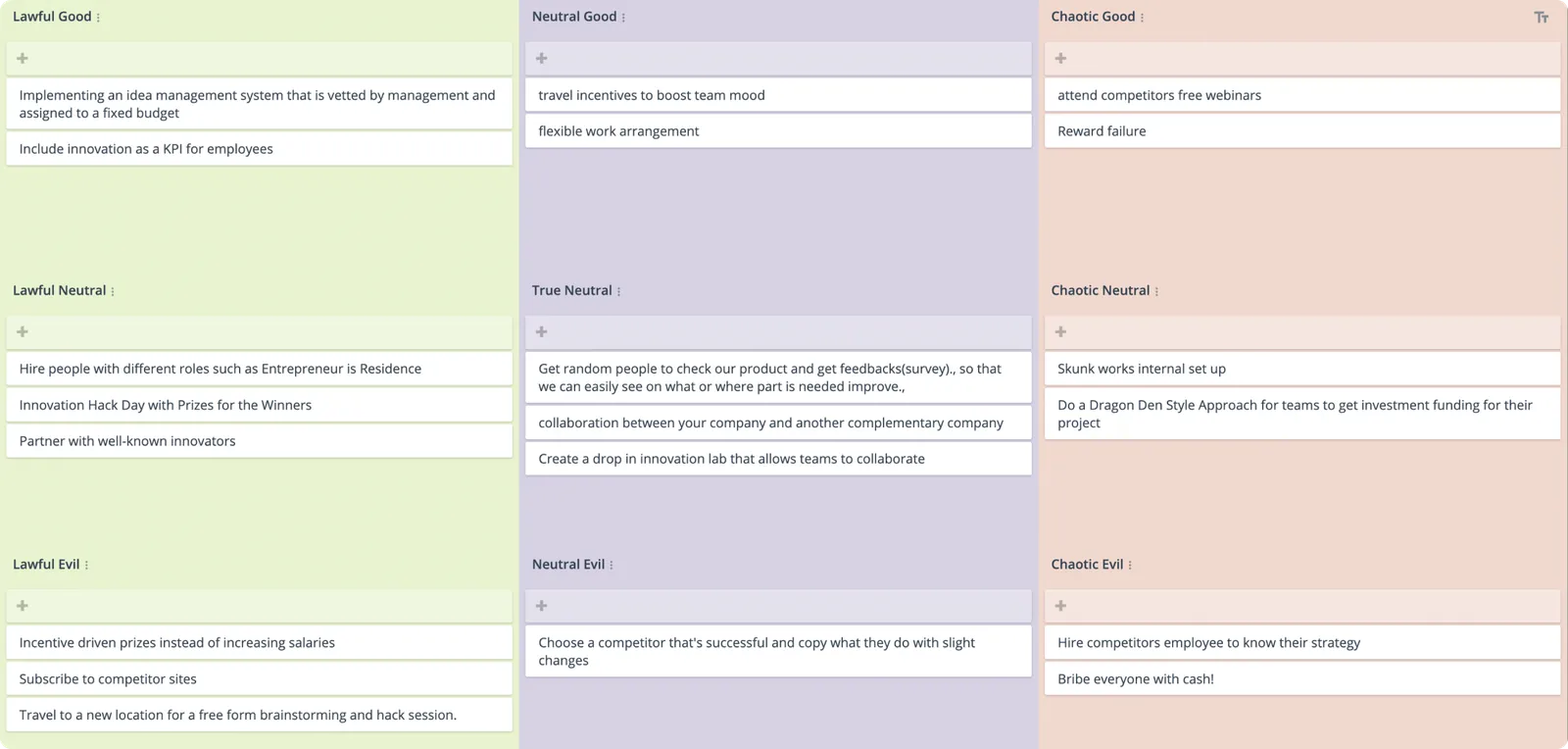
Character Alignment Chart
Free alignment chart maker: build a 3×3 lawful-to-chaotic, good-to-evil morality chart online and fill it in live with your team or group in GroupMap.
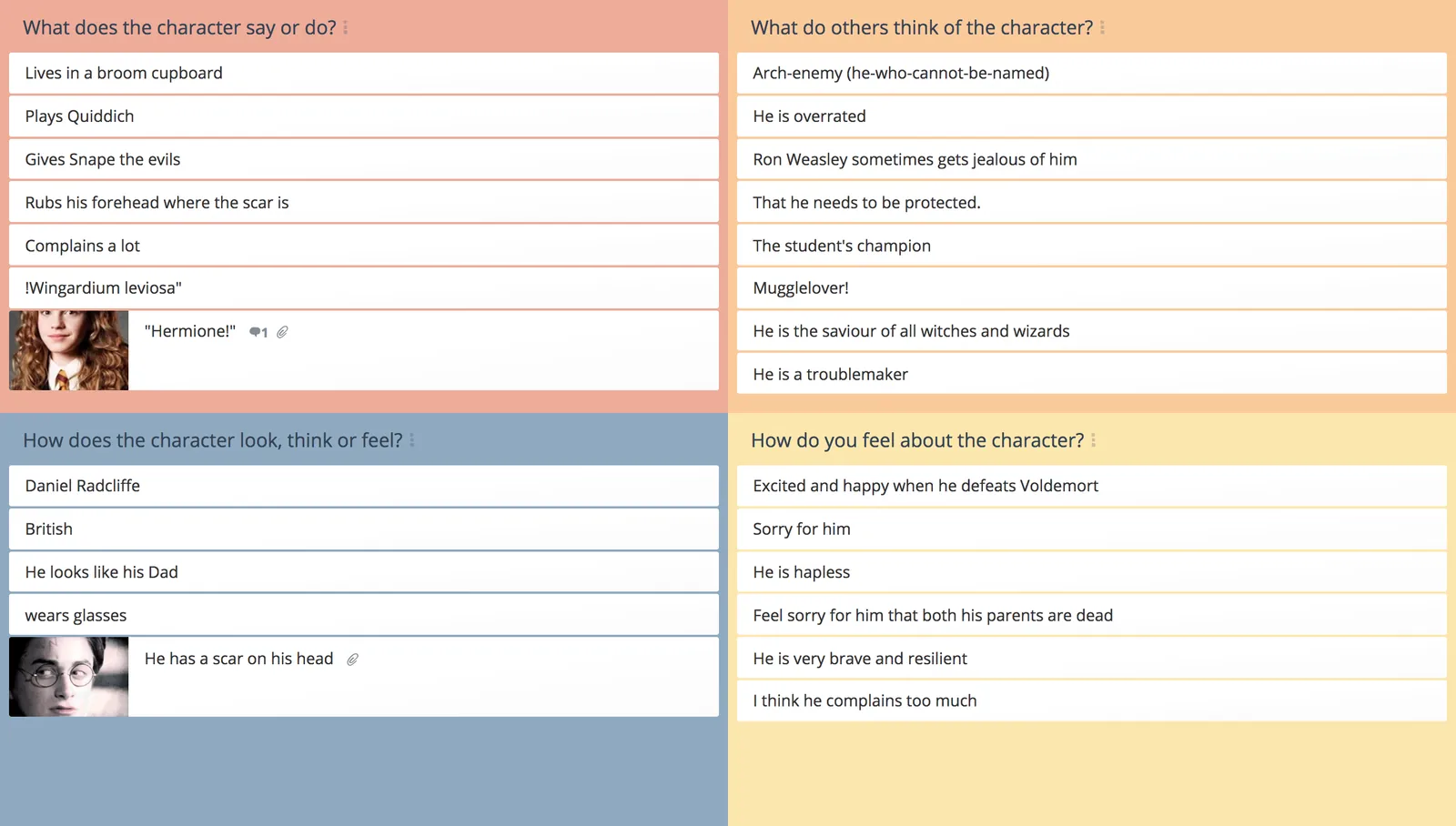
Character Traits Analysis
Use the Character Traits Analysis template in class. Students map what a character says and does and how they affect others, then share and discuss.
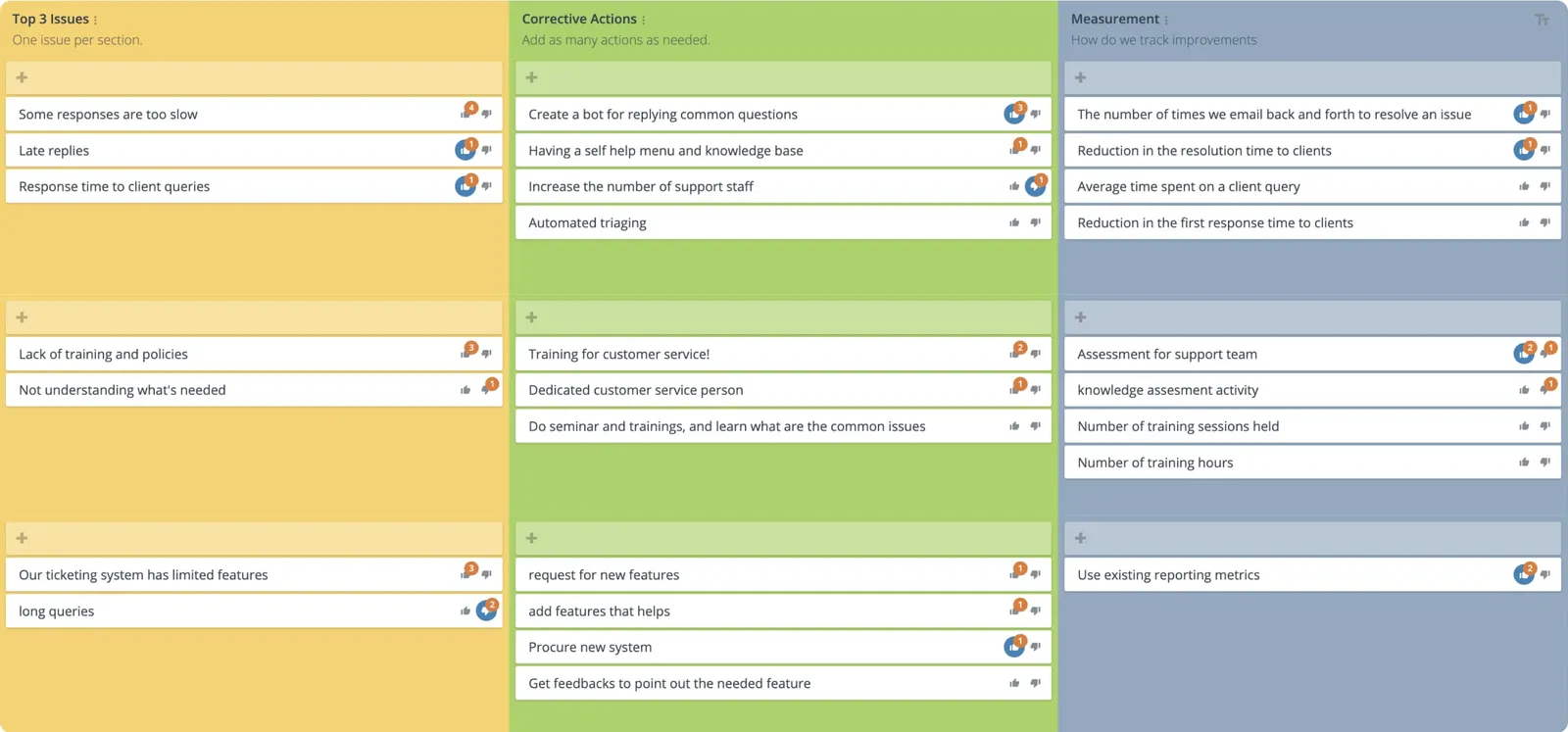
Corrective Action Plan
Address problems with a Corrective Action Plan that helps your team move forward. Try it now.
DAKI Retrospective
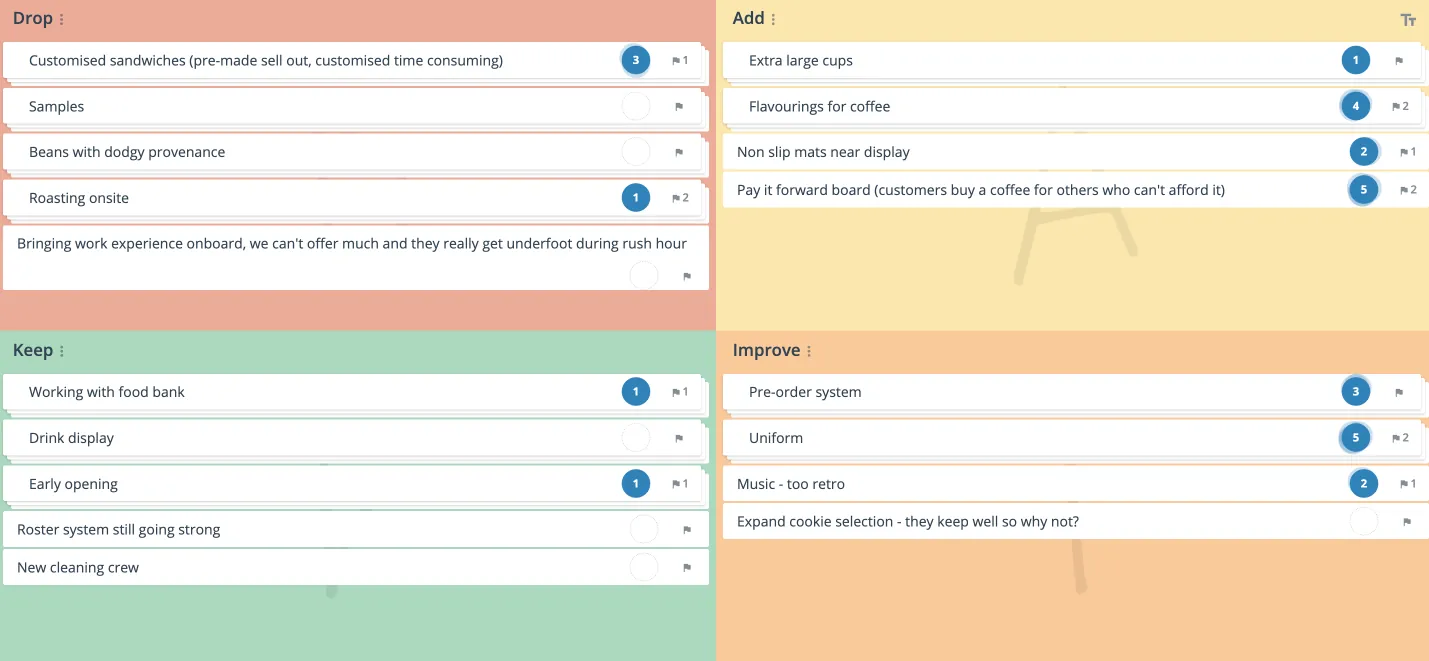
Learn what a DAKI agile retrospective is, its two areas of focus, and how to run the template to drive continuous improvement of your product.
Decision Matrix
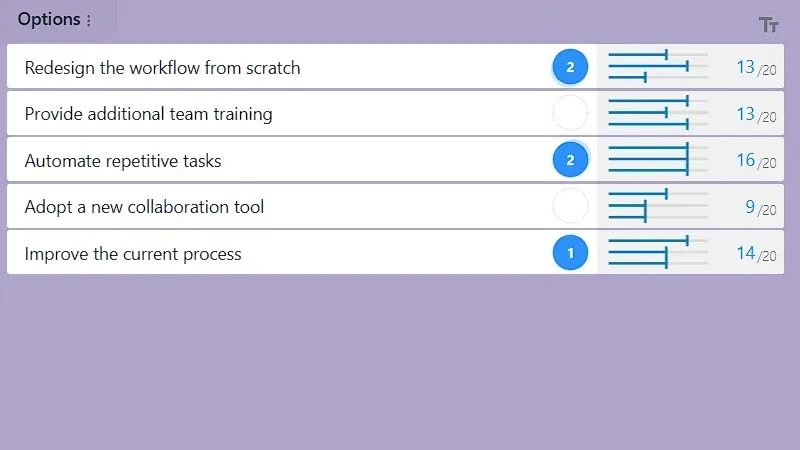
A decision matrix scores options against weighted criteria to reveal the best choice. See a worked example and build a weighted decision matrix with your team.
DMAIC Analysis Template
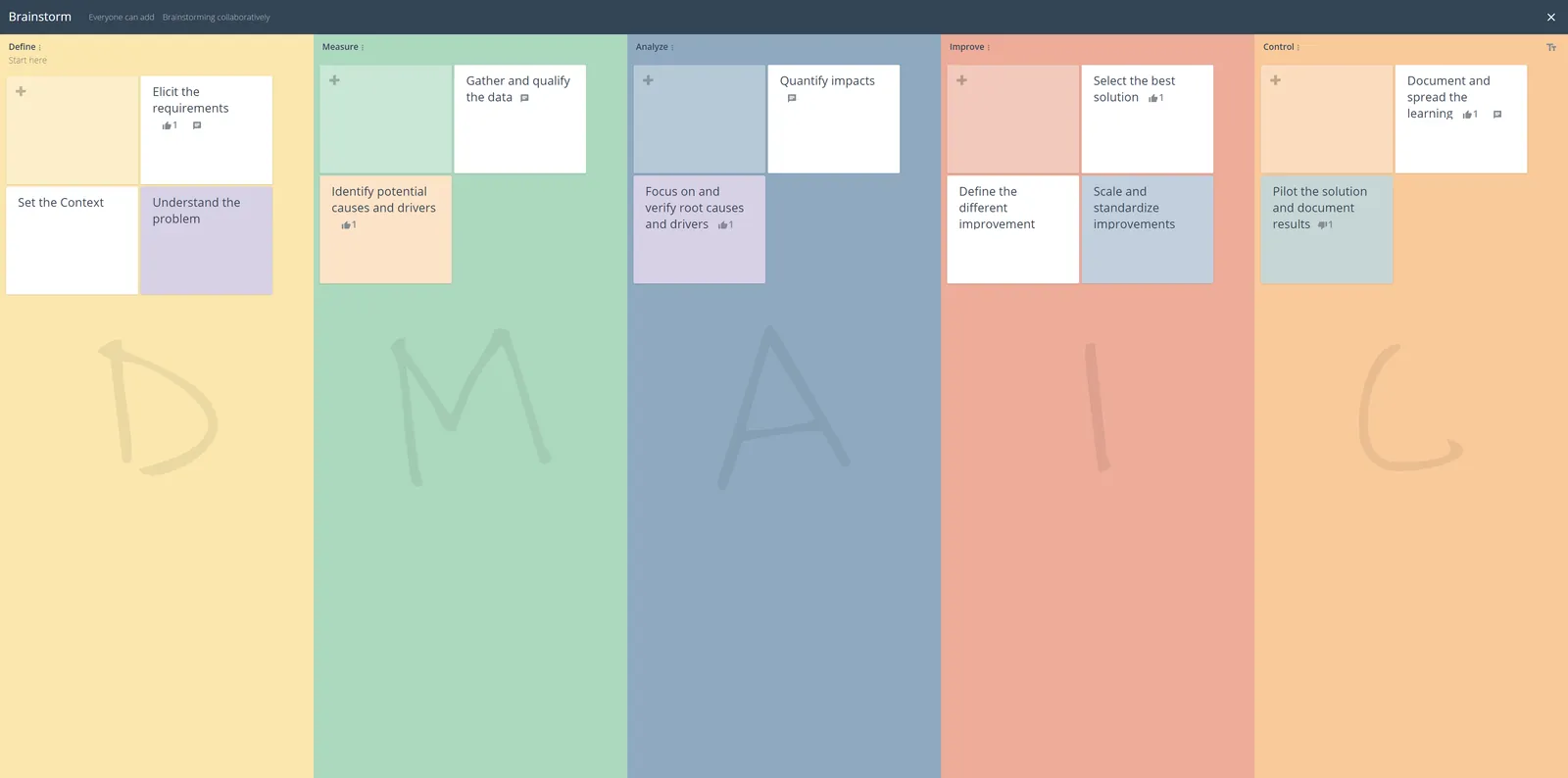
Work through a DMAIC Analysis with a group: define, measure, analyze, improve and control one key problem, building consensus with voting at every step.
Empathy Map
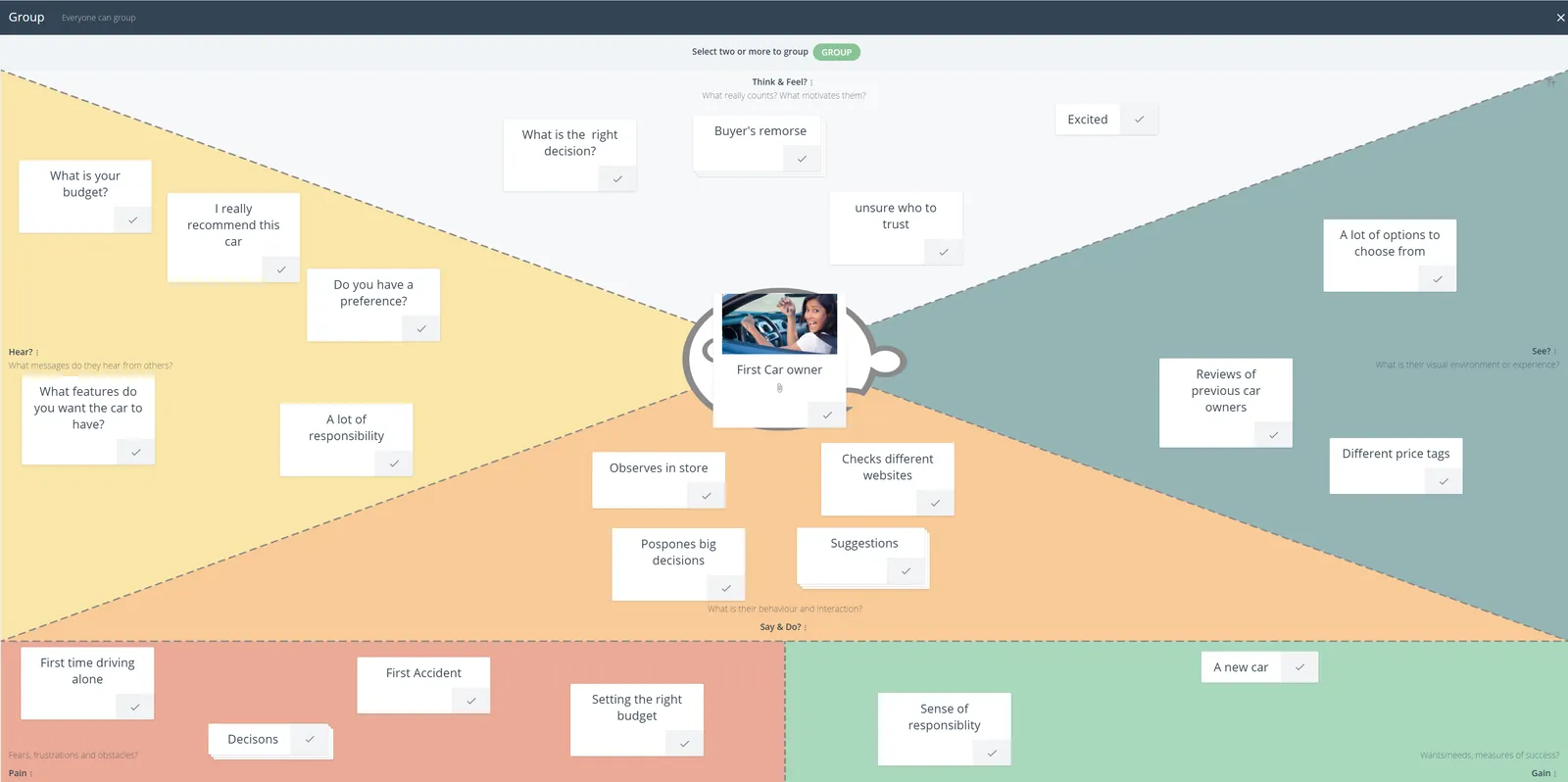
Use the Empathy Map template to capture one customer persona's pains, gains and needs, so a group builds a shared picture before designing for them.
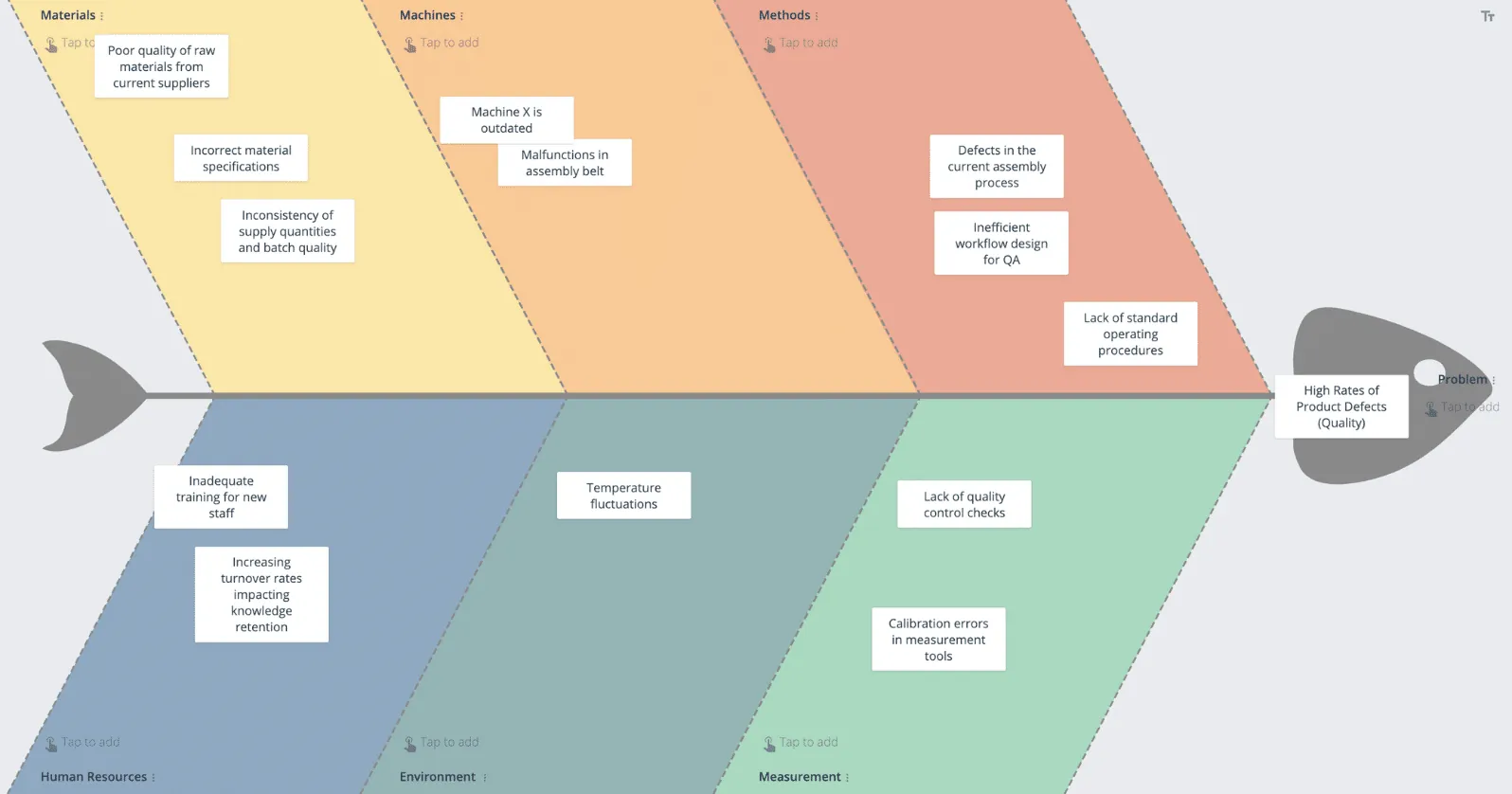
Fishbone (Ishikawa) Root Cause Analysis
Run a Fishbone (Ishikawa) diagram with a group to sort possible causes into categories, vote on the root causes to tackle, and agree actions with owners.
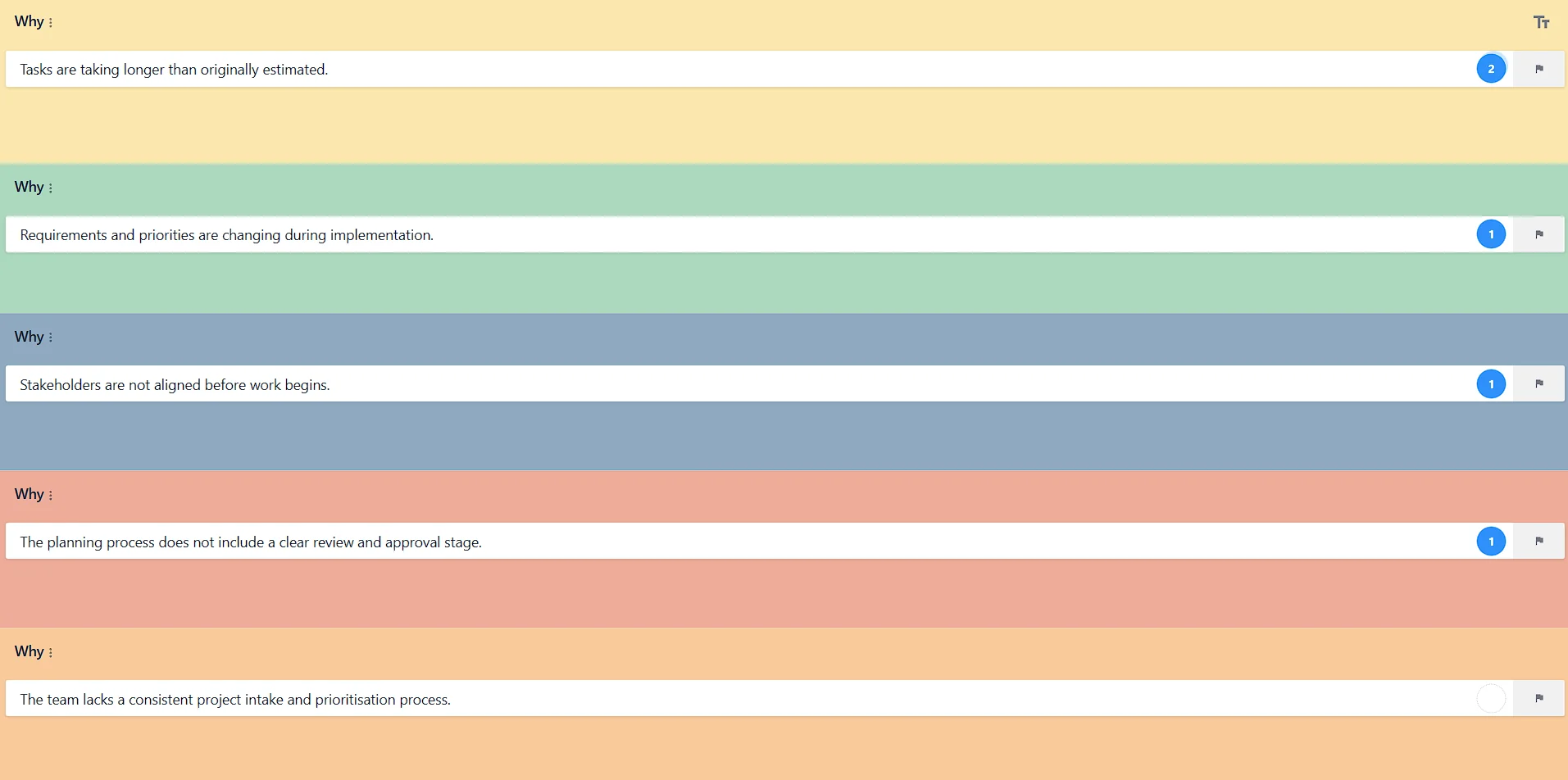
Five Whys
The 5 whys is a root cause analysis technique that asks 'why?' repeatedly to drill past symptoms to the real cause. See a worked example and try our template.
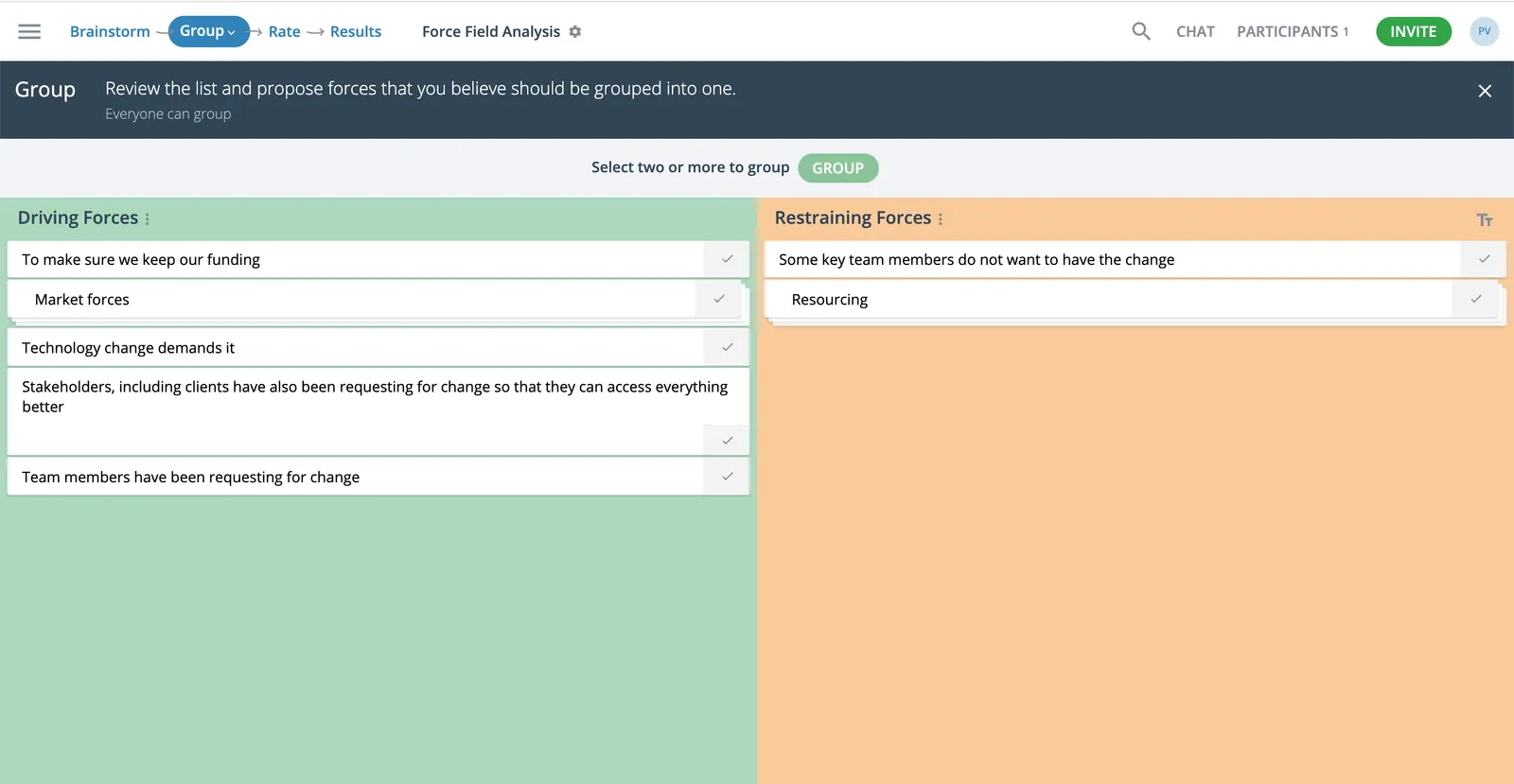
Force Field Analysis
Force Field Analysis, Kurt Lewin's change model, maps the driving and restraining forces behind a decision. Run one live with your team using our template.
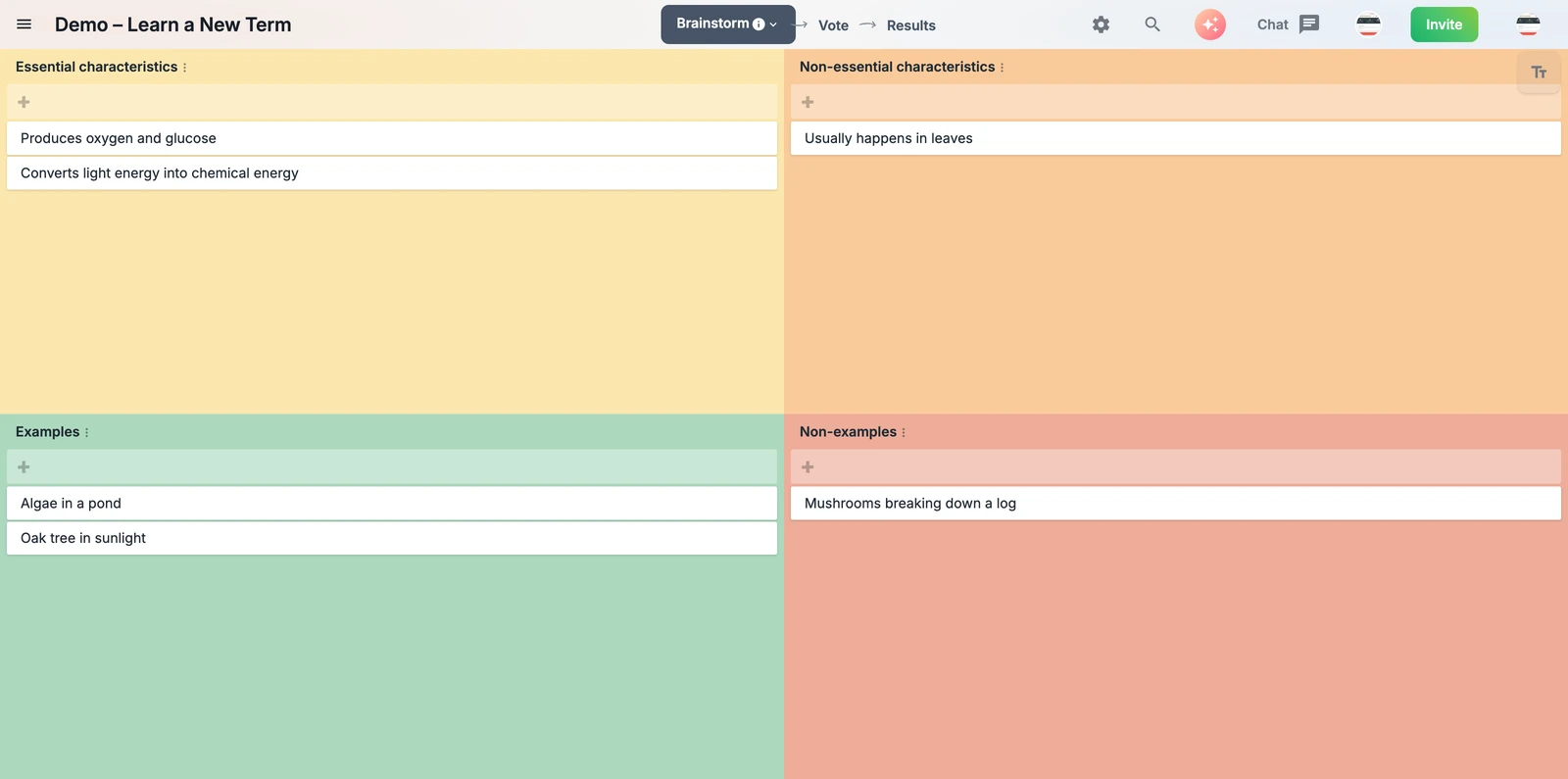
Frayer model
The Frayer model is a four-square vocabulary organizer: definition, characteristics, examples and non-examples around one term. Build one live.
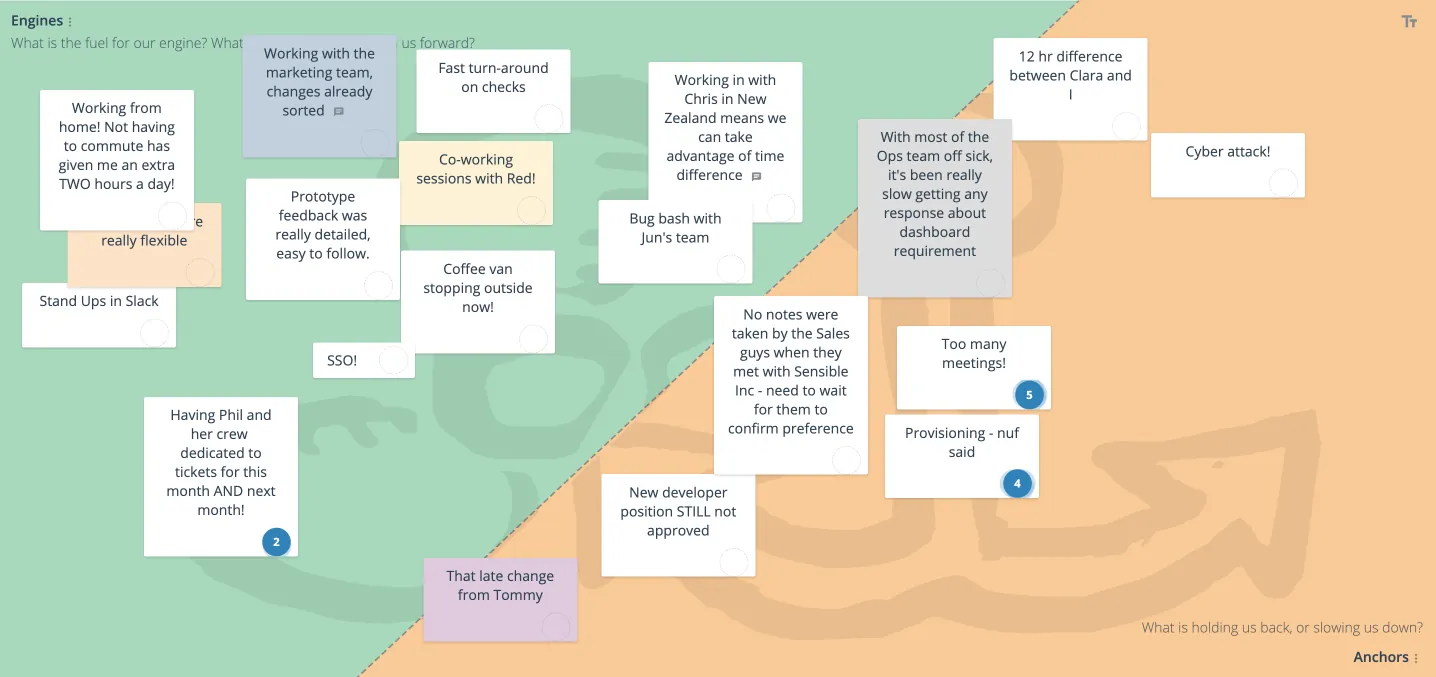
Fun and Easy Retrospective Alternatives
Explore fun agile retrospective alternatives - starfish, hot air balloon, sailboat and anchors - and how each drives your team's continuous improvement.
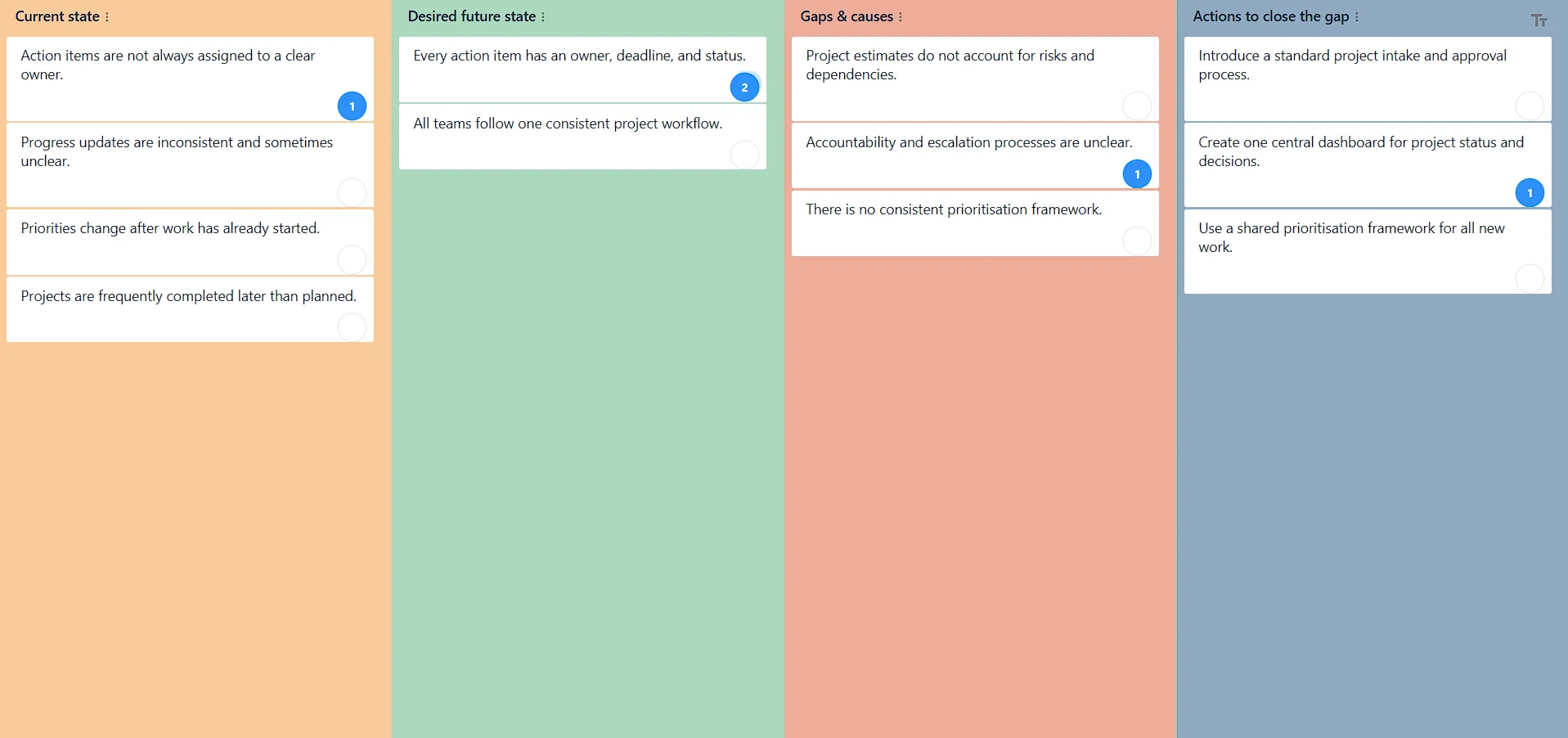
Gap Analysis
A gap analysis compares your current state with your target state to reveal the gap and the actions to close it. Run one with your team.
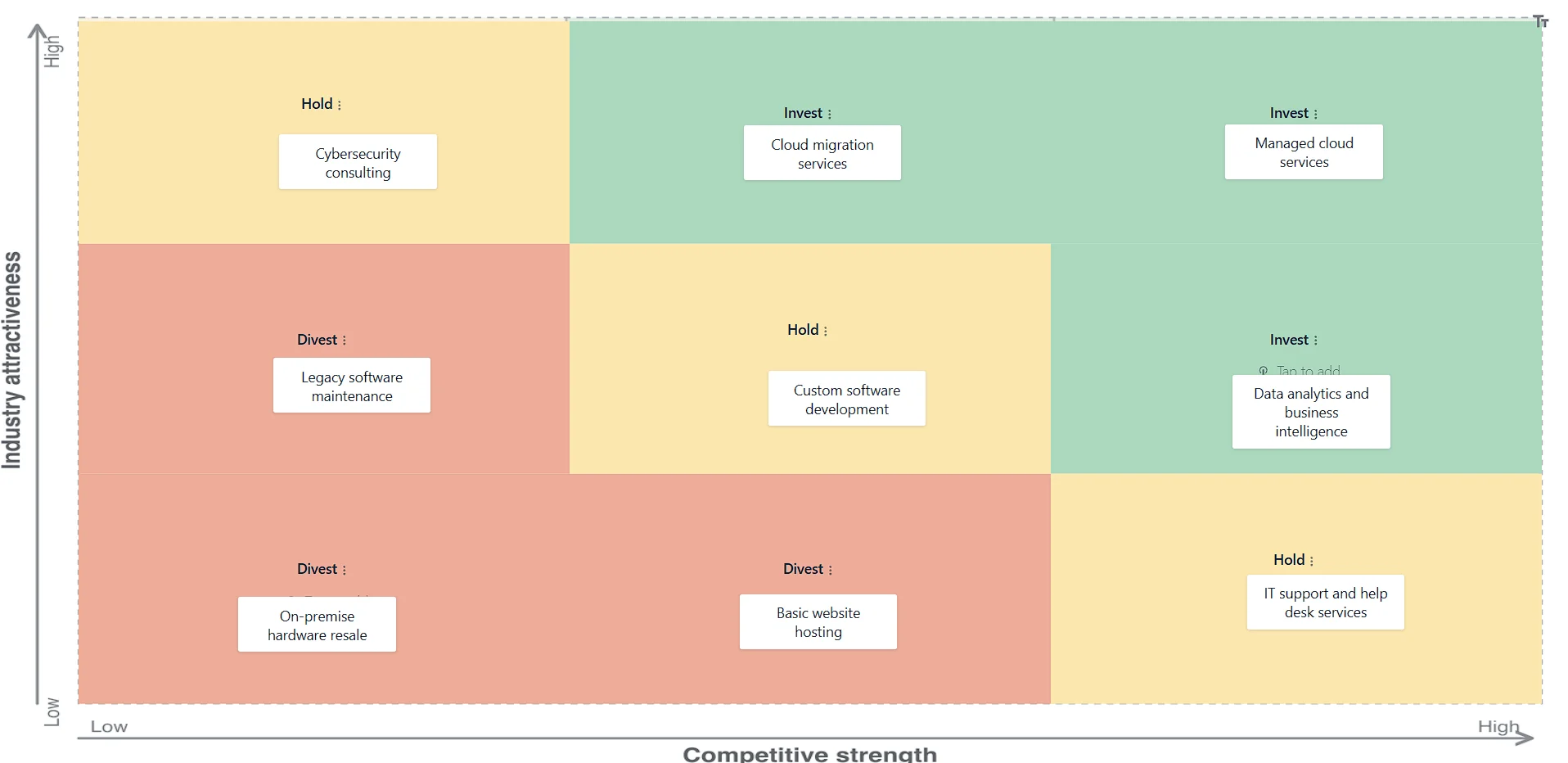
GE-McKinsey Matrix
The GE-McKinsey matrix is a nine-box grid that ranks business units by industry attractiveness and competitive strength. See a worked example and build yours.
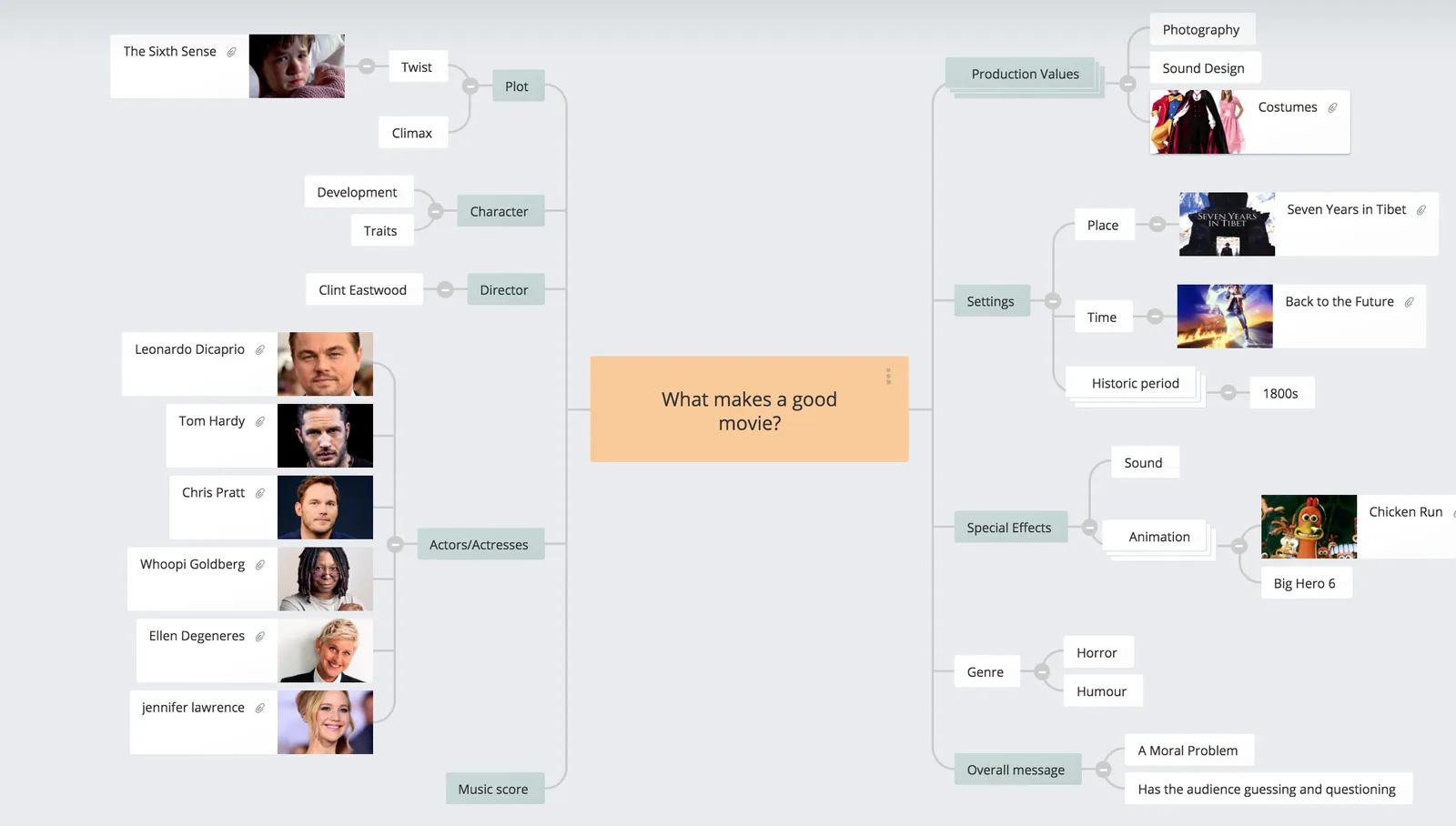
Group Mind Mapping
Capture, develop and share your ideas visually using collaborative mind mapping and group mind mapping tools from GroupMap
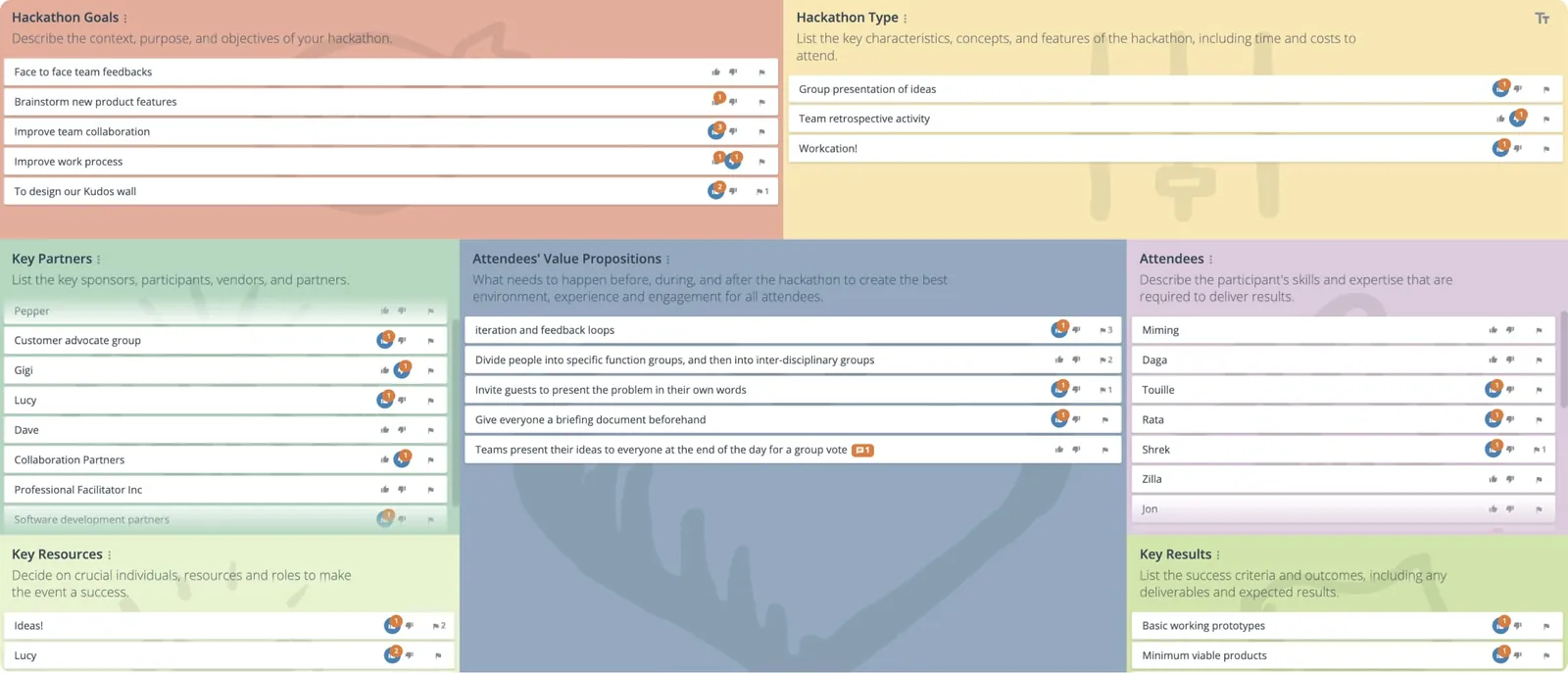
Hackathon Canvas
Maximize your hackathon success with our all-in-one canvas, covering ideation to implementation. Plan, organize, and execute your ideas like a pro.
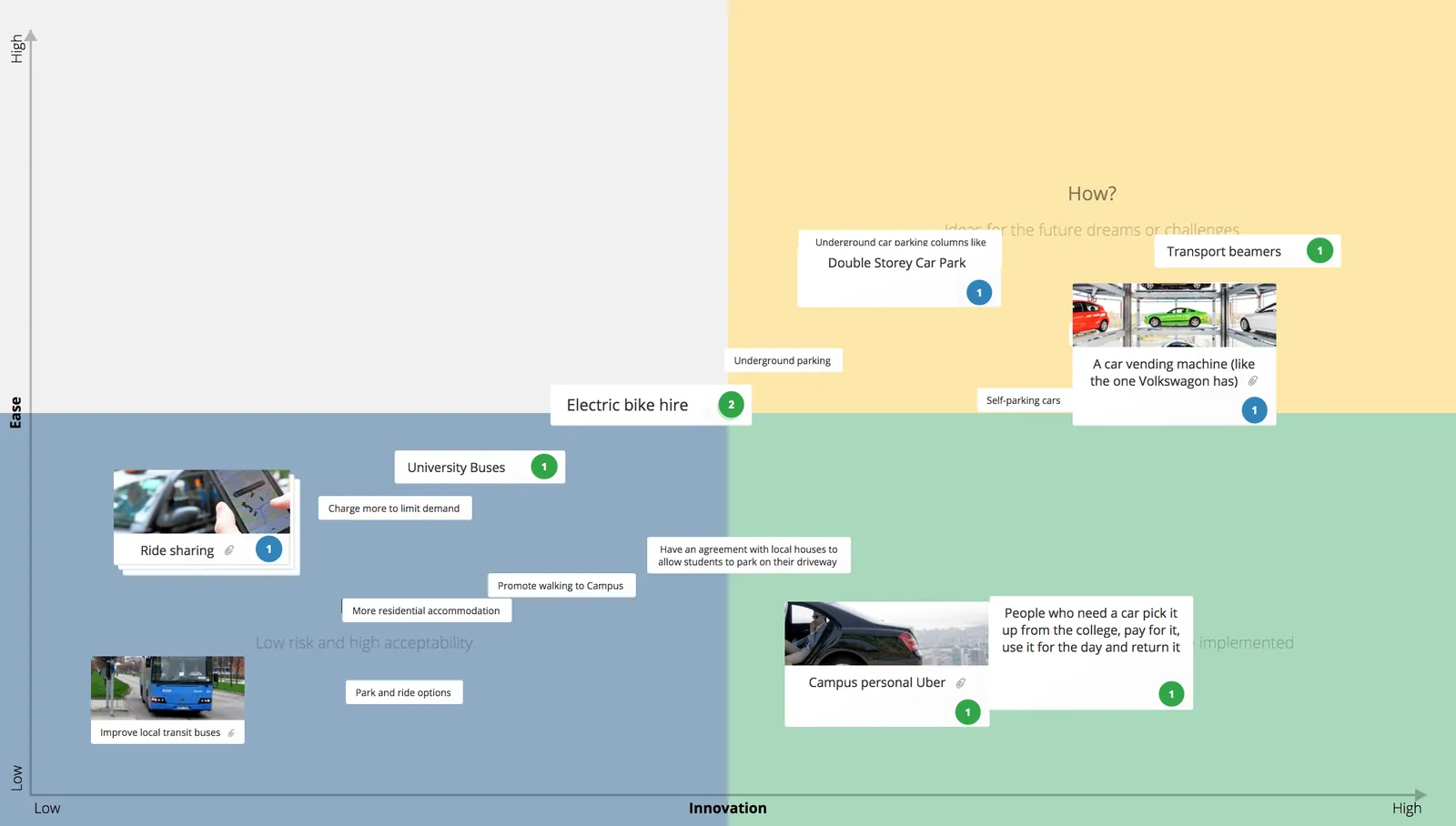
How Now Wow Matrix
The How Now Wow matrix helps teams organize, collaborate and prioritize the best ideas to take forward. Try the template live with your group.
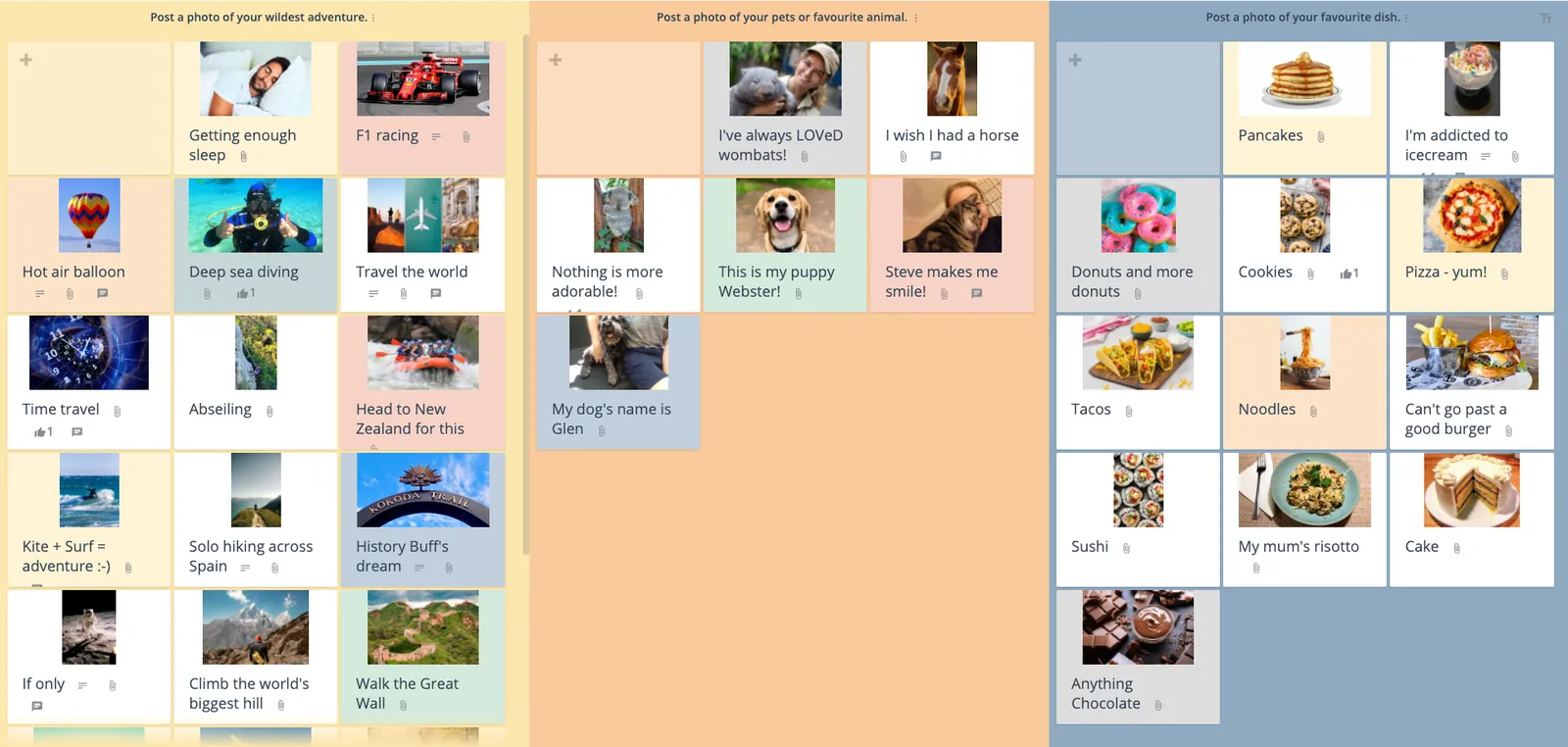
Icebreakers and warm-ups
Four ready-to-run icebreaker templates, plus how to pick one for the session you are facilitating, how long to give it, and what to do when nobody answers.
Icebreakers for large groups
How to open a session with 30, 100 or 300 people. Group-size bands, five icebreakers that scale, and the timing math that decides which one fits your room.
Impact Effort Matrix
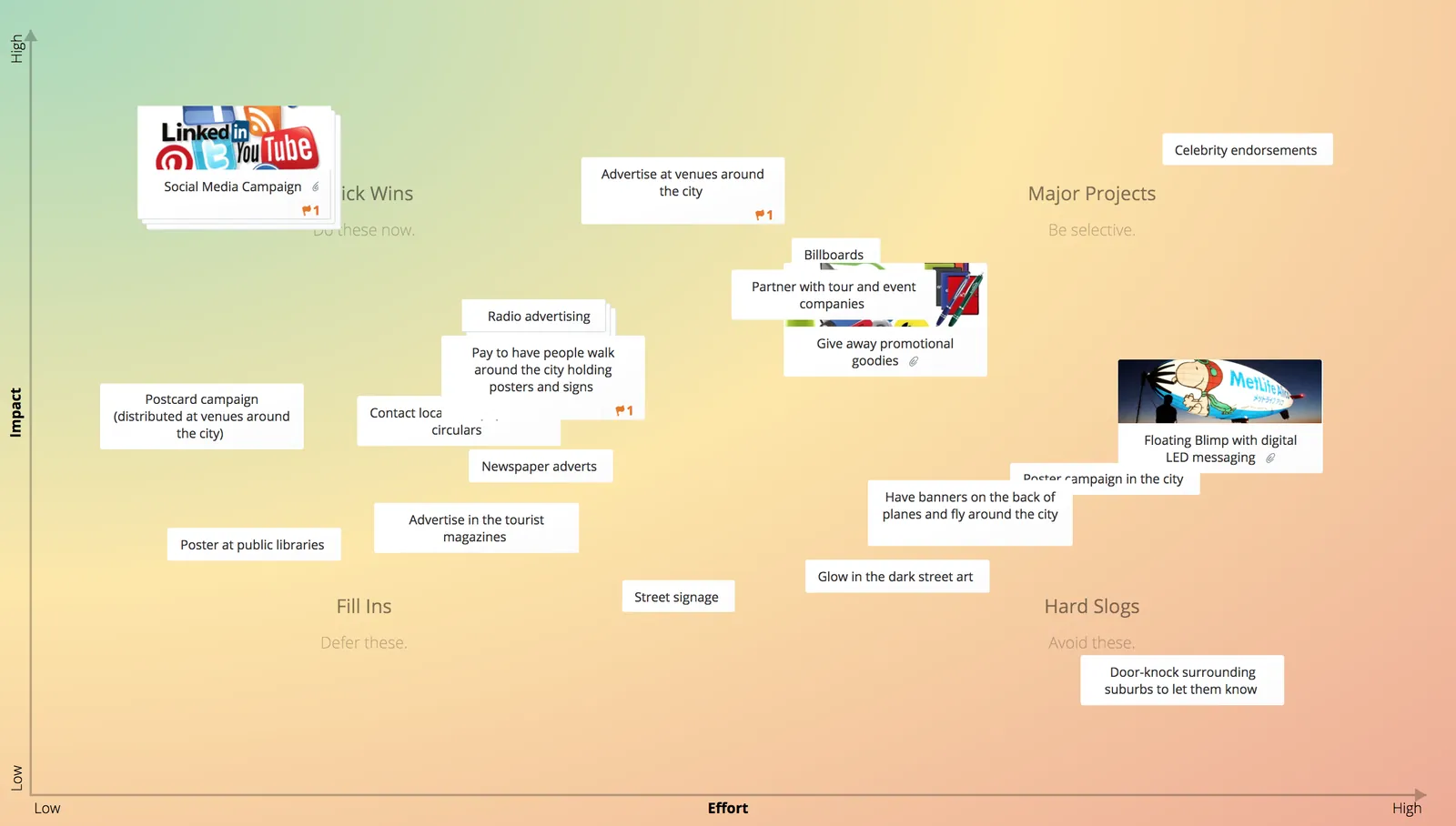
The Impact Effort Matrix (or Action Priority Matrix) helps teams prioritize ideas by impact vs effort to find quick wins. Create one live with your group.
KWHLAQ
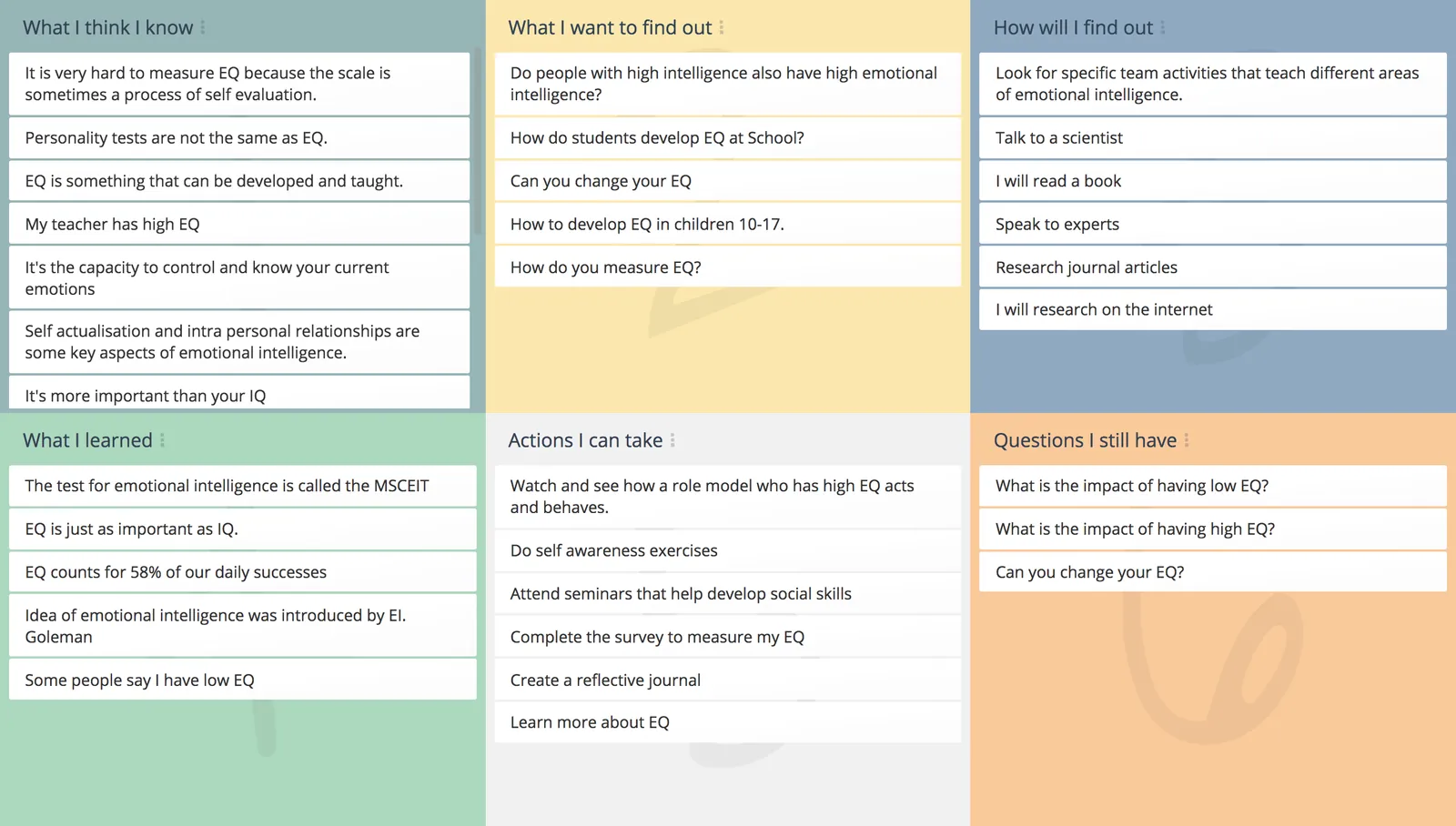
KWHLAQ is a planning and brainstorming tool for helping students take charge of their learning of a new topic - perfect for flipped classrooms.
KWL Chart
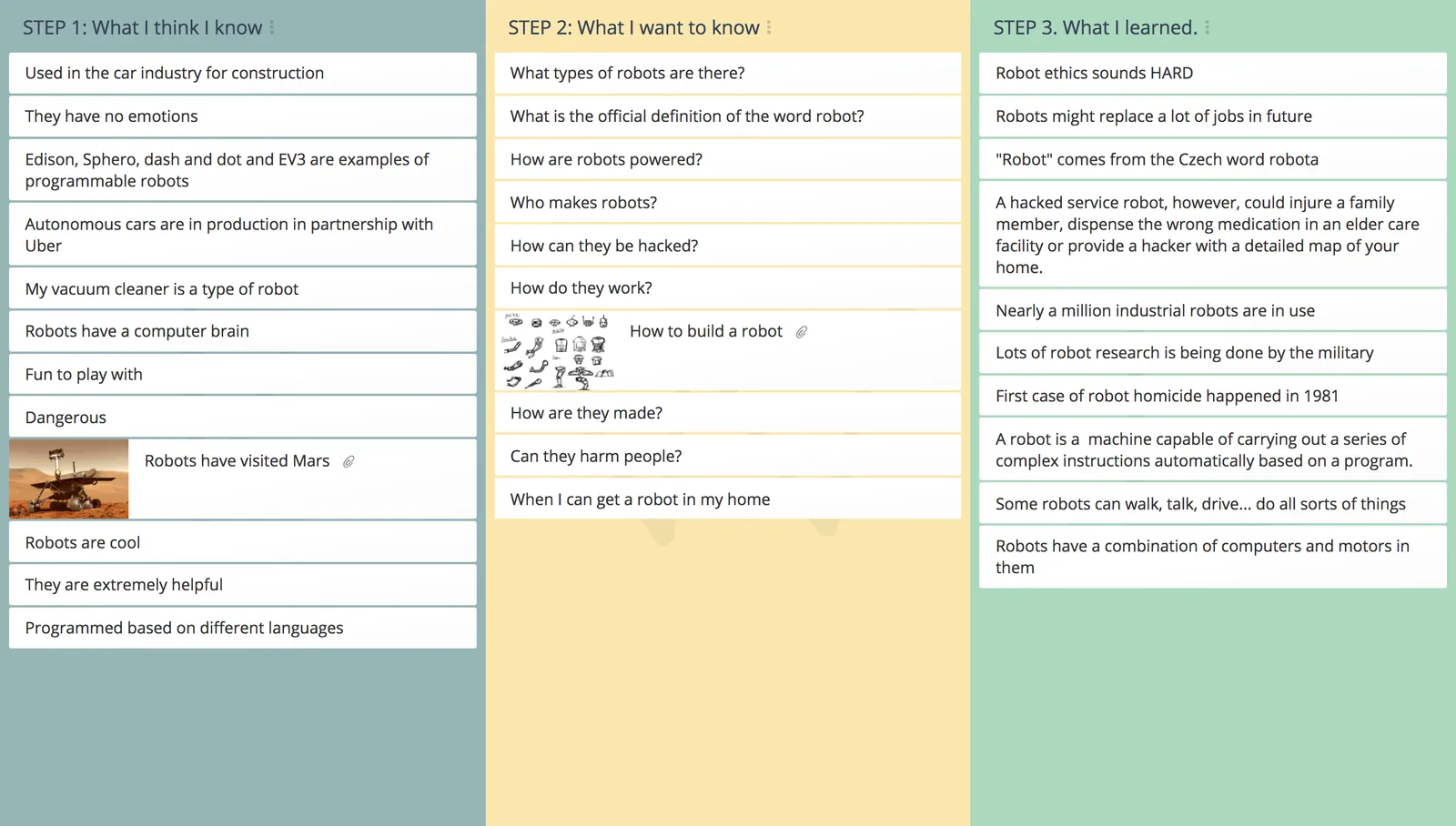
A KWL chart tracks what students Know, Want to know, and have Learned. Download the free printable template, or see examples for science, history and reading.
Lean Canvas
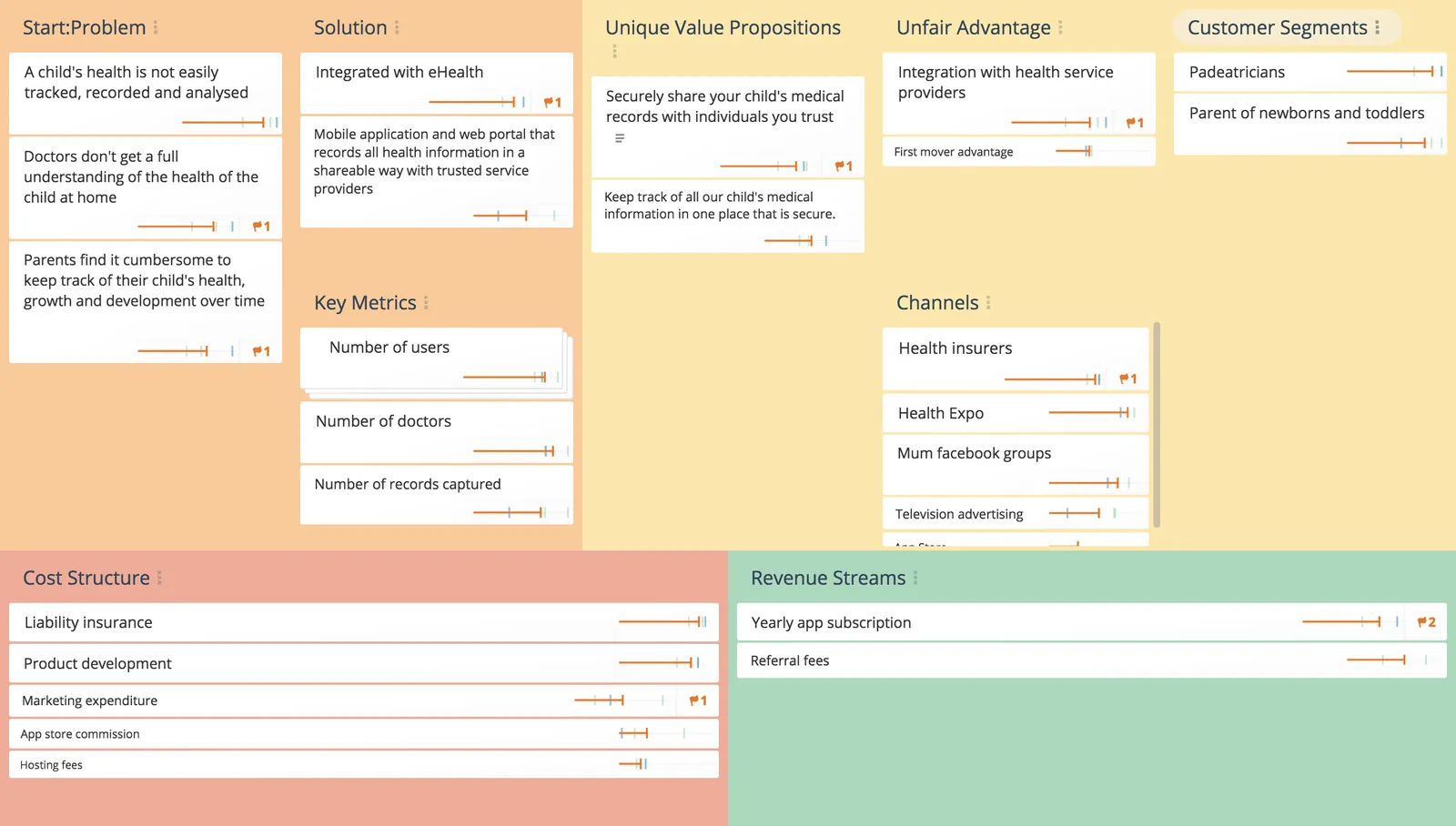
Use a Lean Canvas template to capture problems, solutions, metrics and advantage. Collaborate live and export results into testable plans.
Lean Coffee
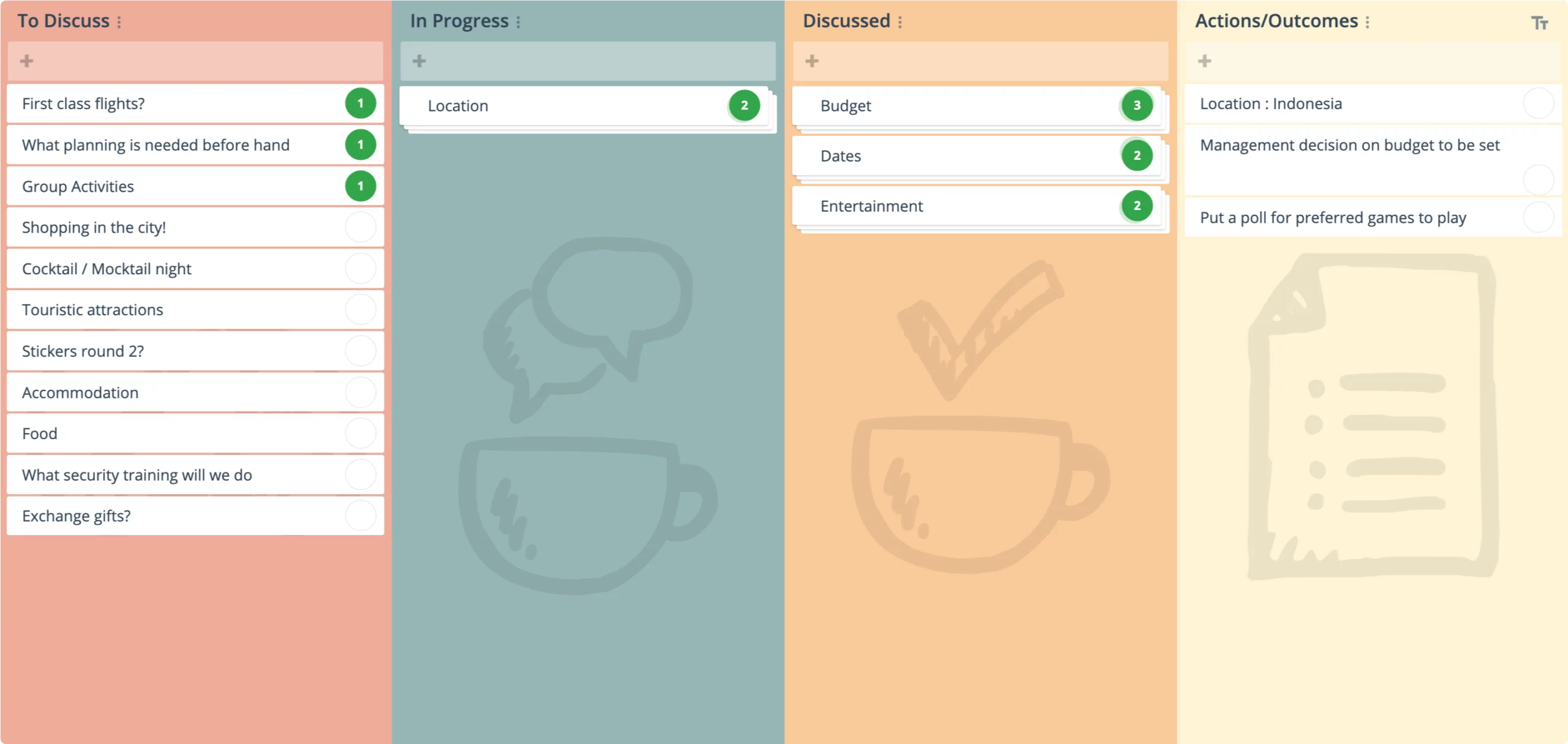
Run a Lean Coffee with this template: participants propose topics, vote on them and discuss each one on a timer, so the agenda comes from the room itself.
Meeting Agenda Template
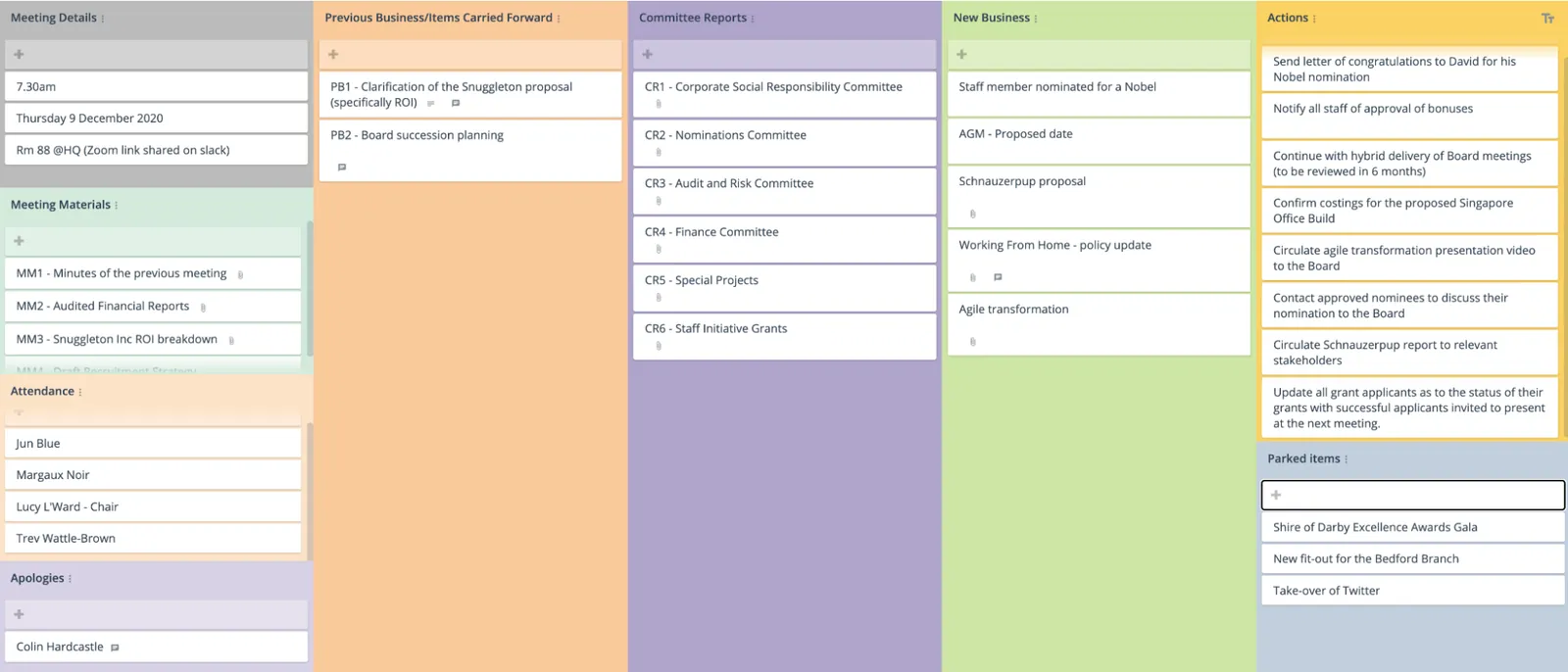
A meeting agenda template with nine key elements, plus worked agenda examples for a weekly team meeting, a board meeting and a project kickoff.
Mood Wall Ice Breaker
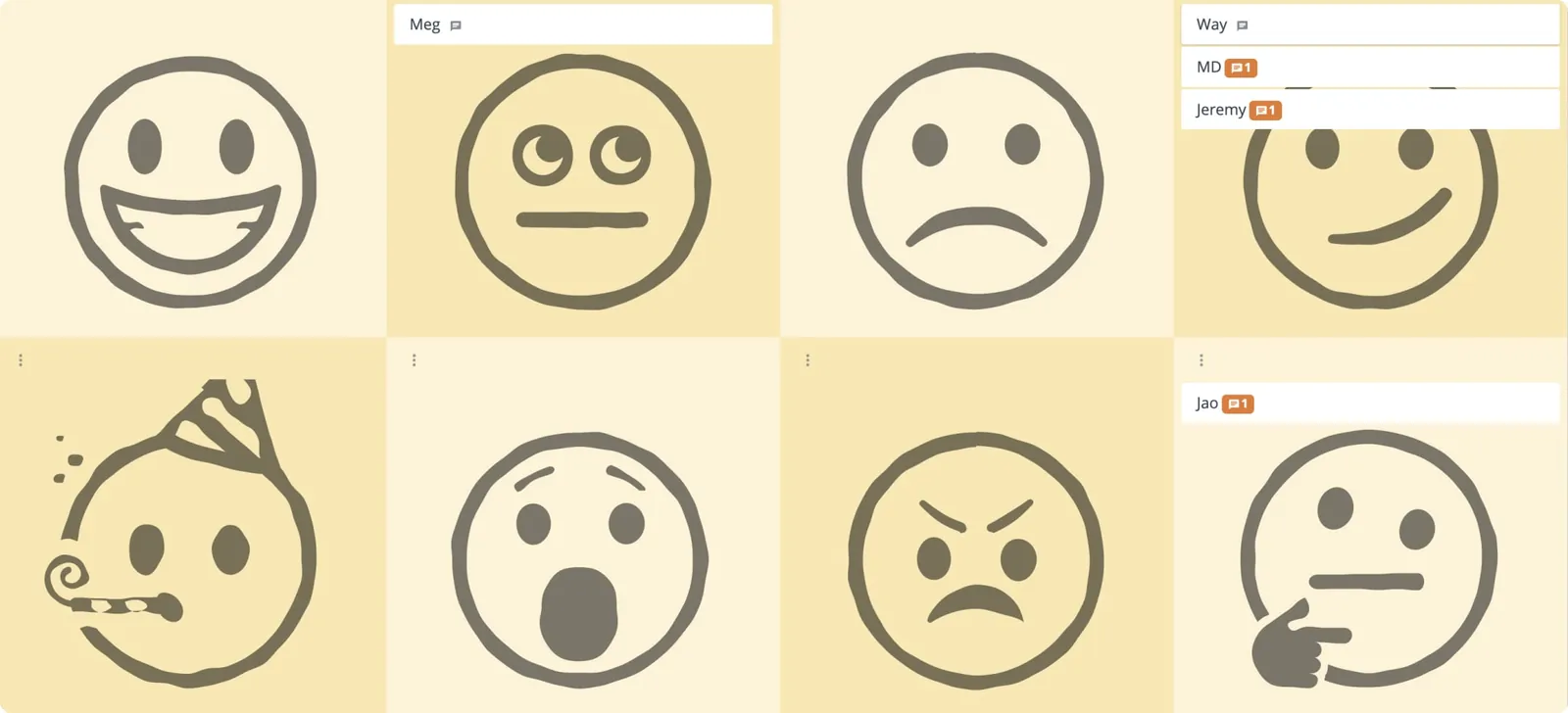
An easy ice breaker that lets people to share their current mood in a non-threatening and inclusive way. Use this Mood Wall template now.
Perceptual Map
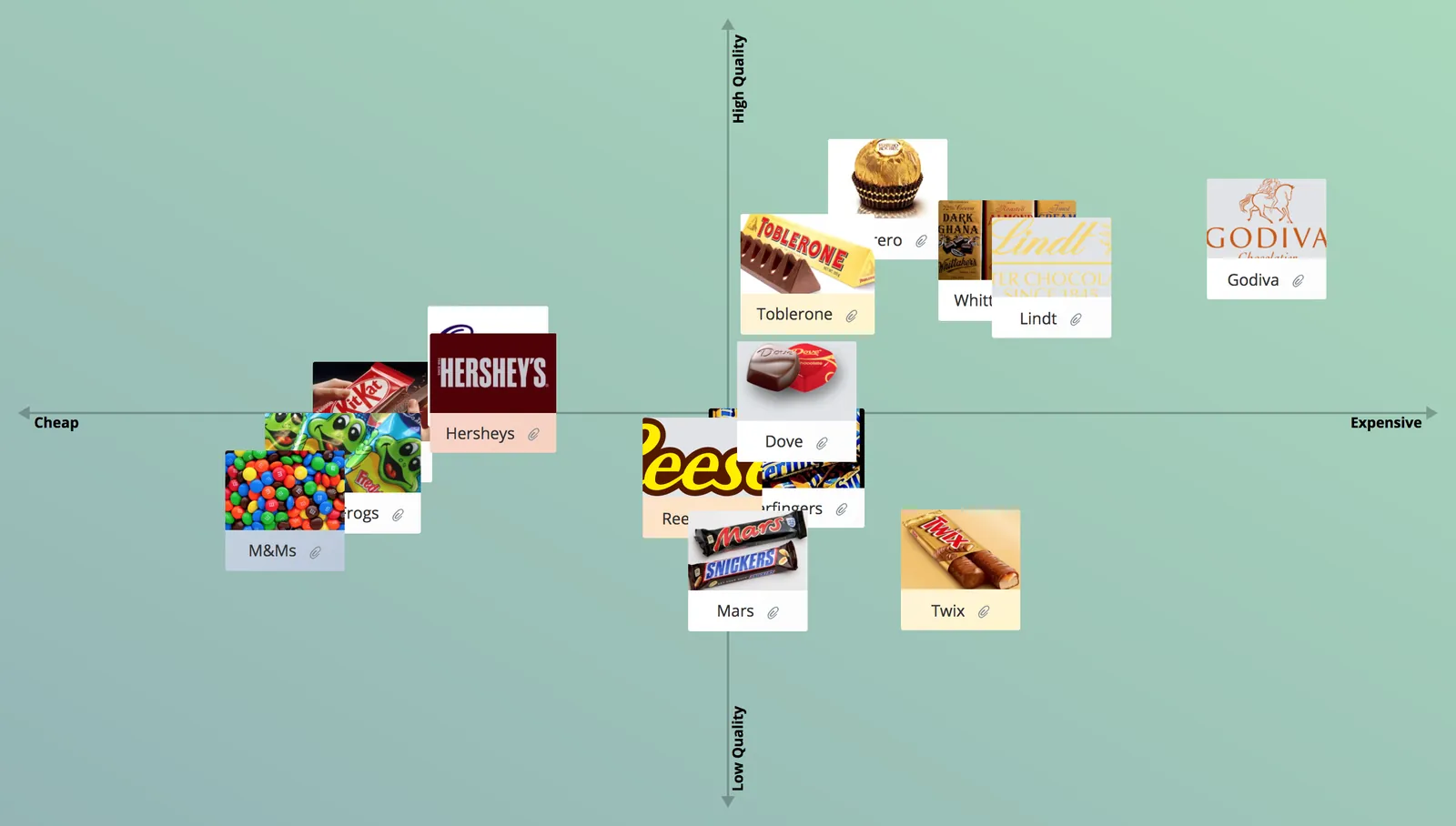
Perceptual Maps are useful focus group tools capturing relative perceptions of brands, products or ideas. Get started with our Perceptual Map Template.
PEST Analysis
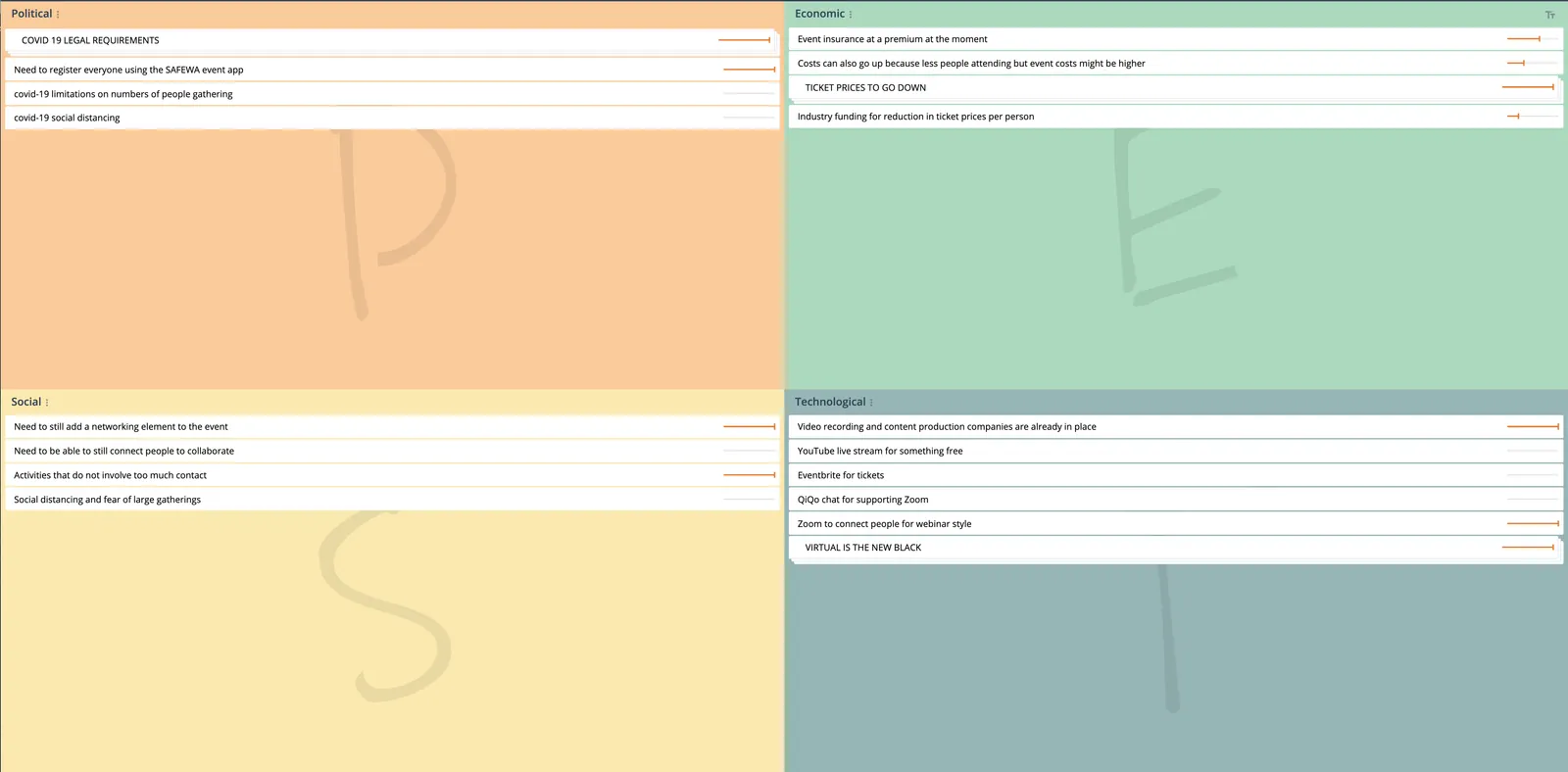
The PEST analysis template is a strategic business tool tracking macro-economic factors which can impacting businesses now and in the future.
PESTLE Analysis
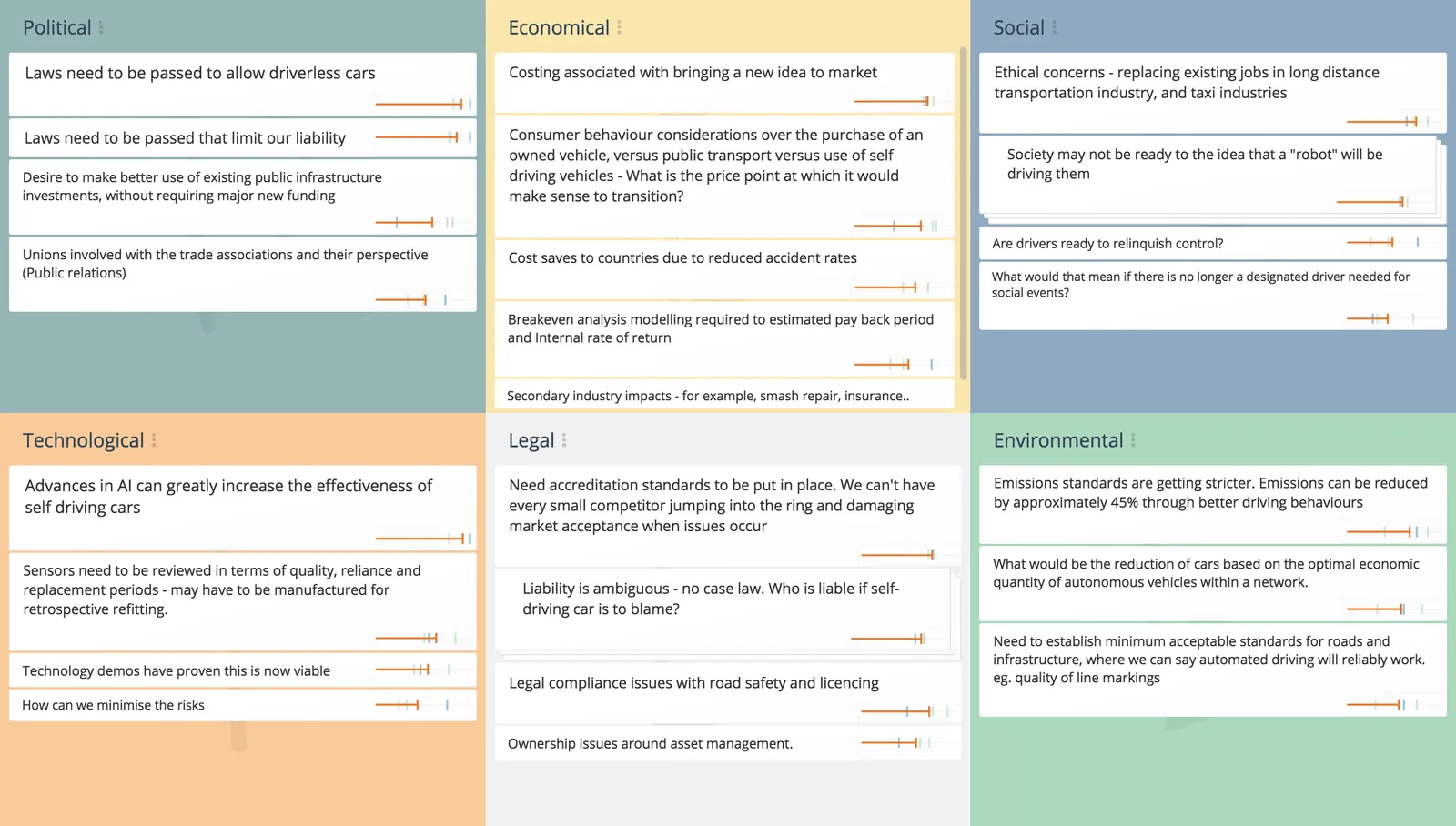
PESTLE analysis examines Political, Economic, Social, Technological, Legal and Environmental factors. See a sample PESTLE analysis and use our free template.
Plus Delta Retrospective
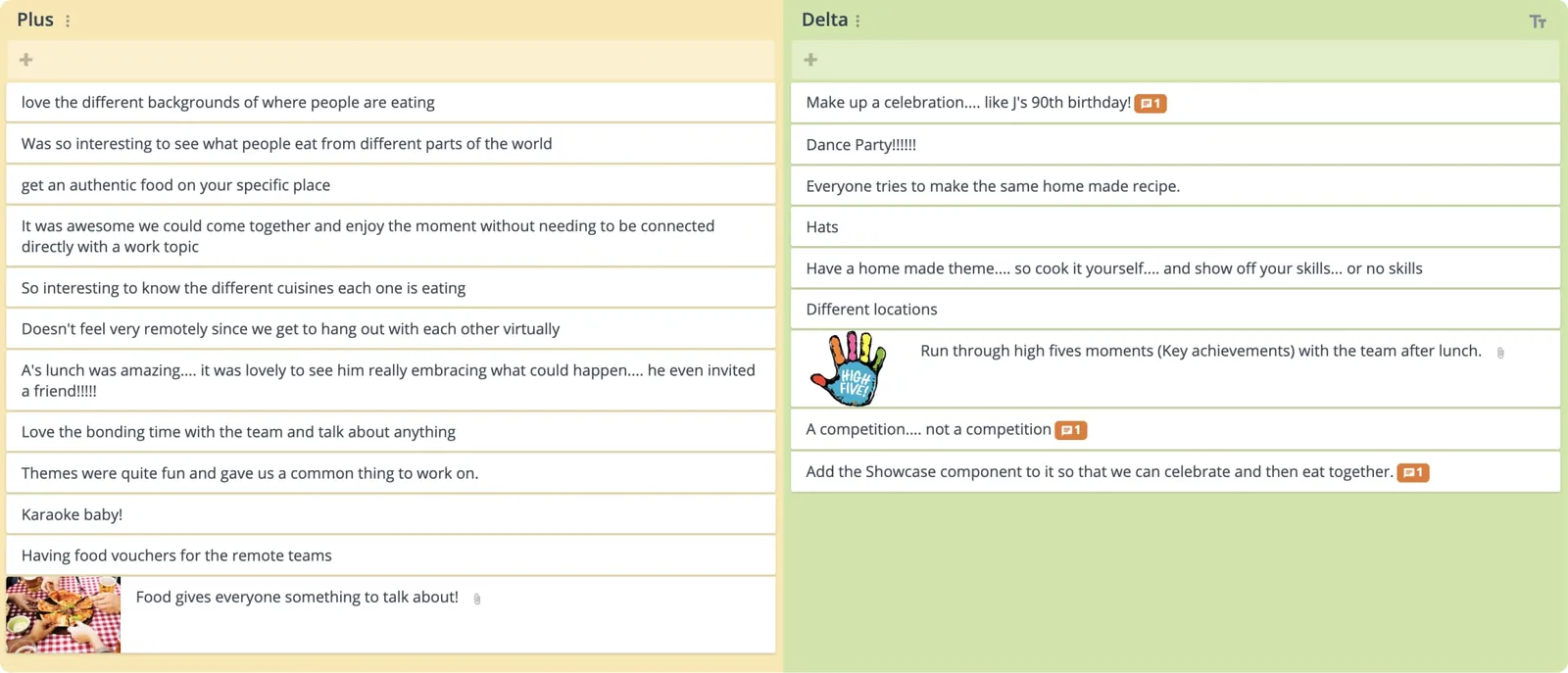
Looking to reflect on your team's recent project or sprint? Consider using the Plus Delta retrospective method!
PMI (Plus, Minus, Interesting)
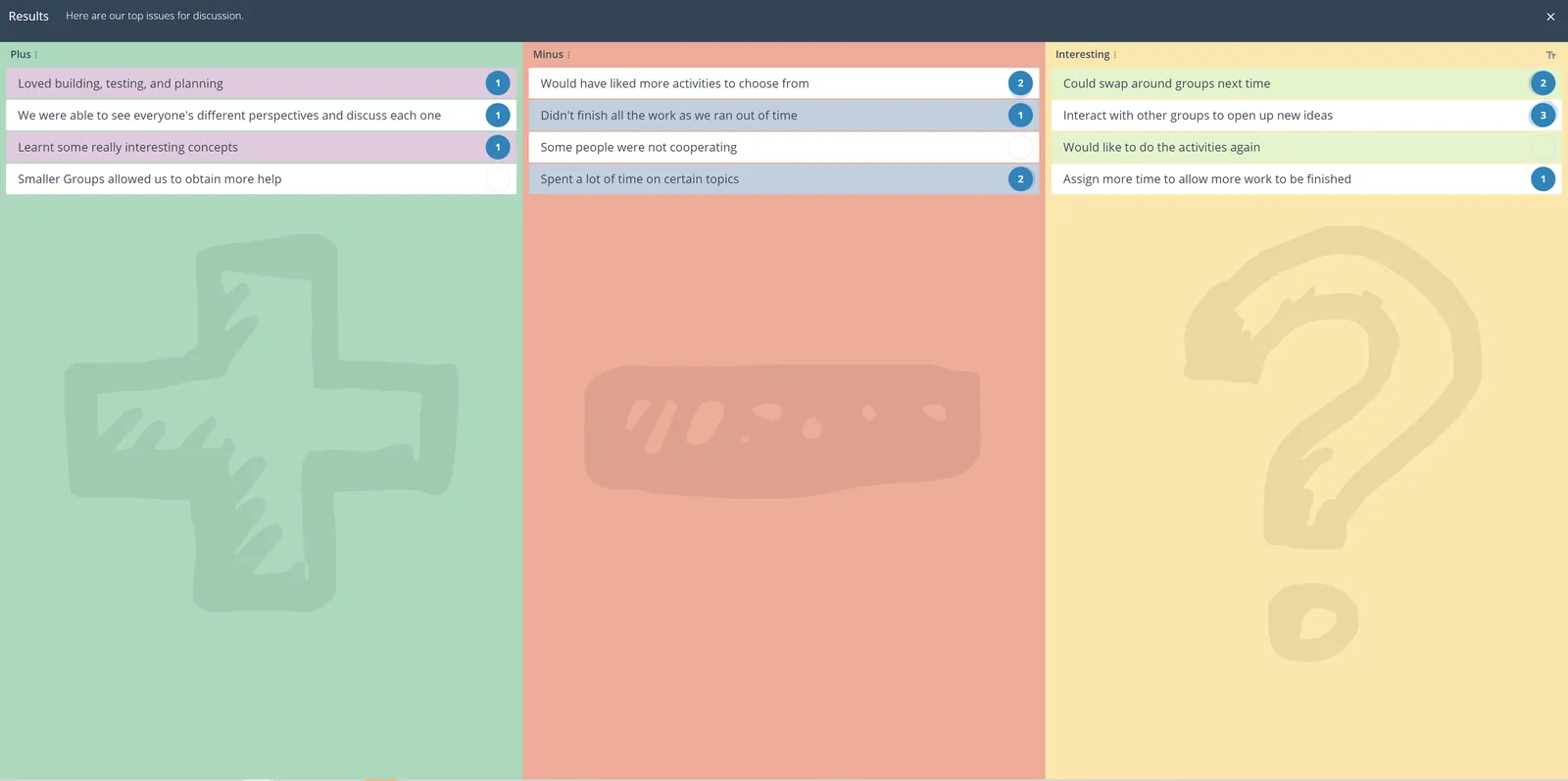
Use the PMI (Plus, Minus, Interesting) template to weigh an idea from three angles. Participants brainstorm individually, then vote and decide together.
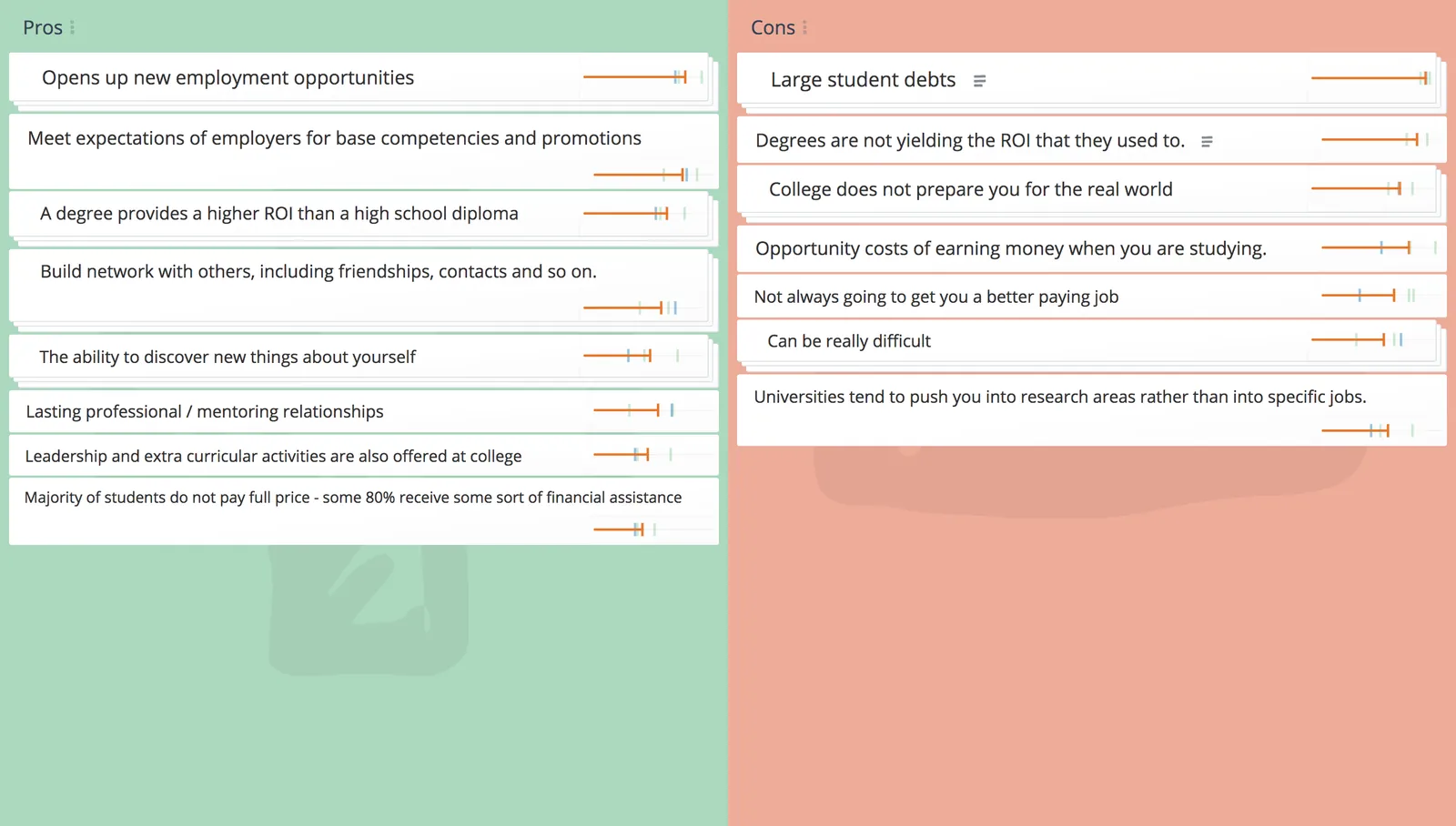
Pros and Cons List
The easiest form of collaborative brainstorming. Should we? Shouldn't we? Decide easily creating a prioritized pros and cons list today.
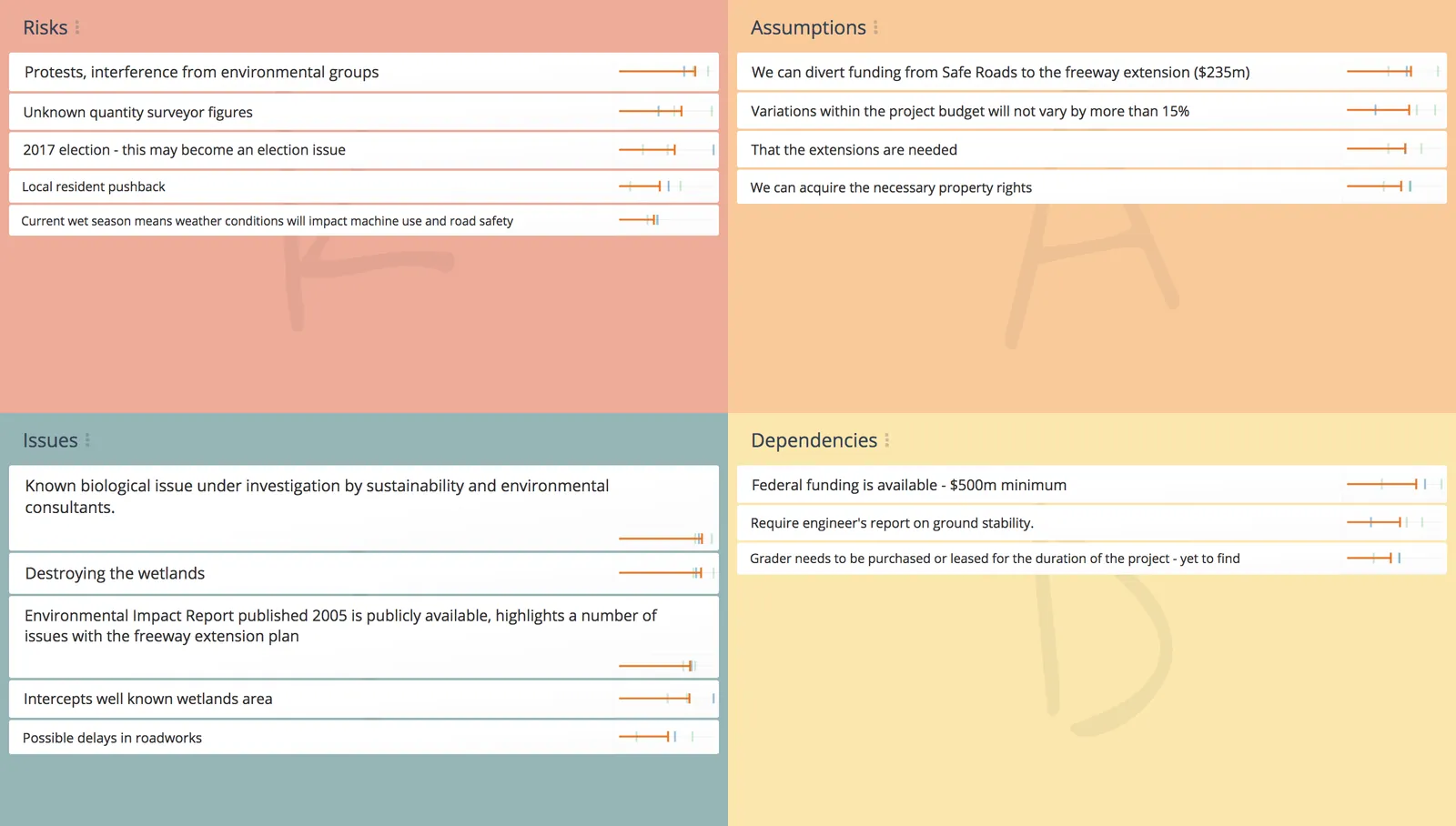
RAID Analysis
RAID analysis is a project planning technique identifying key project (R)isks, (A)ssumptions, (I)ssues, and (D)ependencies.
RAID Log template
Track project risks, assumptions, issues and dependencies in one RAID log. See the standard columns, a worked example, and how to run the session.
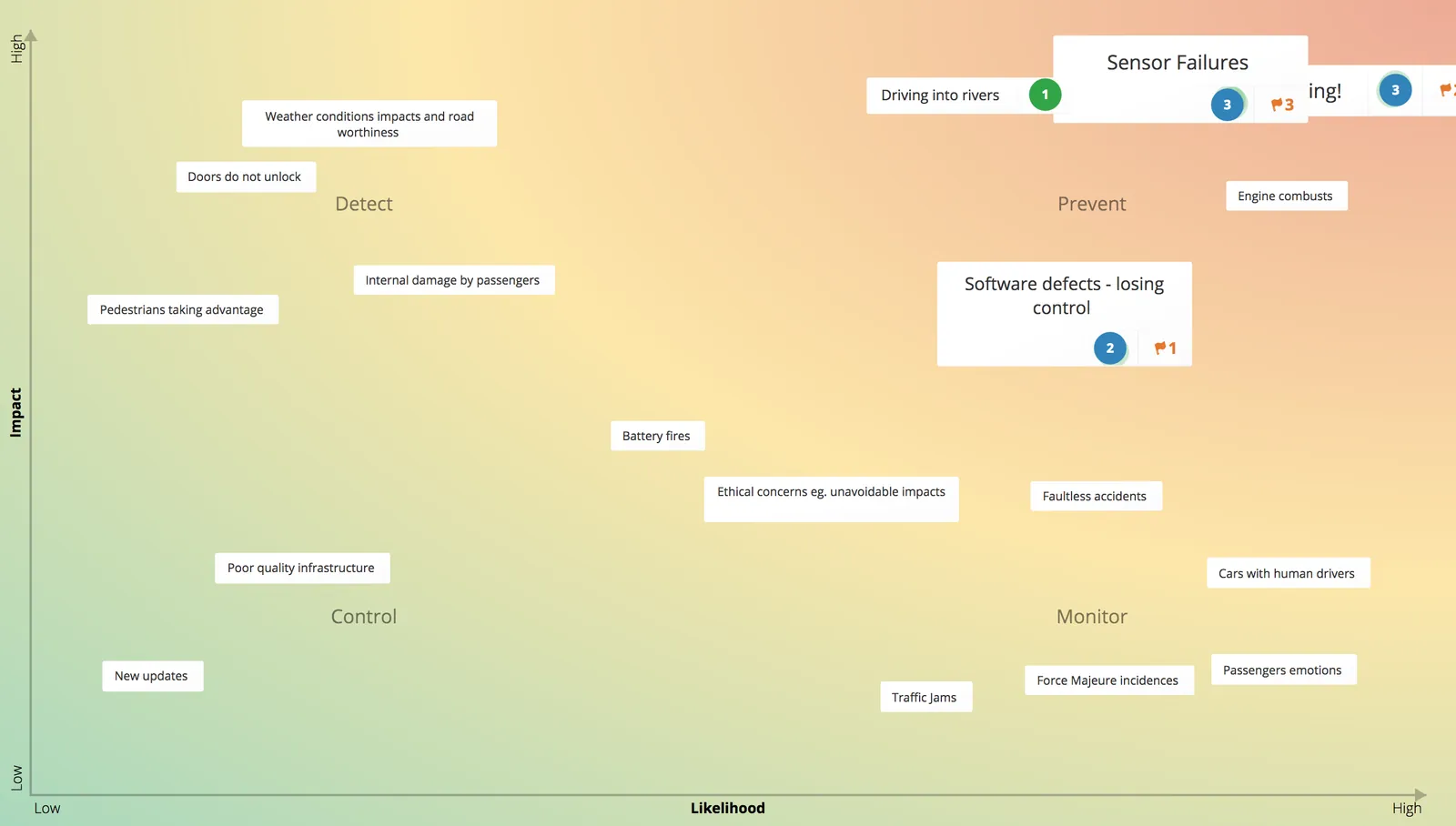
Risk Assessment
Use our free risk assessment matrix to map risks by likelihood and impact. Run risk mapping live with your team, with a worked example and a ready template.
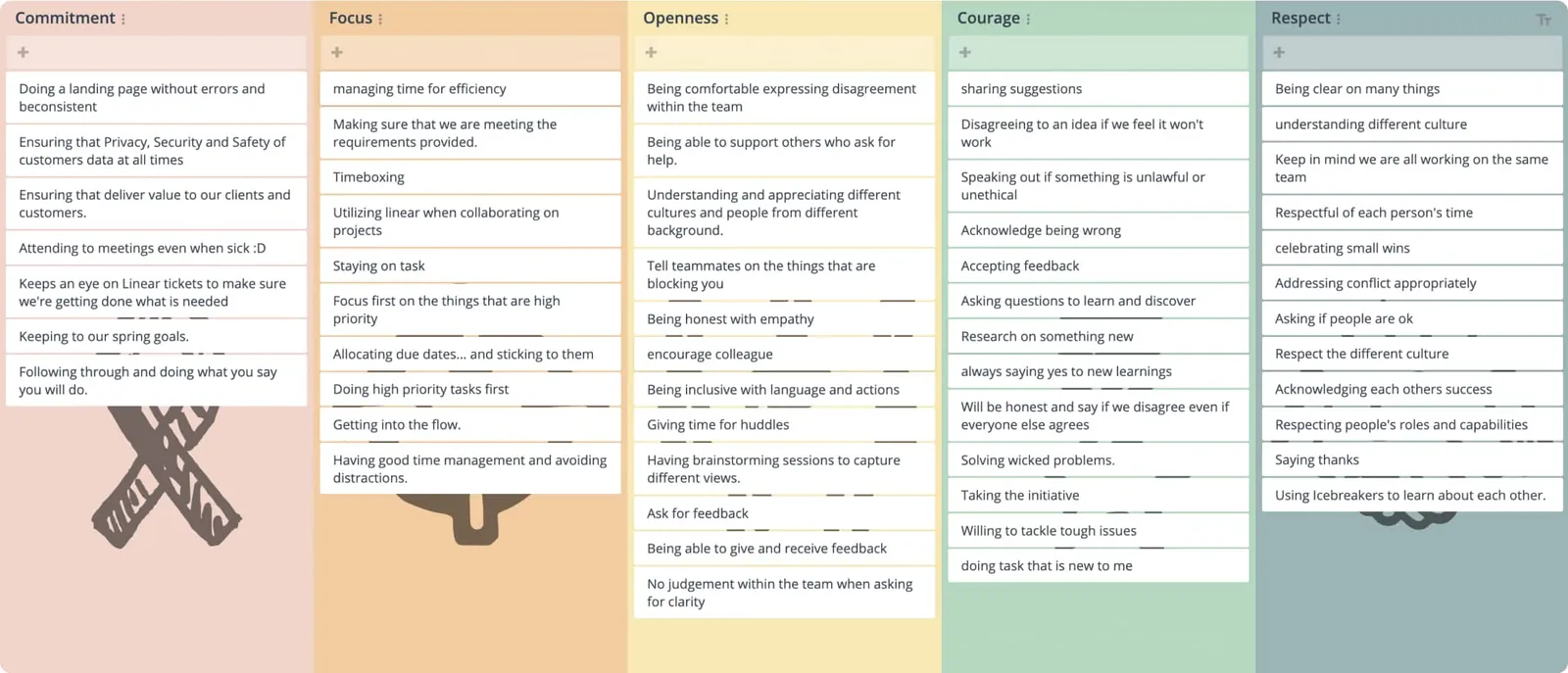
Scrum Values in Action
The Scrum Values Ice Breaker and Agile Retrospective template lets your team think and act on behaviors that represent each value. Try it now.
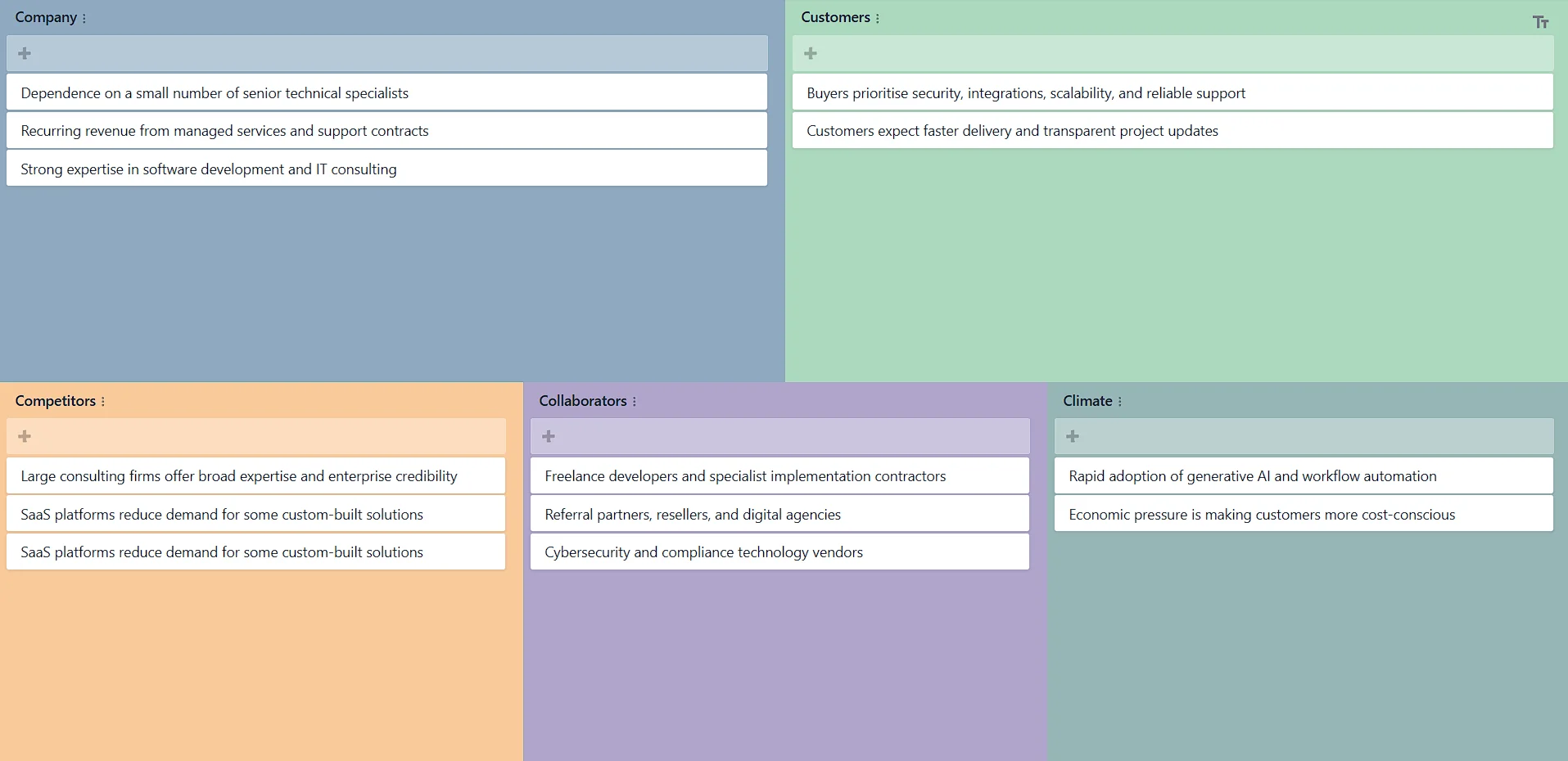
Situational analysis (5Cs)
A situational analysis assesses the internal and external factors shaping your business using tools like 5C, SWOT and PEST. See a worked example and template.
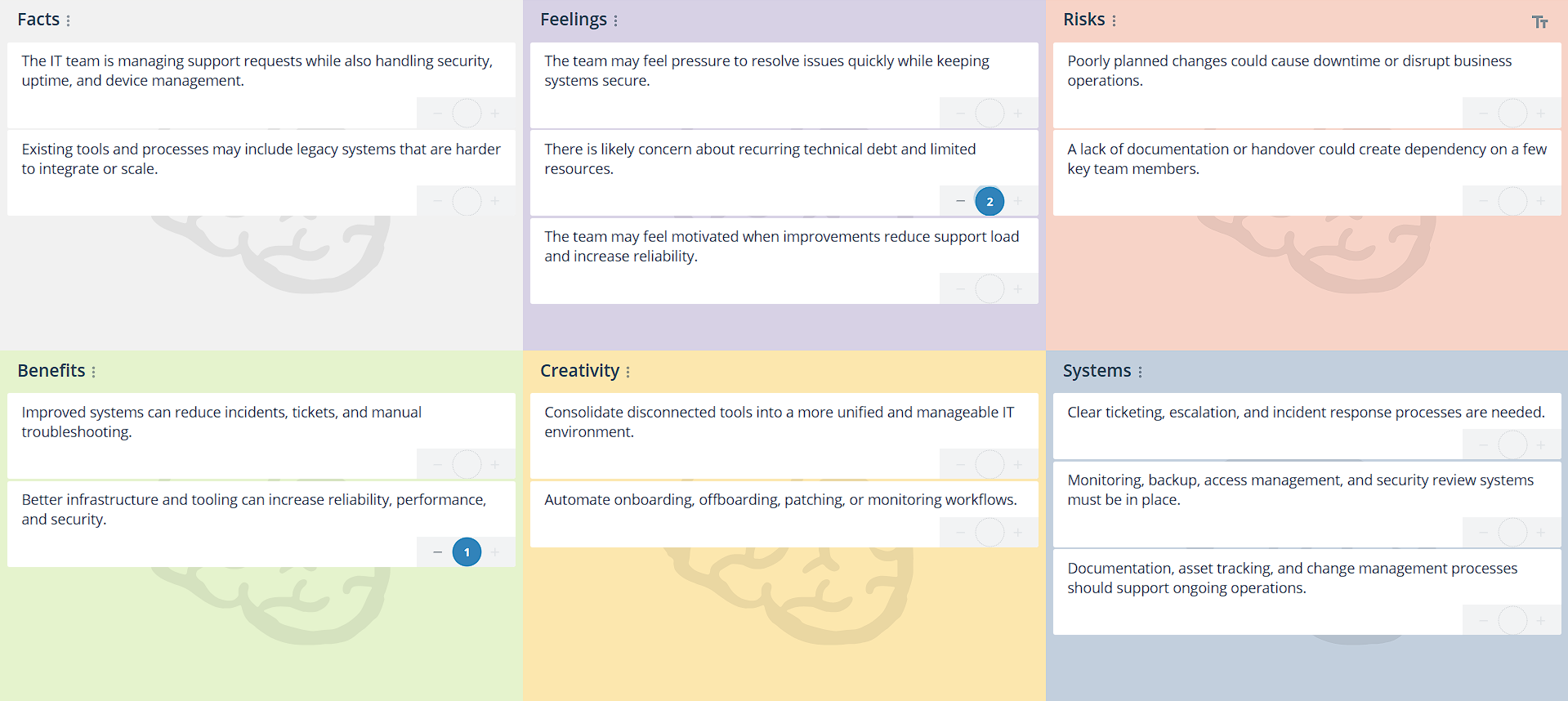
Six Thinking Styles
Six Thinking Styles helps teams explore any topic from six angles (facts, feelings, risks, benefits, creativity and systems) structured live in GroupMap.
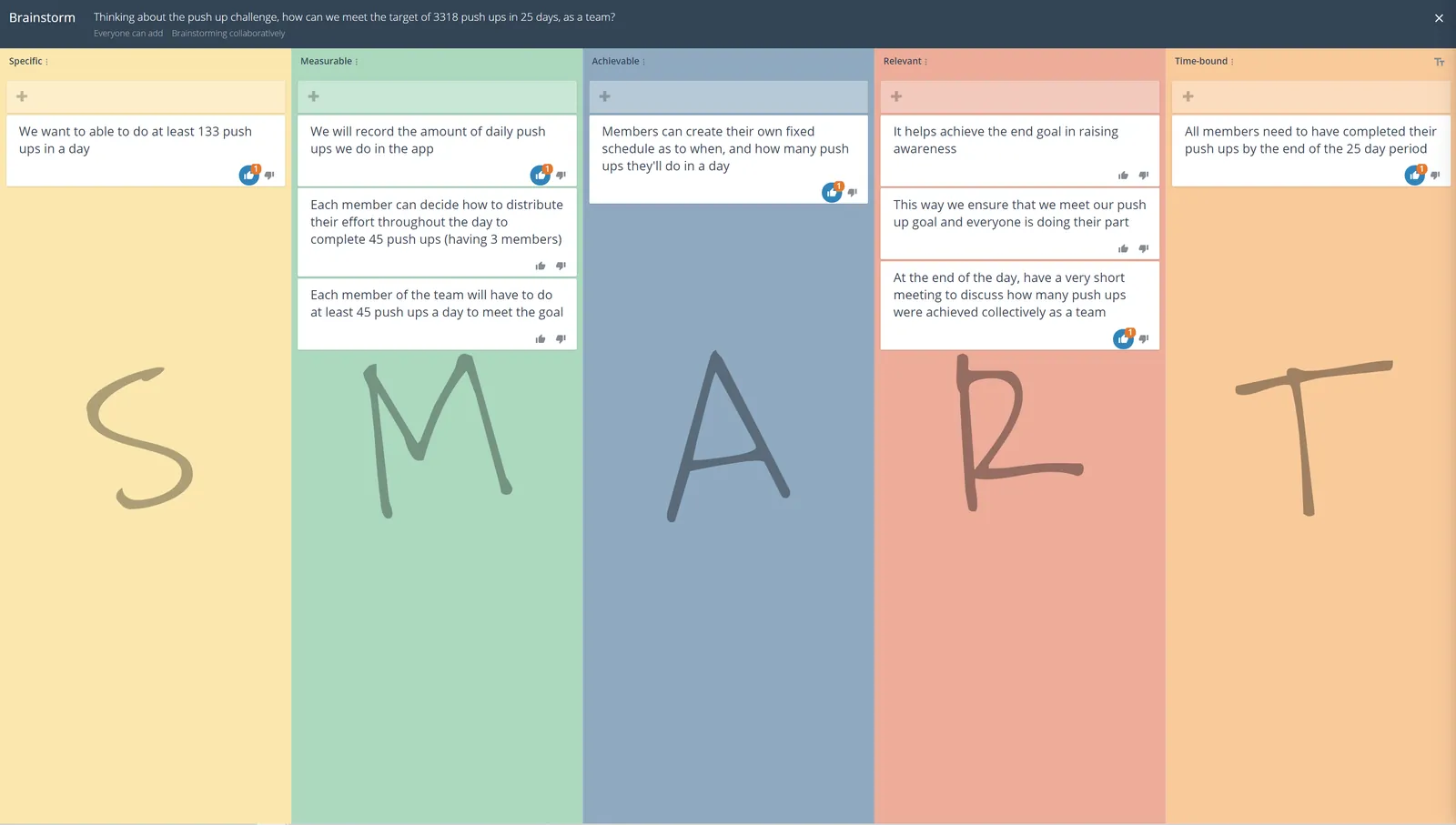
SMART Goals Template
SMART goals template with worked examples and a step-by-step guide to writing Specific, Measurable, Achievable, Relevant and Time-bound goals.
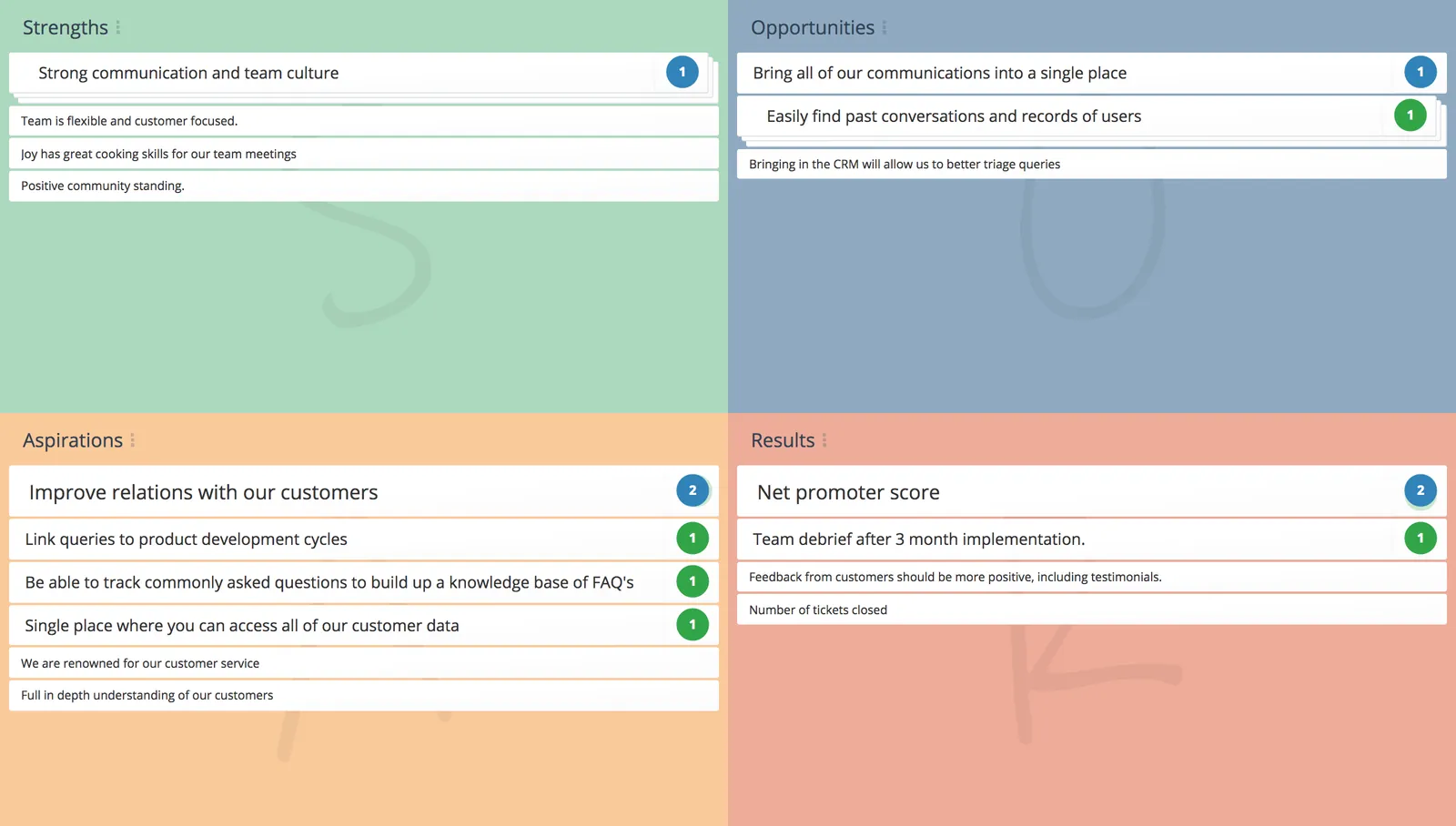
SOAR Analysis Template
Free SOAR analysis template with a worked example: use the SOAR model (Strengths, Opportunities, Aspirations, Results) to plan strategy live with your team.
Stakeholder Mapping and Analysis
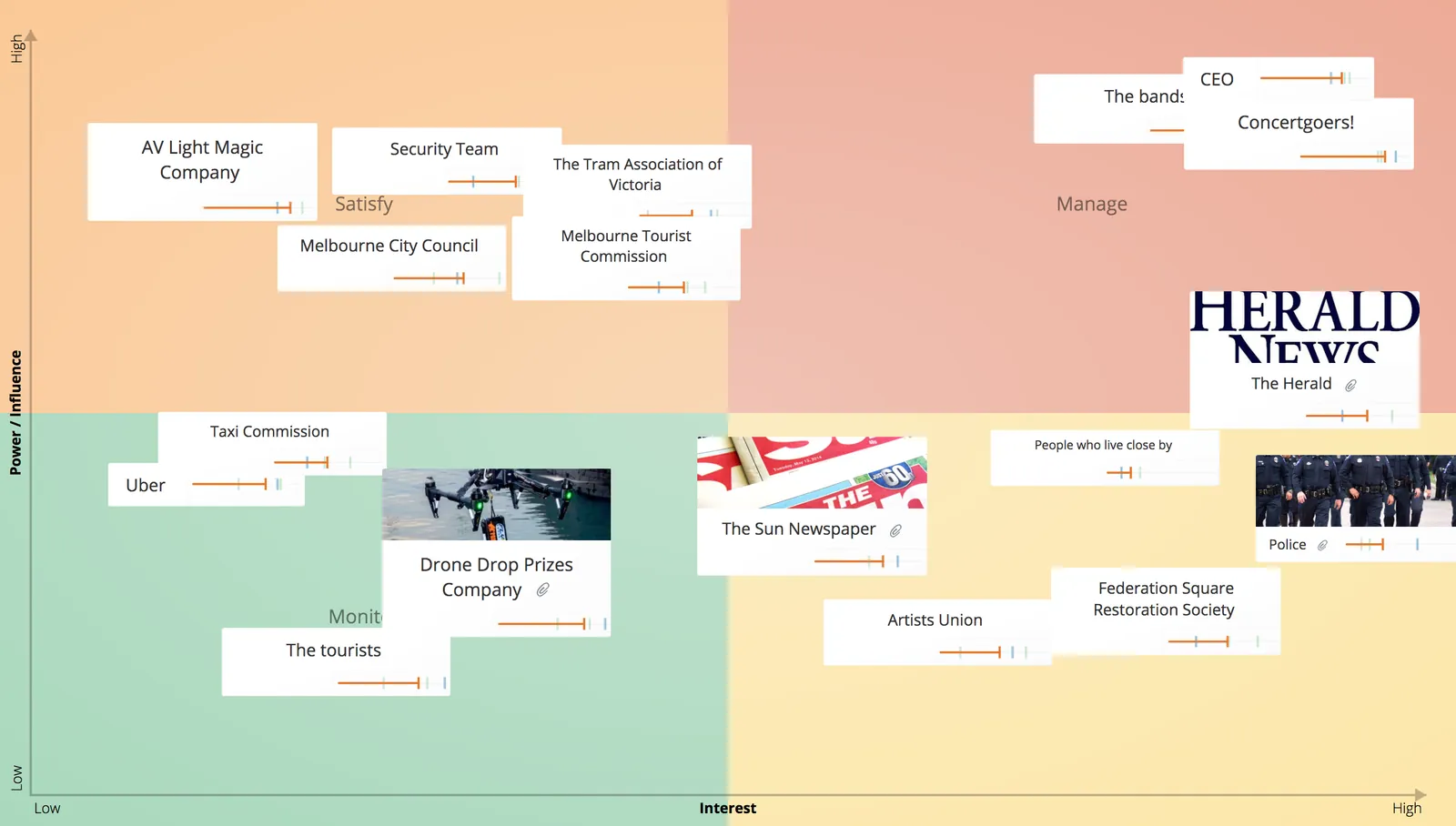
Stakeholder mapping plots who has influence and who has interest, so you know who to manage, satisfy, inform and monitor. Five methods, two worked examples and a free template.
Start Stop Continue Retrospective
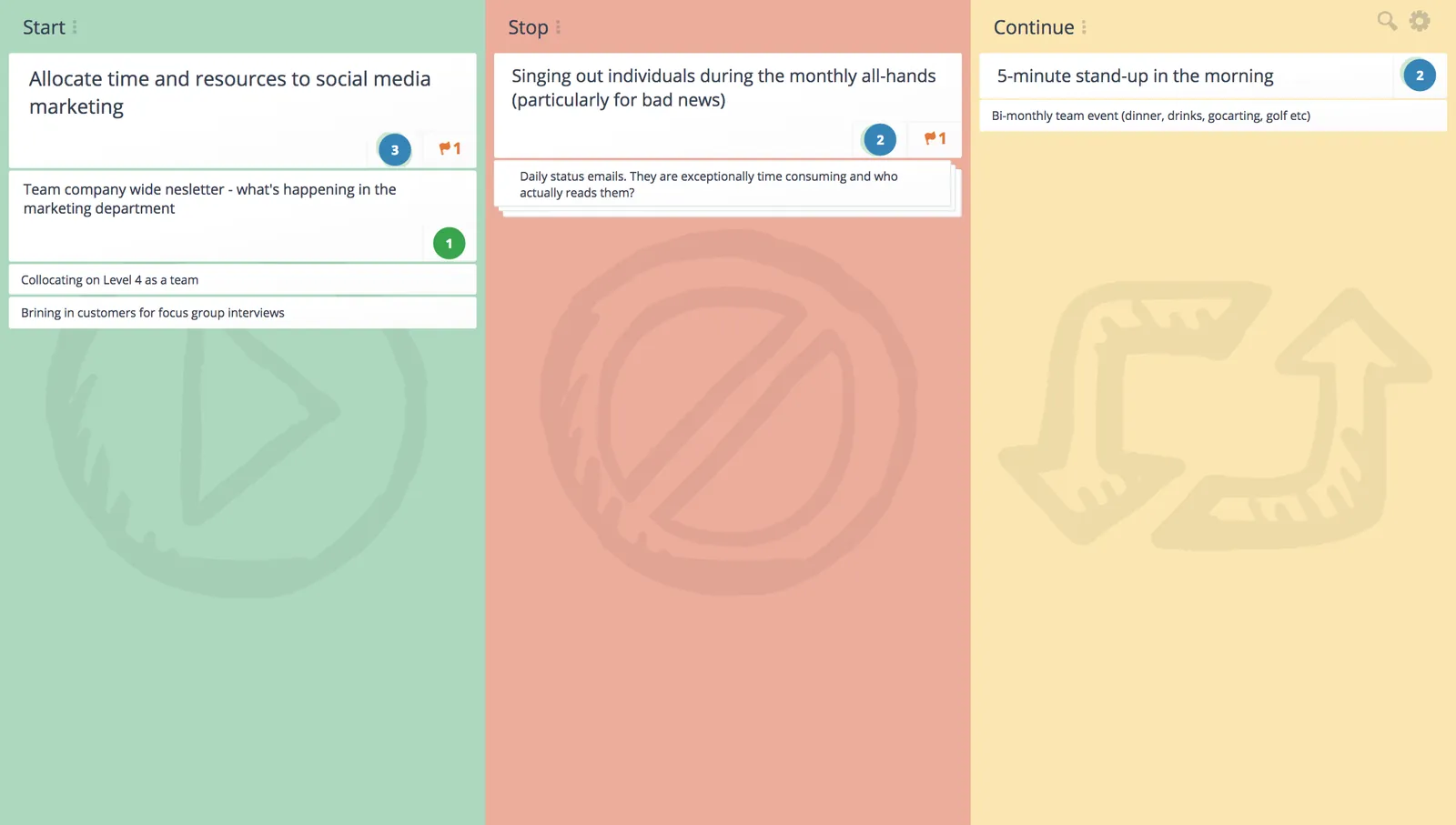
Start Stop Continue Retrospective is a simple way for teams to reflect on their recent experience and decide what they should change moving forward.
Start Stop Retrospective
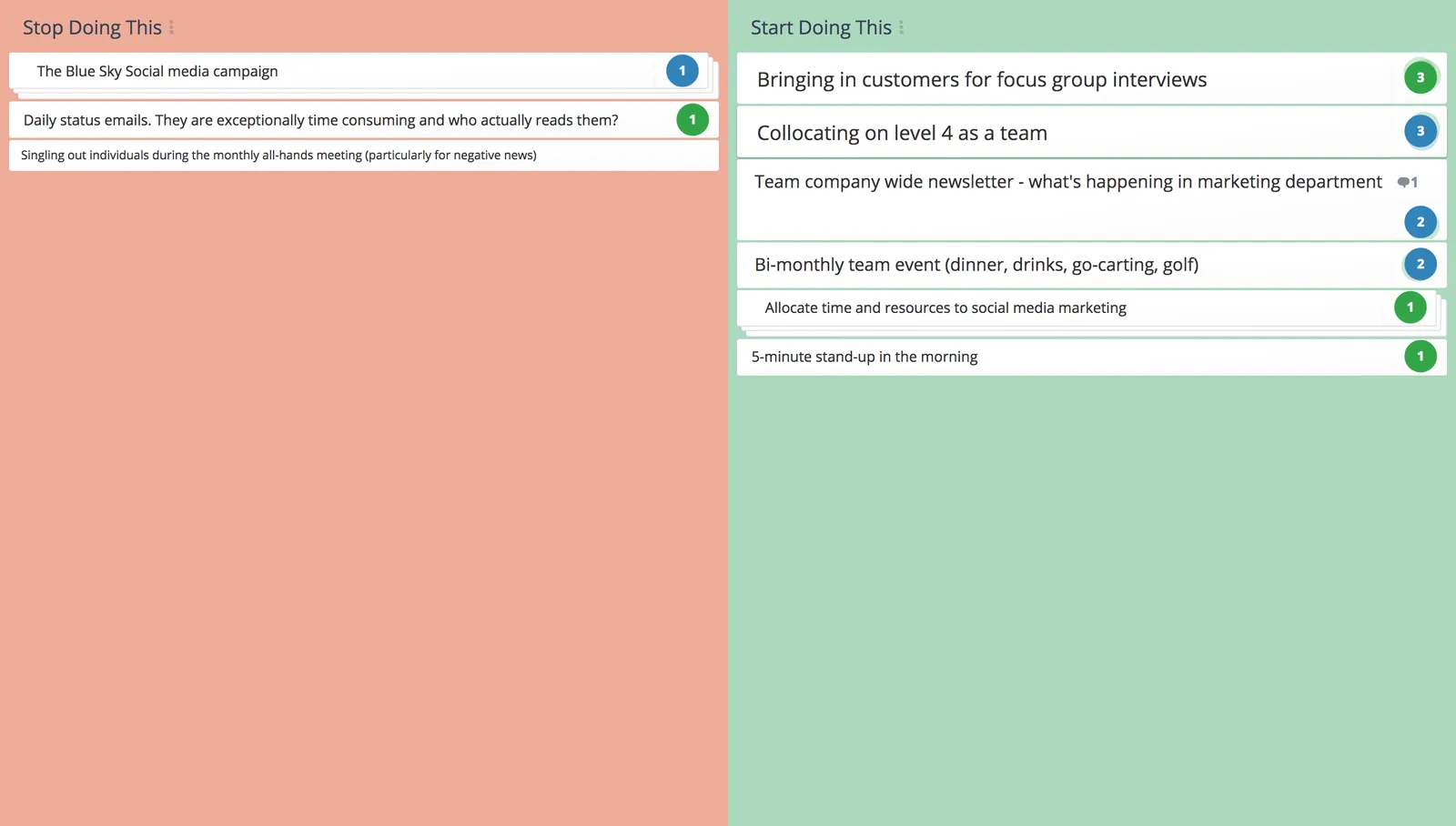
Start Stop Retrospective is an effective way for teams to reflect on their experiences and decide on what things they should change as they move forward.
Startup Canvas
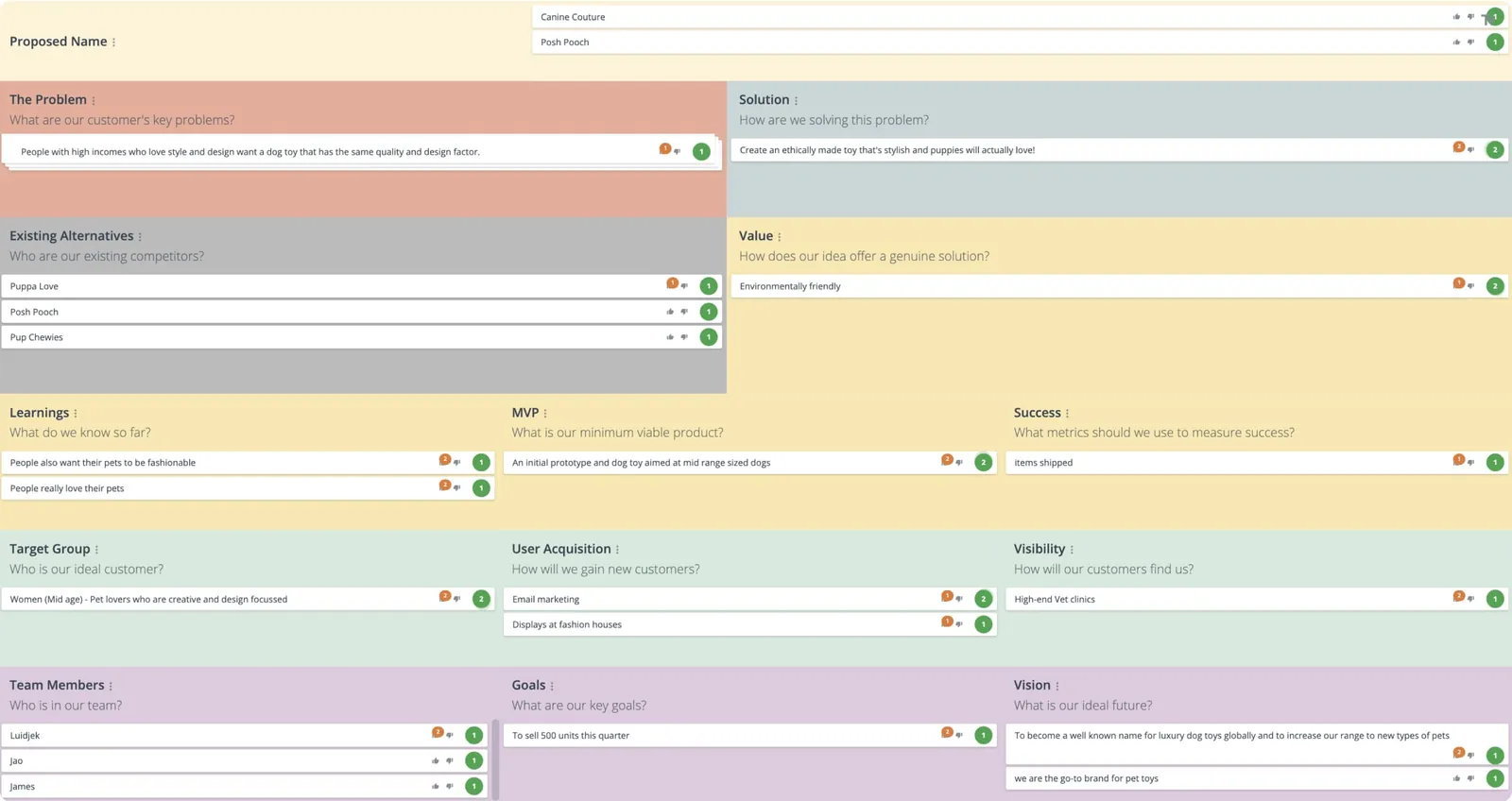
With the Startup Canvas, you'll have all the tools you need to turn your business idea into a thriving startup.
SWOT Analysis
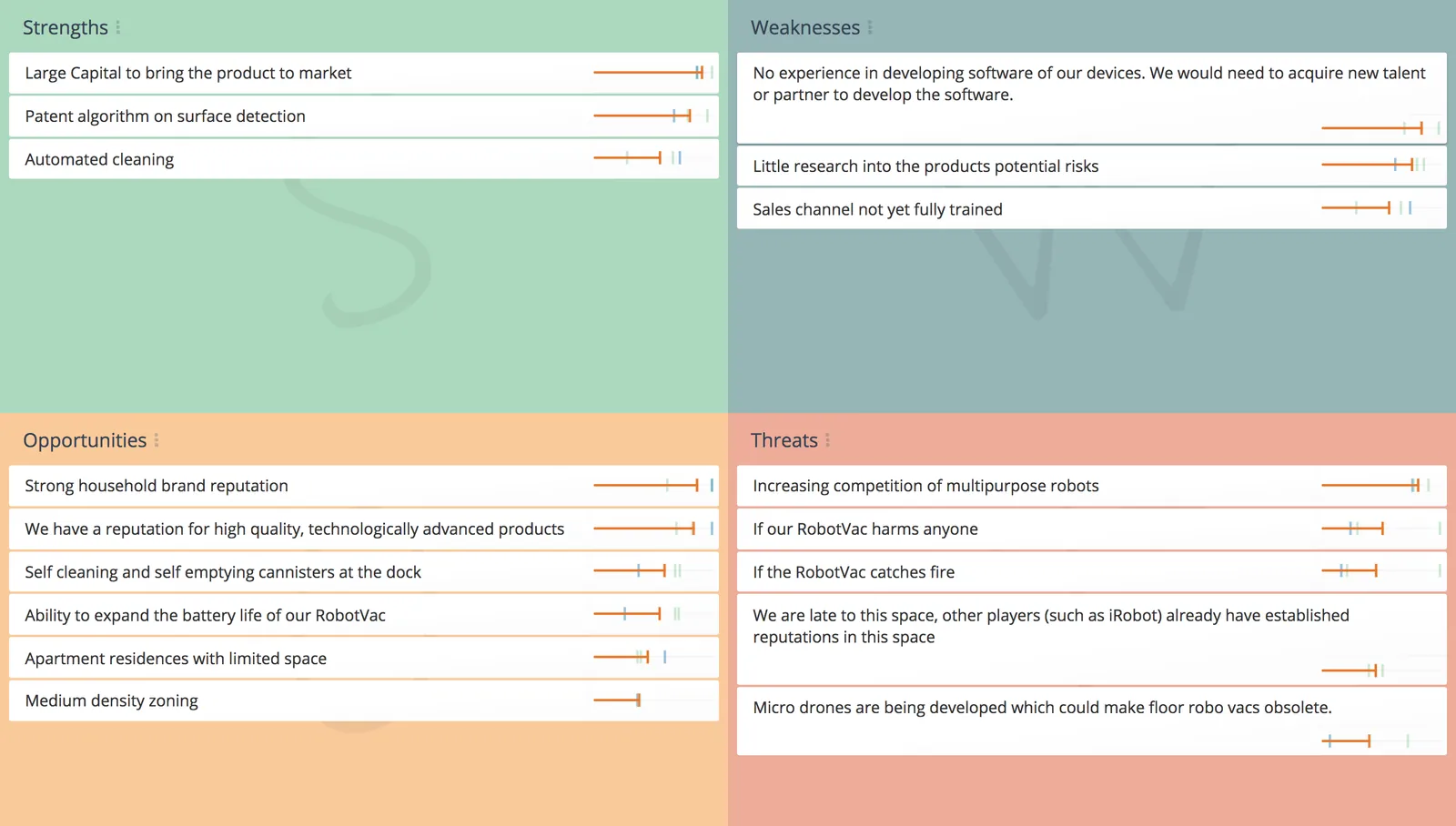
Collaborative SWOT analysis template to map strengths, weaknesses, opportunities and threats. Live input, examples, export-ready results.
T-chart
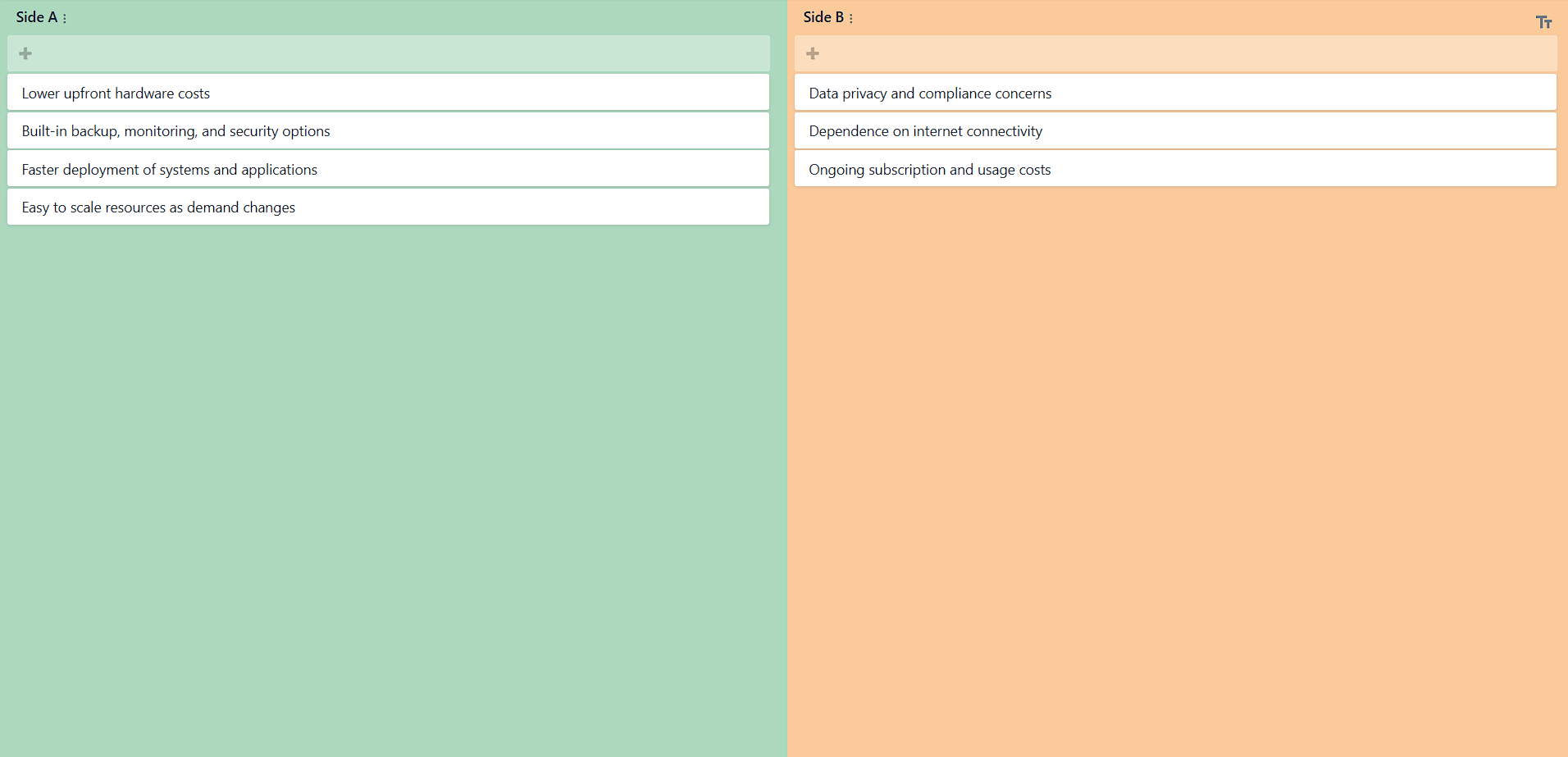
A T-chart is a two-column graphic organizer for comparing two sides: pros and cons, before and after, cause and effect. Build one live with your group.
Team Canvas
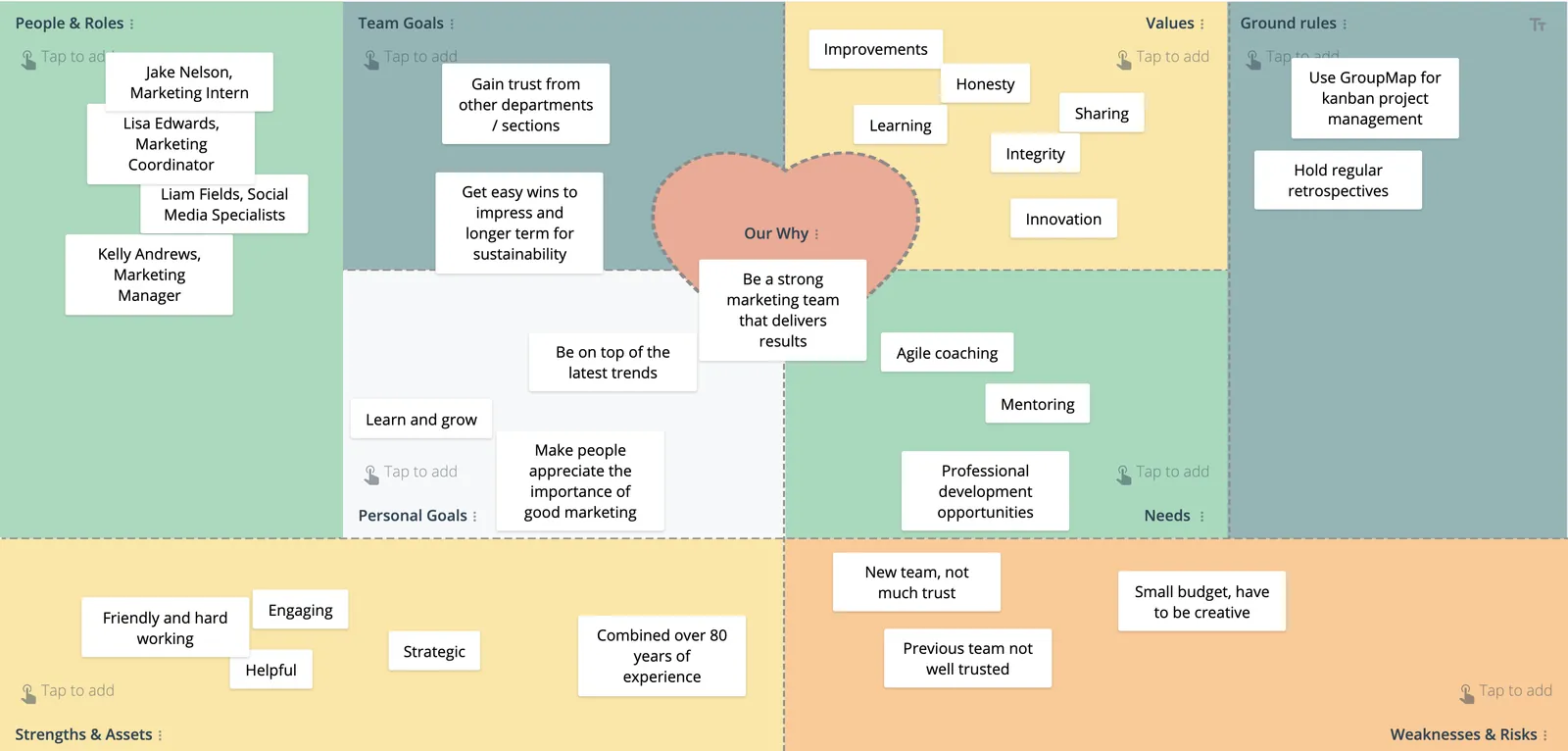
The Team Canvas was firstly developed by Alex Ivanov and is designed to work through with your team to help teams function effectively.
Team Charter
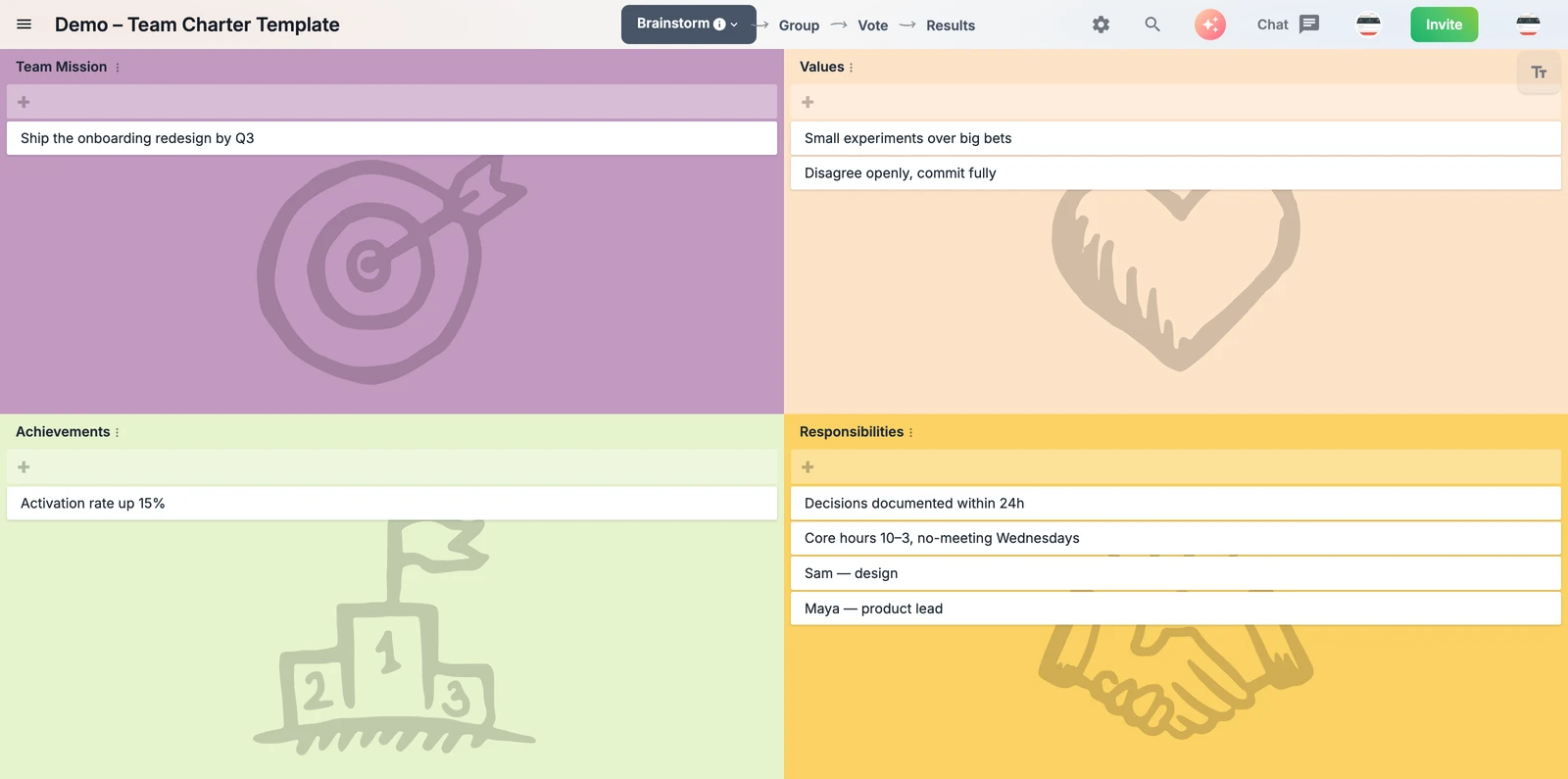
A team charter sets a team's purpose, values, roles, working agreements and success measures. See a worked example and build yours with our template.
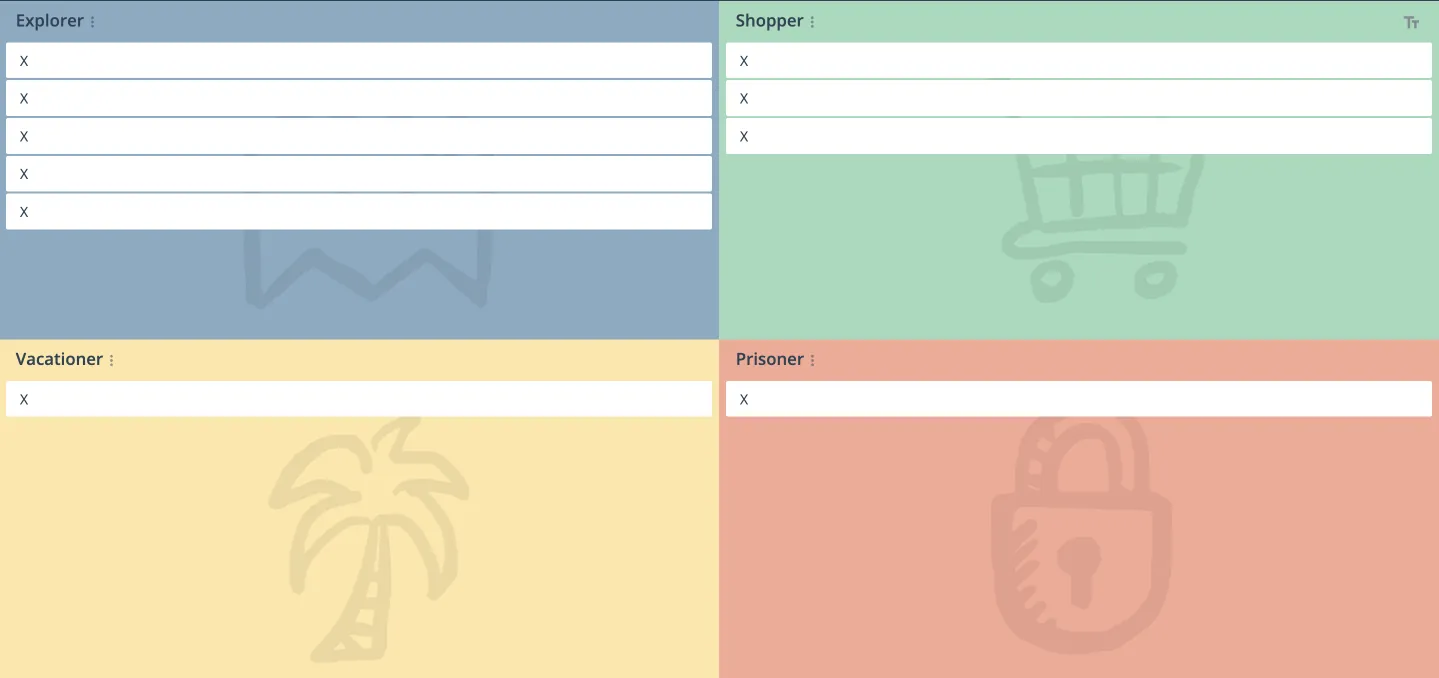
The ESVP Agile Retrospective Check In
Learn what Derby and Larsen's ESVP retrospective check-in is, how it works, and how to use the ESVP template to understand your team.
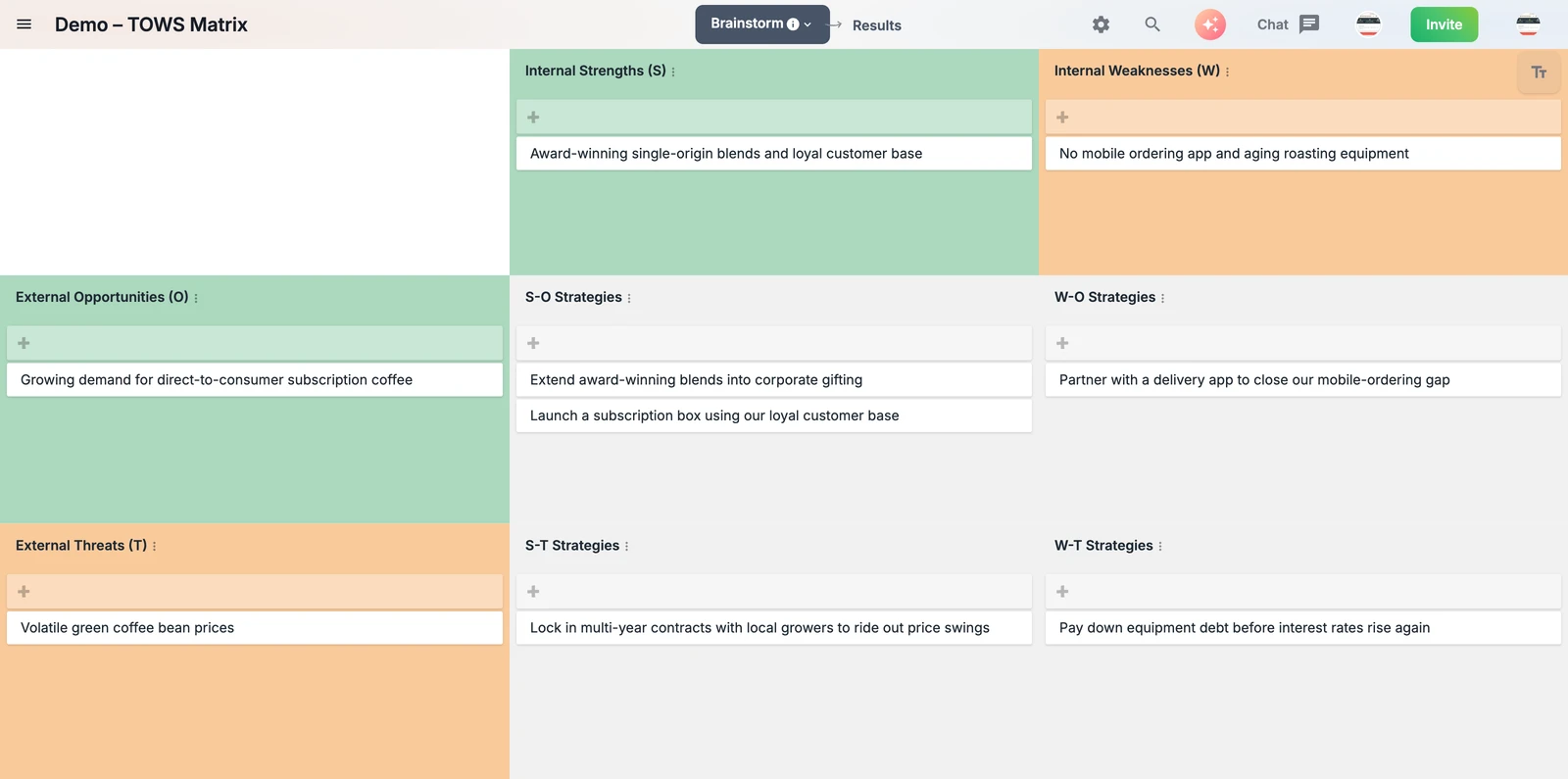
TOWS Matrix
The TOWS matrix turns a SWOT into action by pairing strengths, weaknesses, opportunities and threats into SO, ST, WO and WT strategies. See an example.
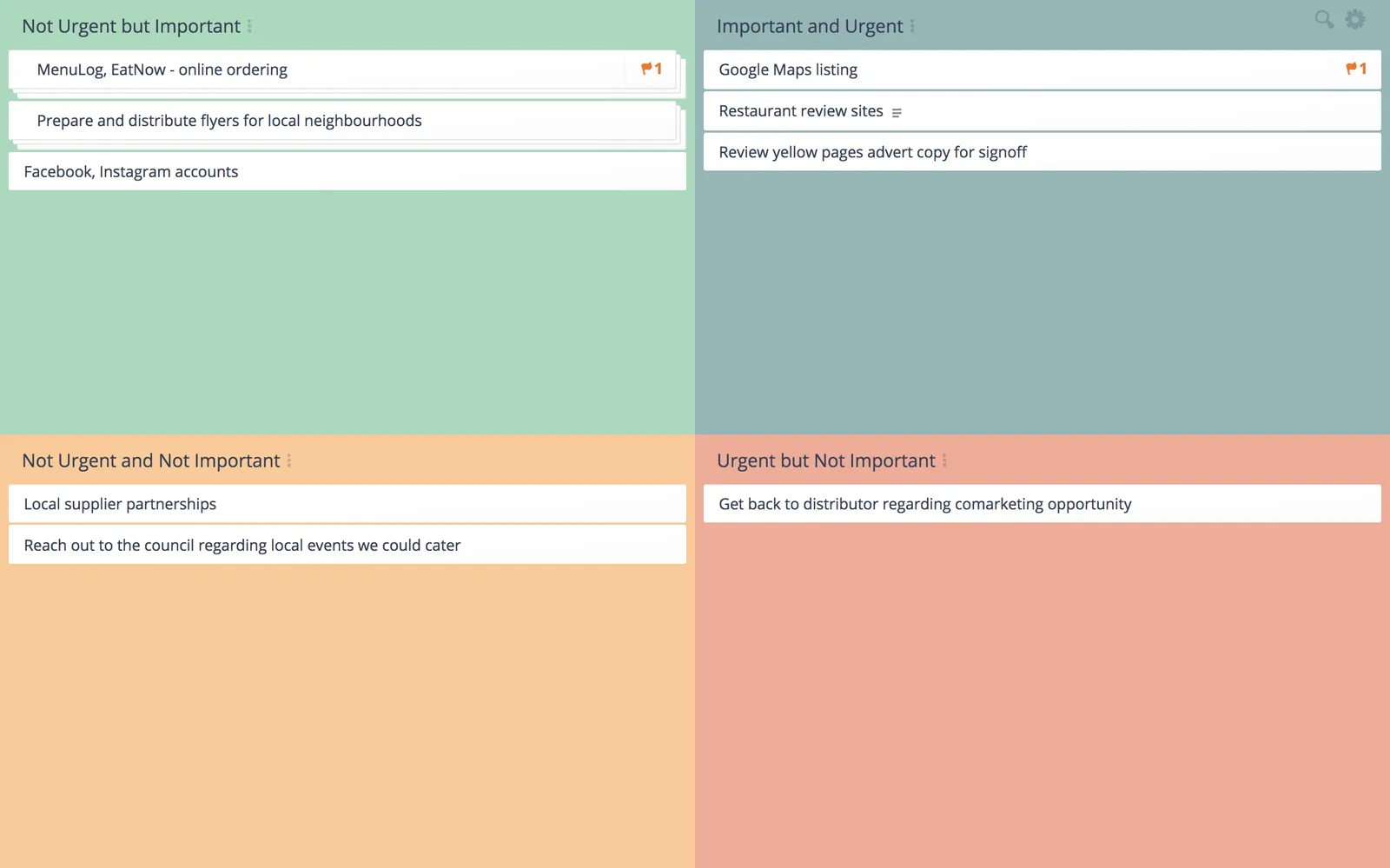
Urgent Important Matrix
Use the urgent important matrix (the Eisenhower chart) to sort tasks into four quadrants by urgency and importance, live with your team in GroupMap.
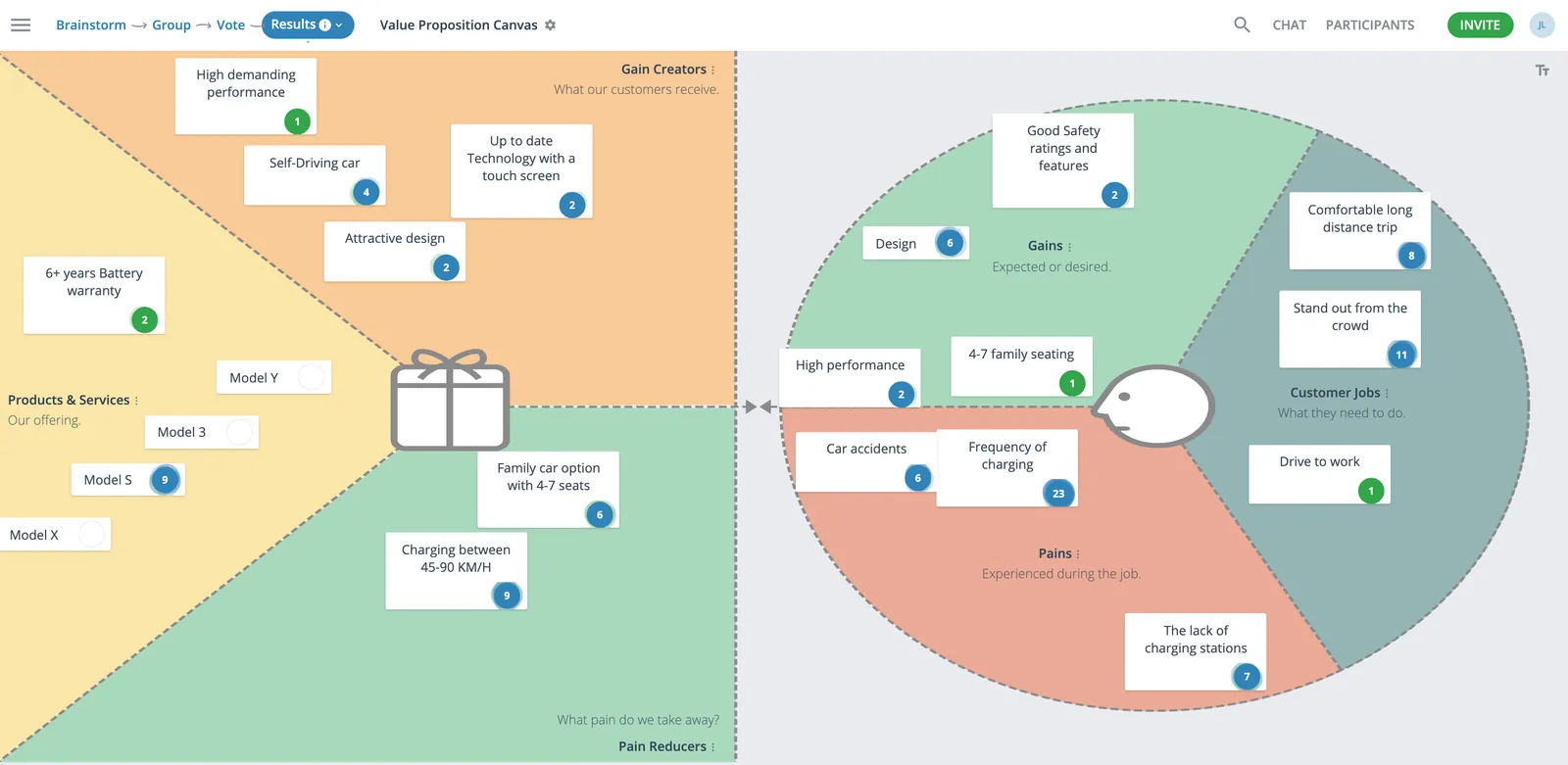
Value Proposition Canvas
Map customer jobs, pains and gains with a value proposition canvas template. Capture ideas together, align product fit, and export results.
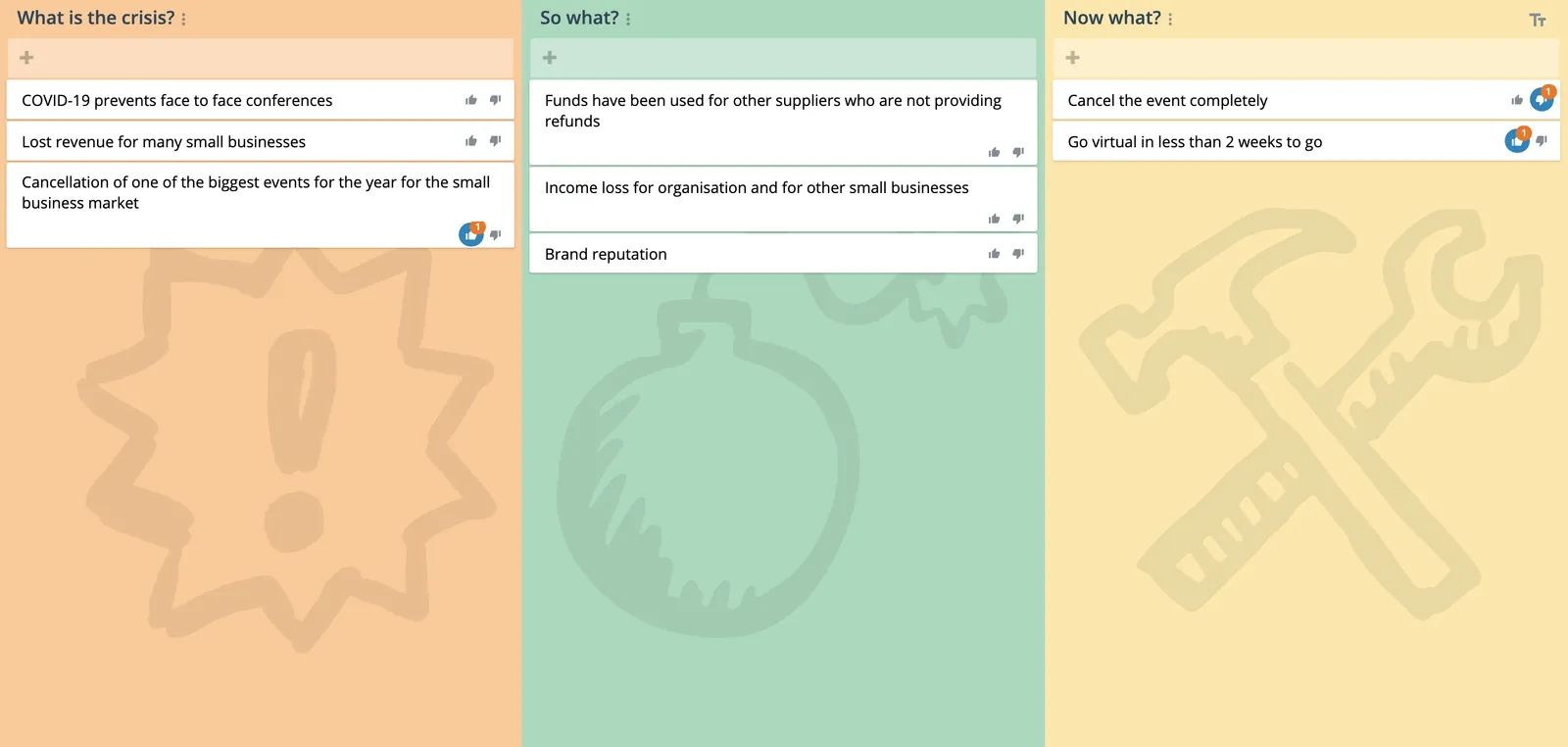
What, So What, What Now?
What So What Now What is a reflective model that helps teams evaluate a shared experience or a recent event. GroupMap customizable template.
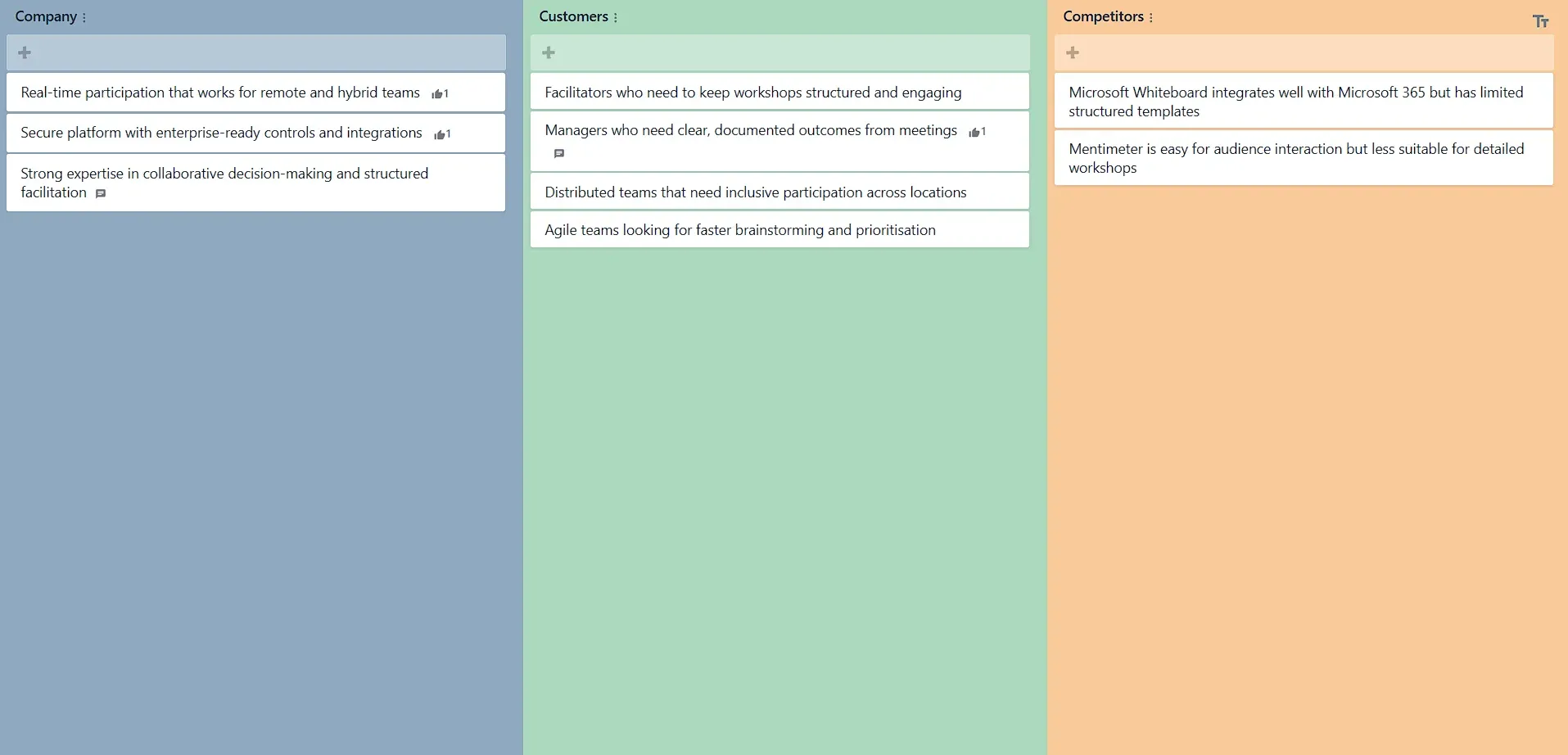
The 3Cs framework (Company, Customers, Competitors) finds the strategic sweet spot where you meet customer needs better than rivals. See an example.
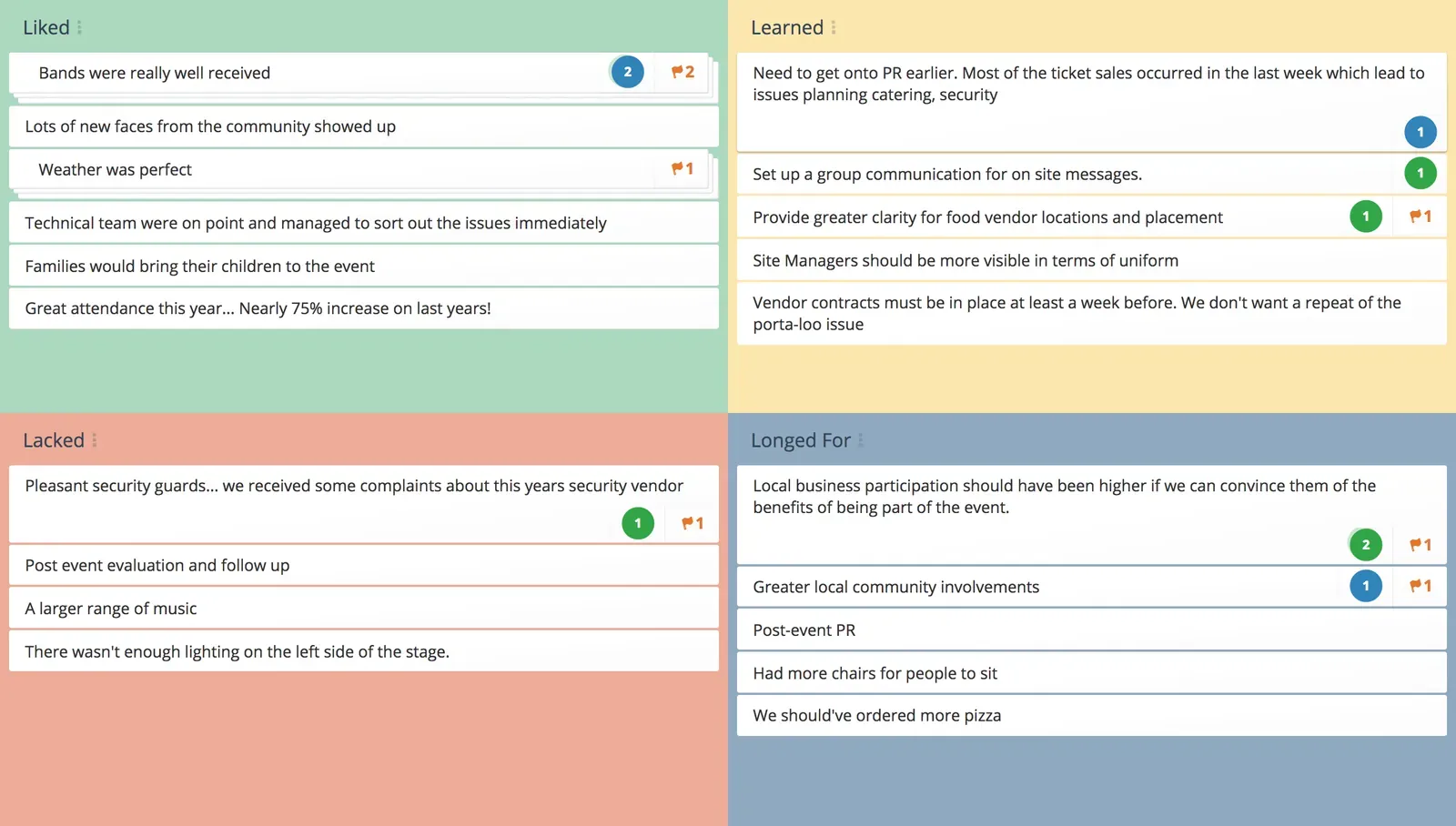
The 4Ls Retrospective is great tool for agile teams at the end of an iteration to identify opportunities for improvement via four simple questions.
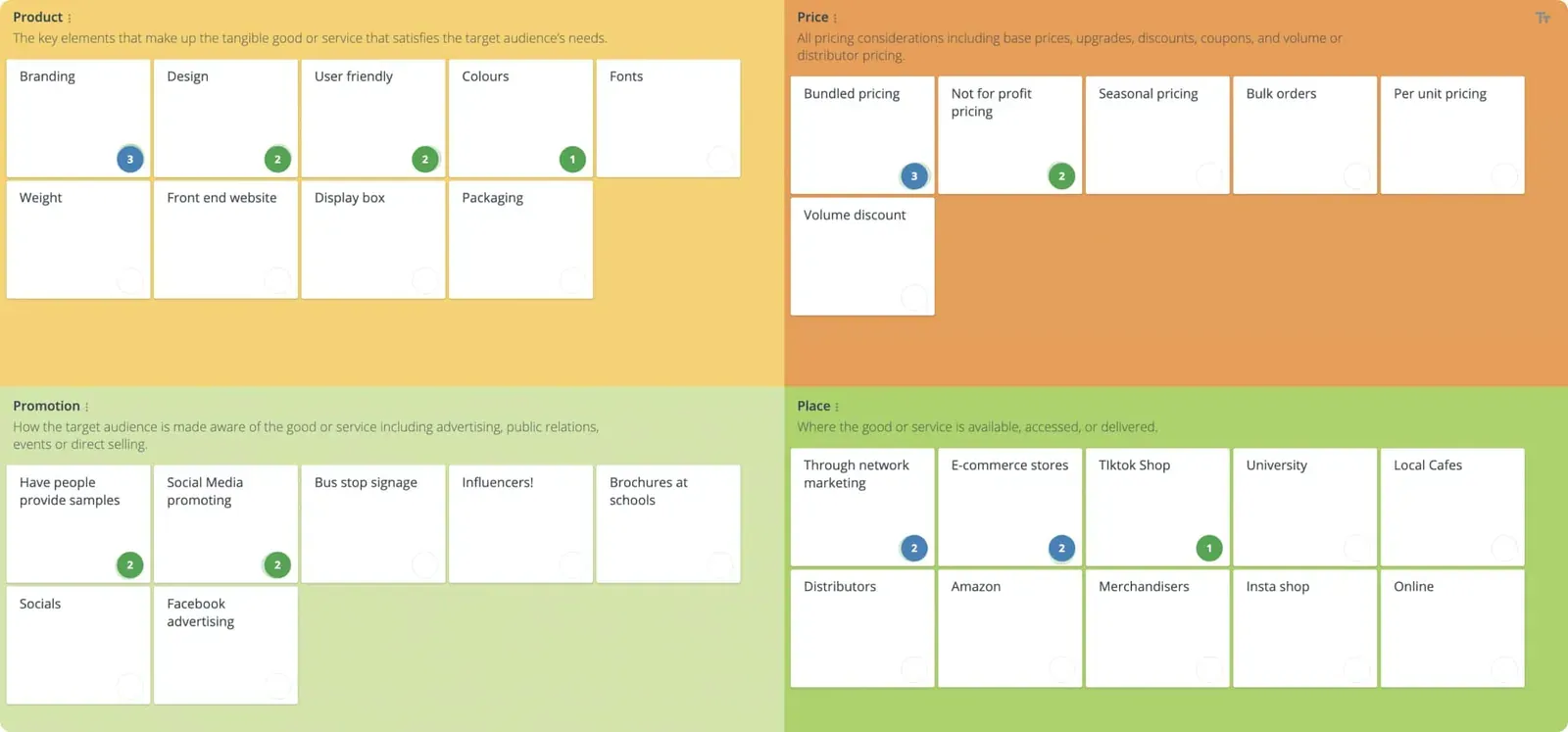
Discover the 4 key elements of a winning marketing strategy on our 4P Marketing Mix template.
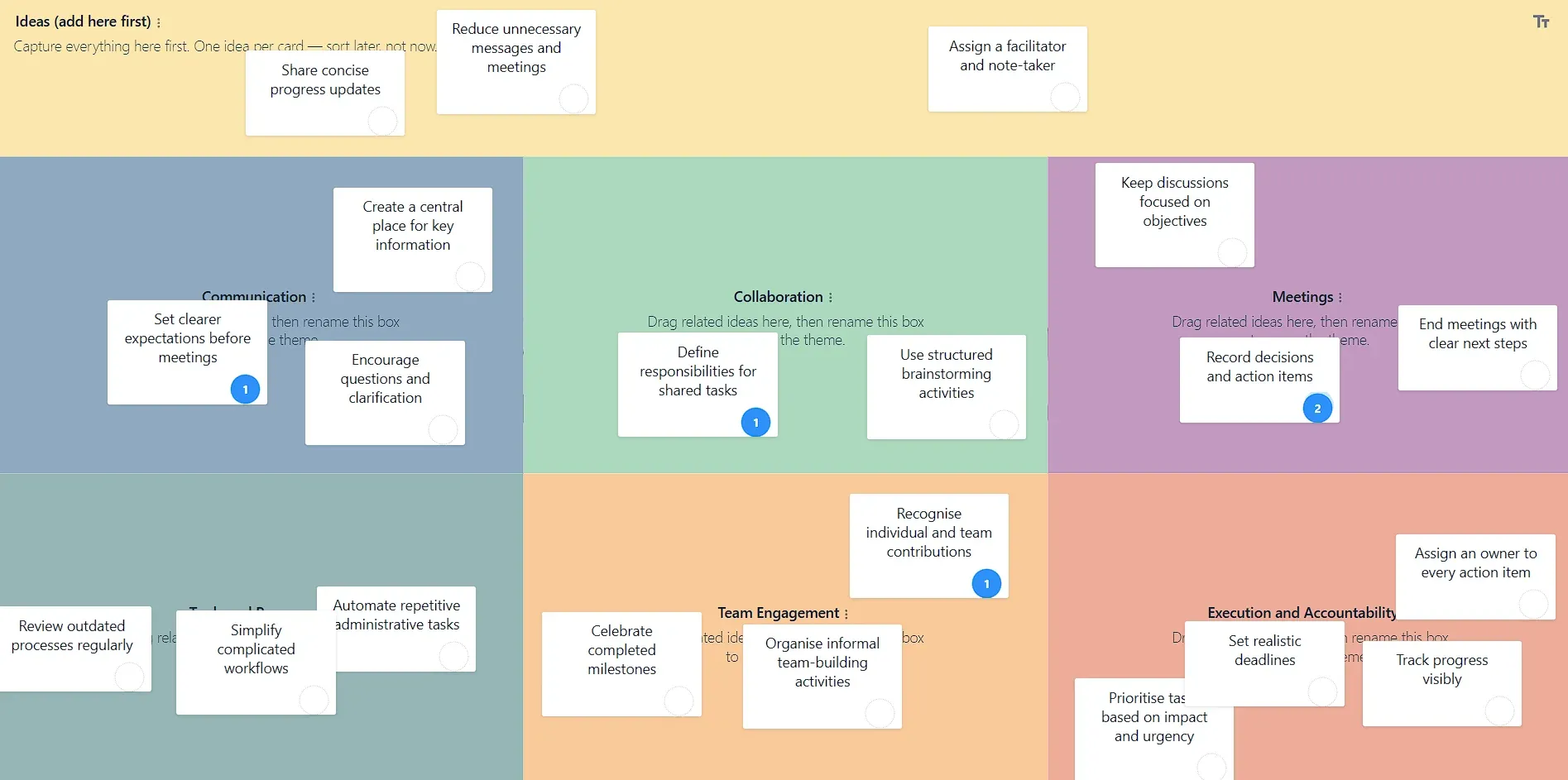
An affinity diagram groups many ideas into natural themes. Learn how to run an affinity mapping session, see an example, and cluster ideas with your team.
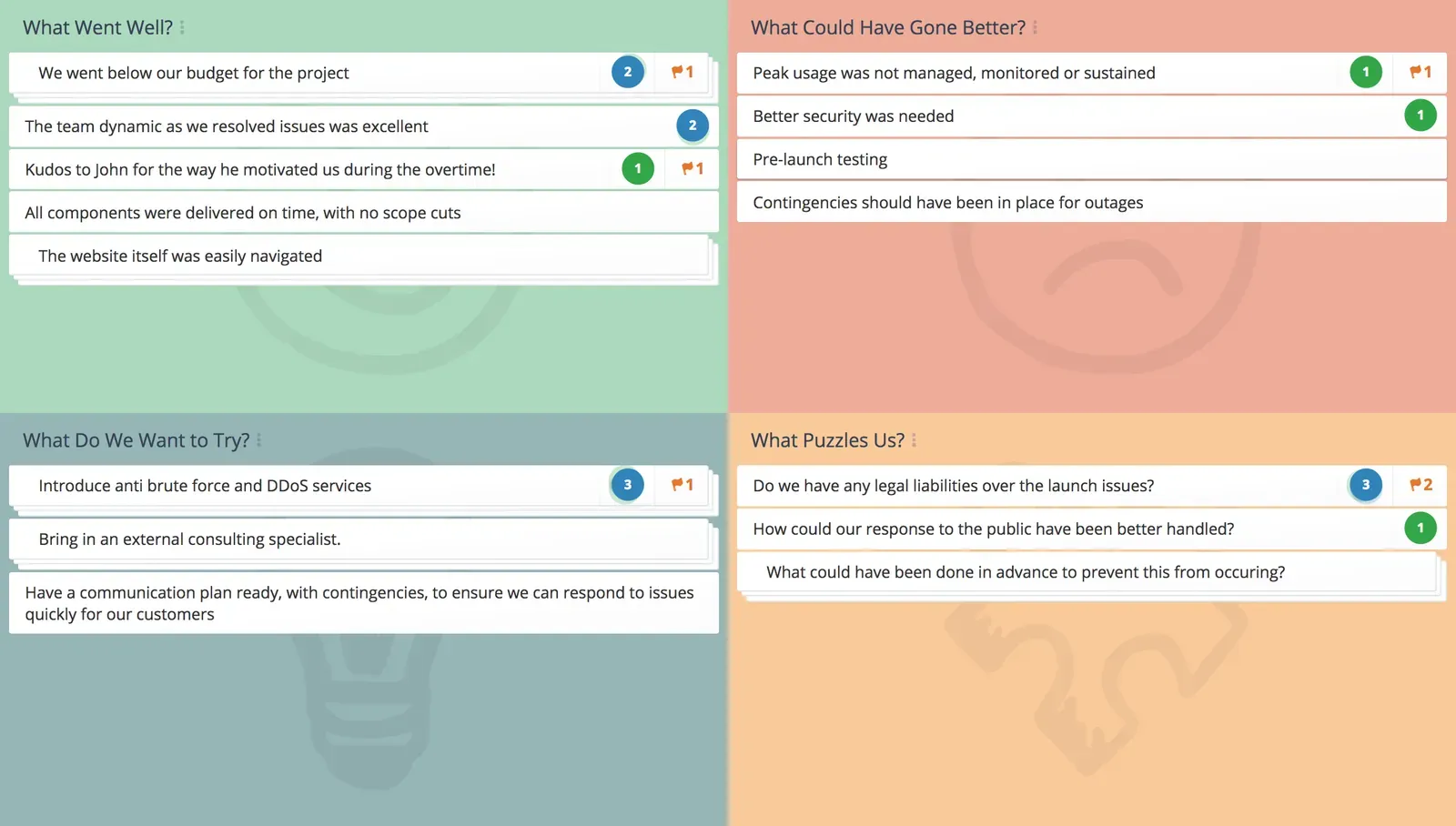
GroupMap’s online retrospective tool helps you identify what went well, not so well, puzzles and ideas. Get started with our Agile Retrospective Template.
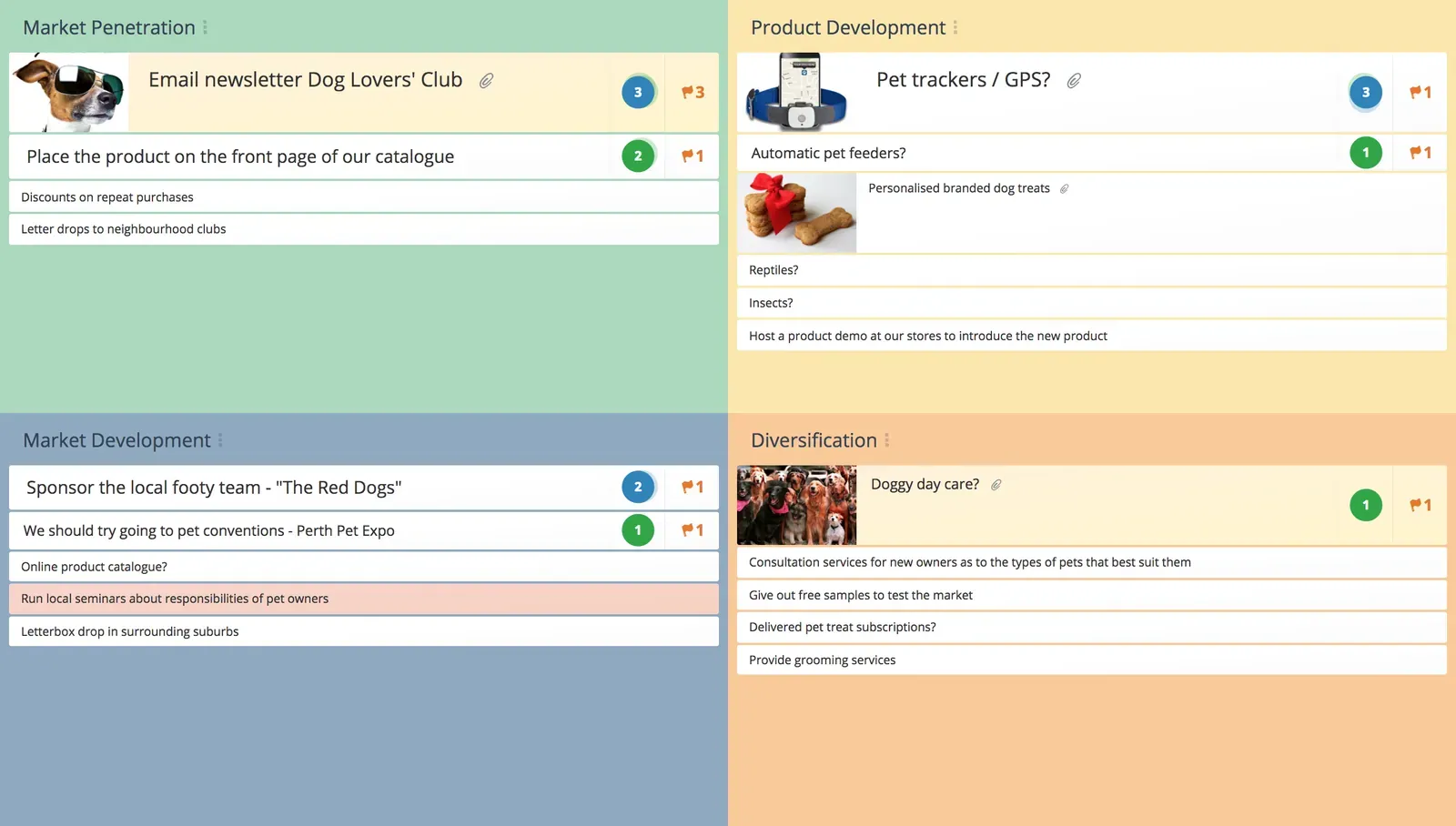
The Ansoff Matrix helps you strategies for future product growth, considering the market and product direction. Get started with our Ansoff Matrix Template.
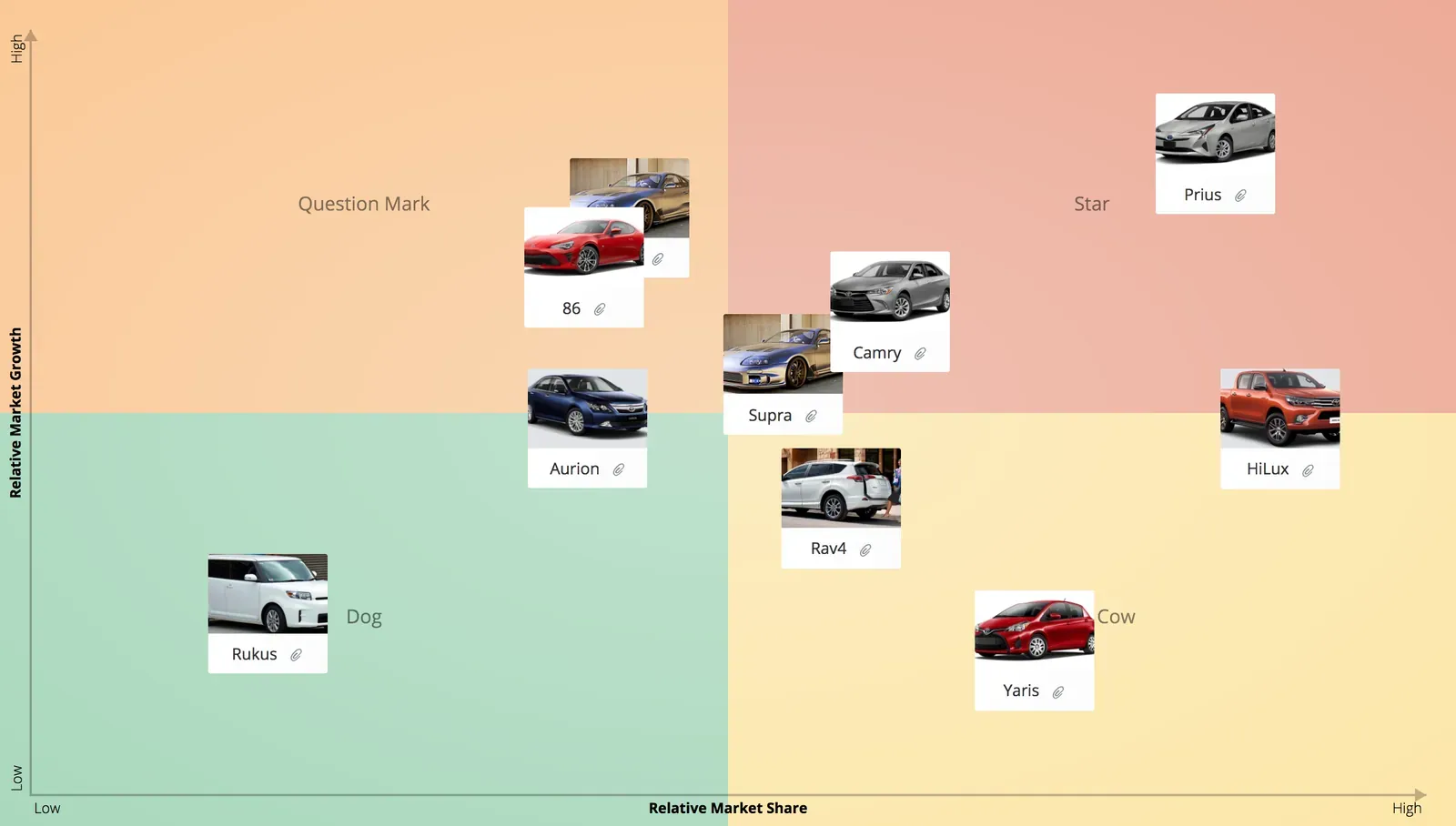
The BCG matrix (Boston matrix) sorts products into Stars, Cash Cows, Question Marks and Dogs. See a worked company example and build yours with our template.
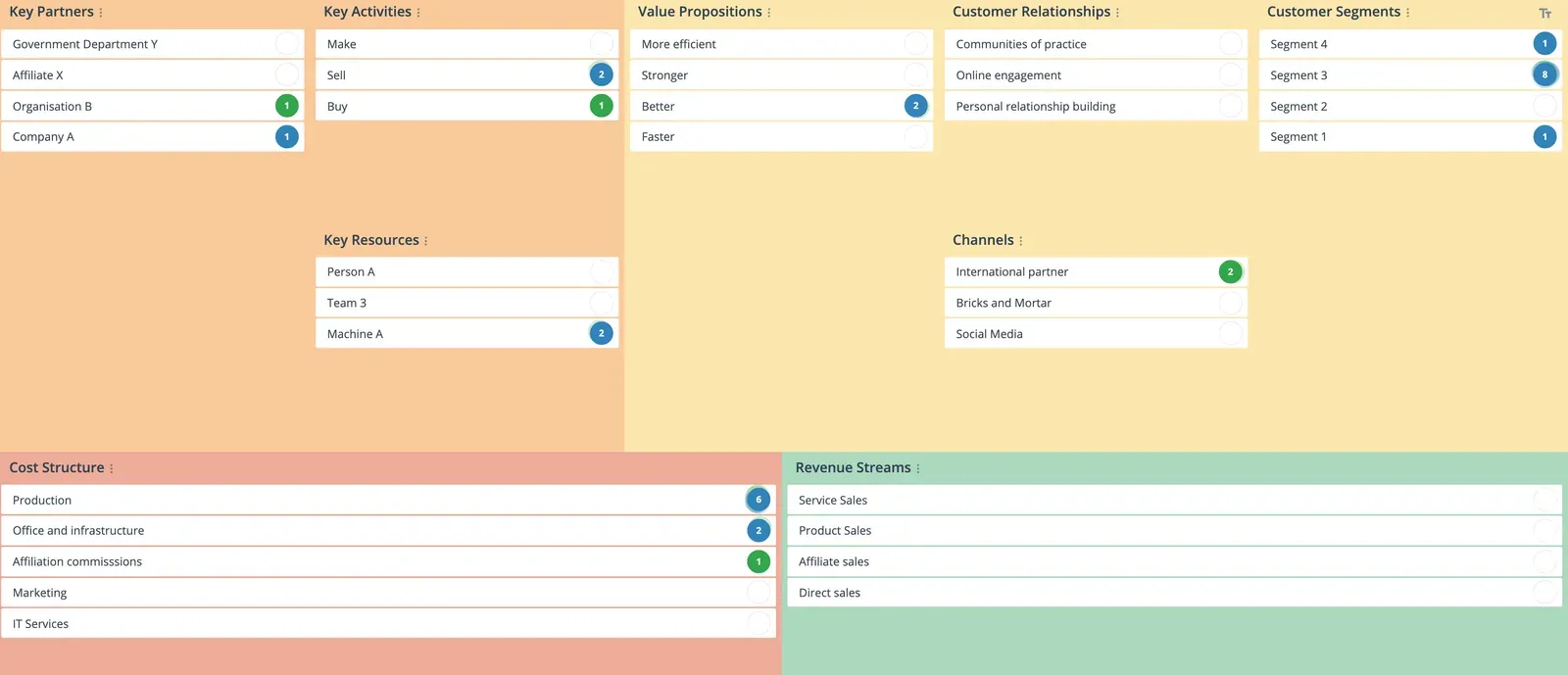
The business model canvas is a visual chart documenting key aspects of new or existing businesses, acting as an organizational blueprint.
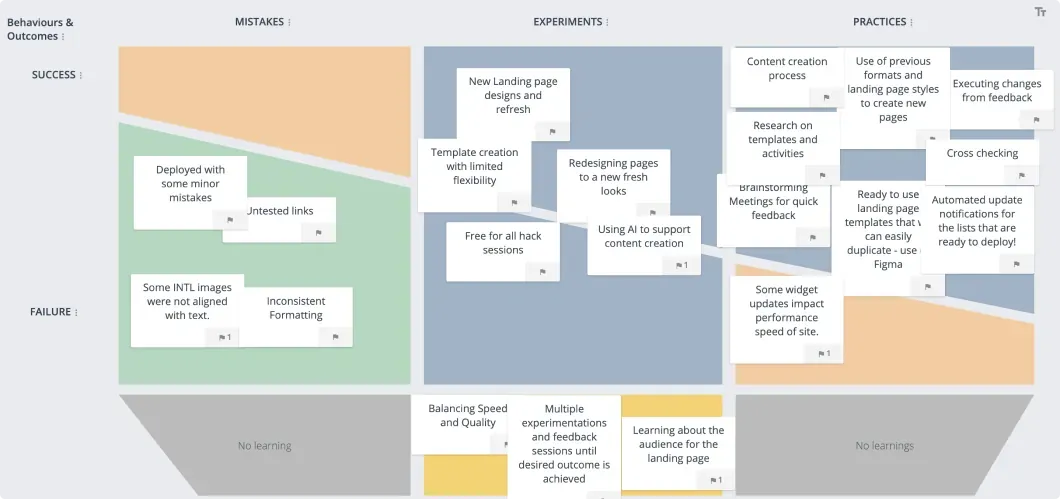
Use the Management 3.0 Celebration Grid to celebrate successes, recognize effort, and turn mistakes and experiments into shared learning with your group.
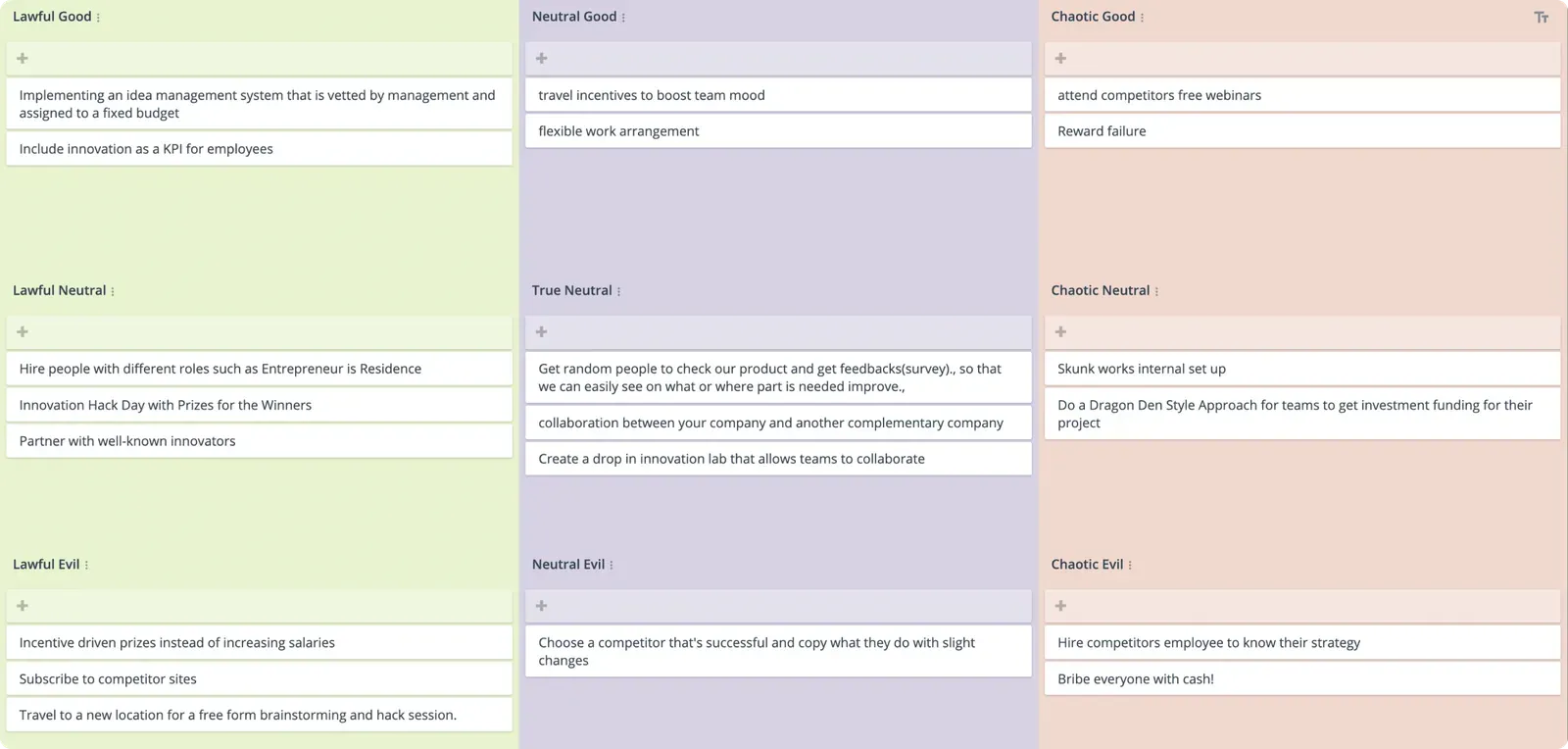
Free alignment chart maker: build a 3×3 lawful-to-chaotic, good-to-evil morality chart online and fill it in live with your team or group in GroupMap.
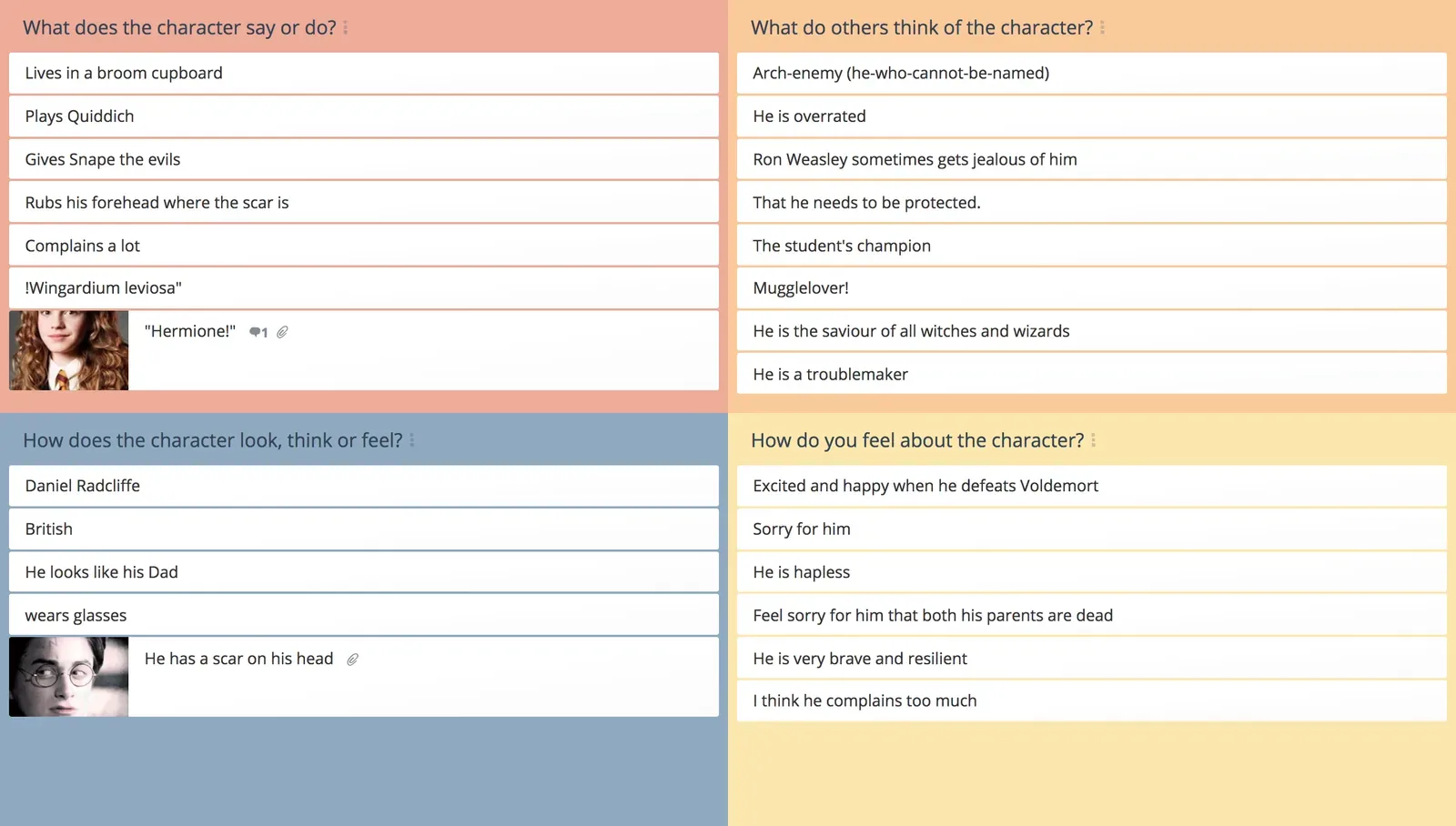
Use the Character Traits Analysis template in class. Students map what a character says and does and how they affect others, then share and discuss.
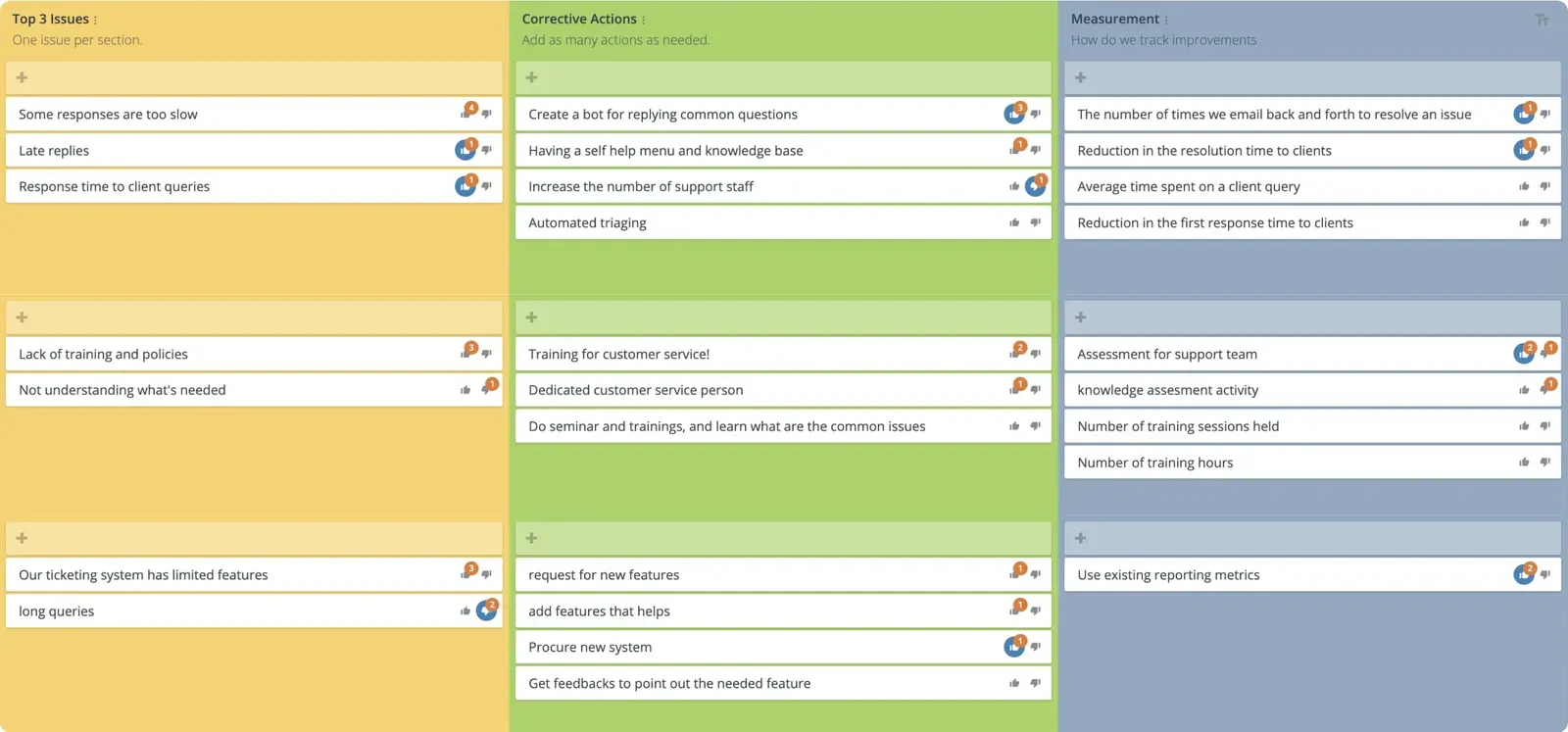
Address problems with a Corrective Action Plan that helps your team move forward. Try it now.
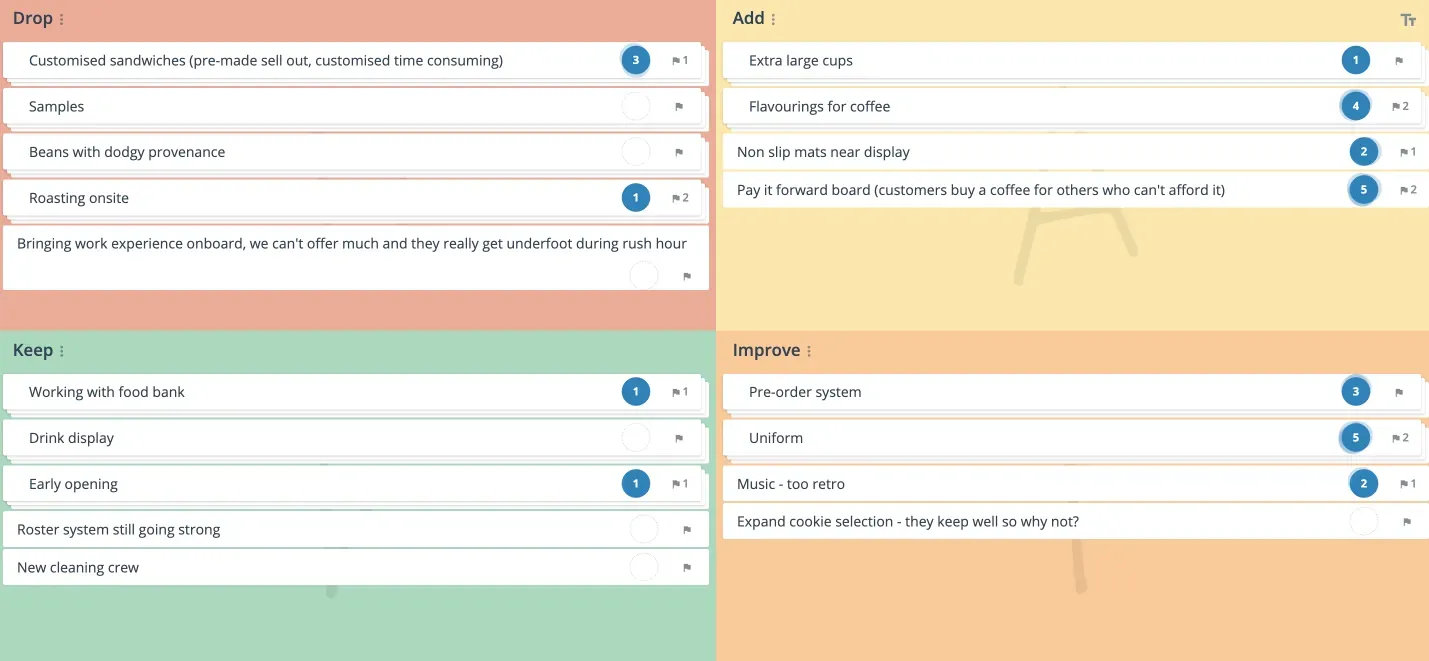
Learn what a DAKI agile retrospective is, its two areas of focus, and how to run the template to drive continuous improvement of your product.
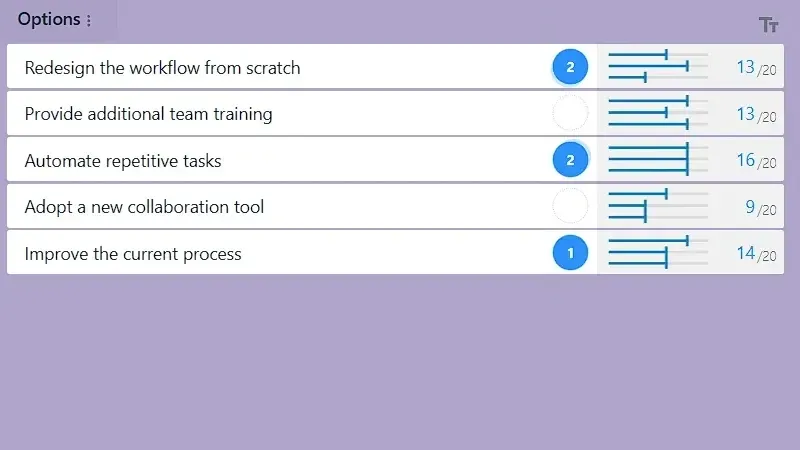
A decision matrix scores options against weighted criteria to reveal the best choice. See a worked example and build a weighted decision matrix with your team.
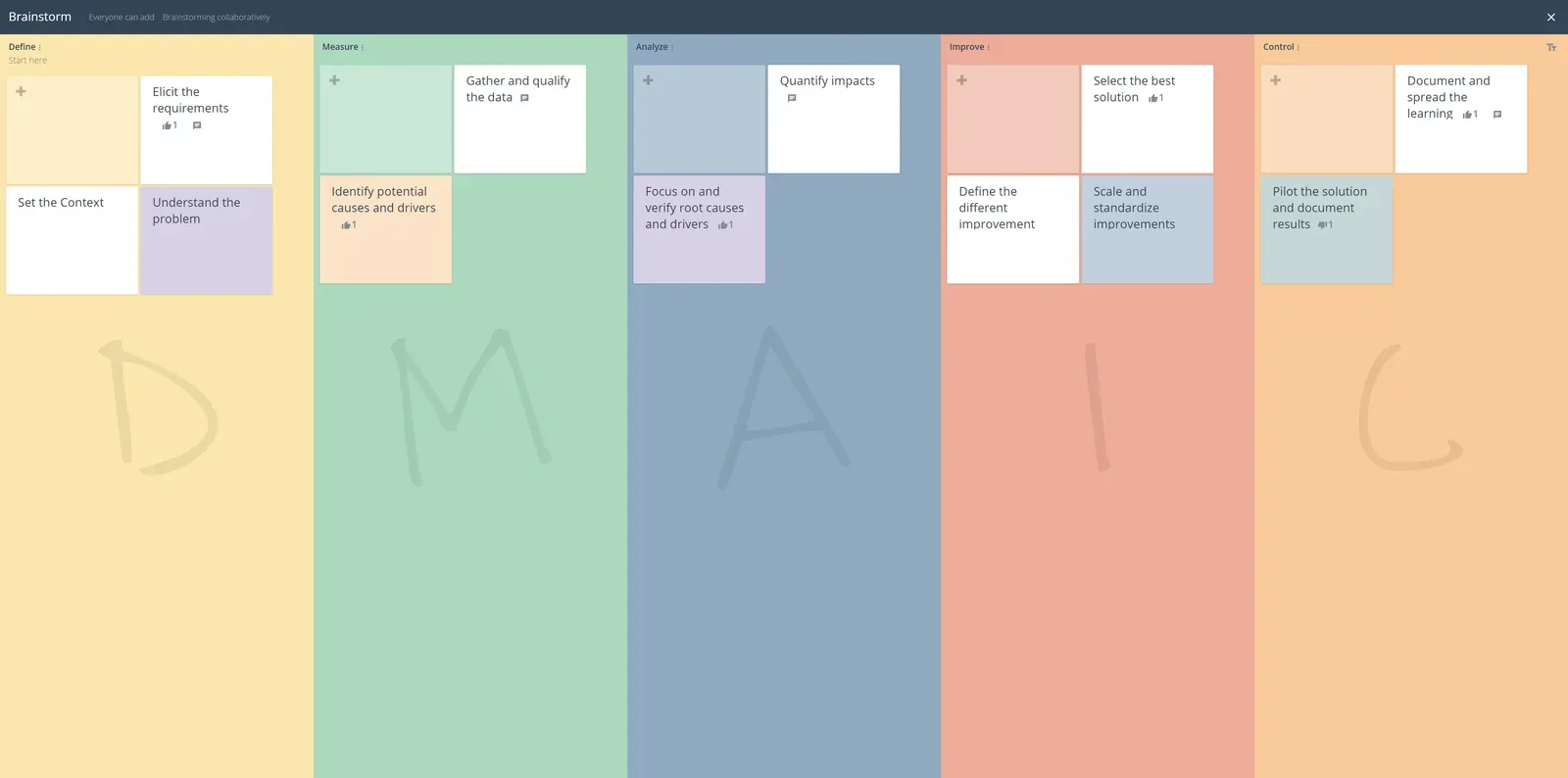
Work through a DMAIC Analysis with a group: define, measure, analyze, improve and control one key problem, building consensus with voting at every step.
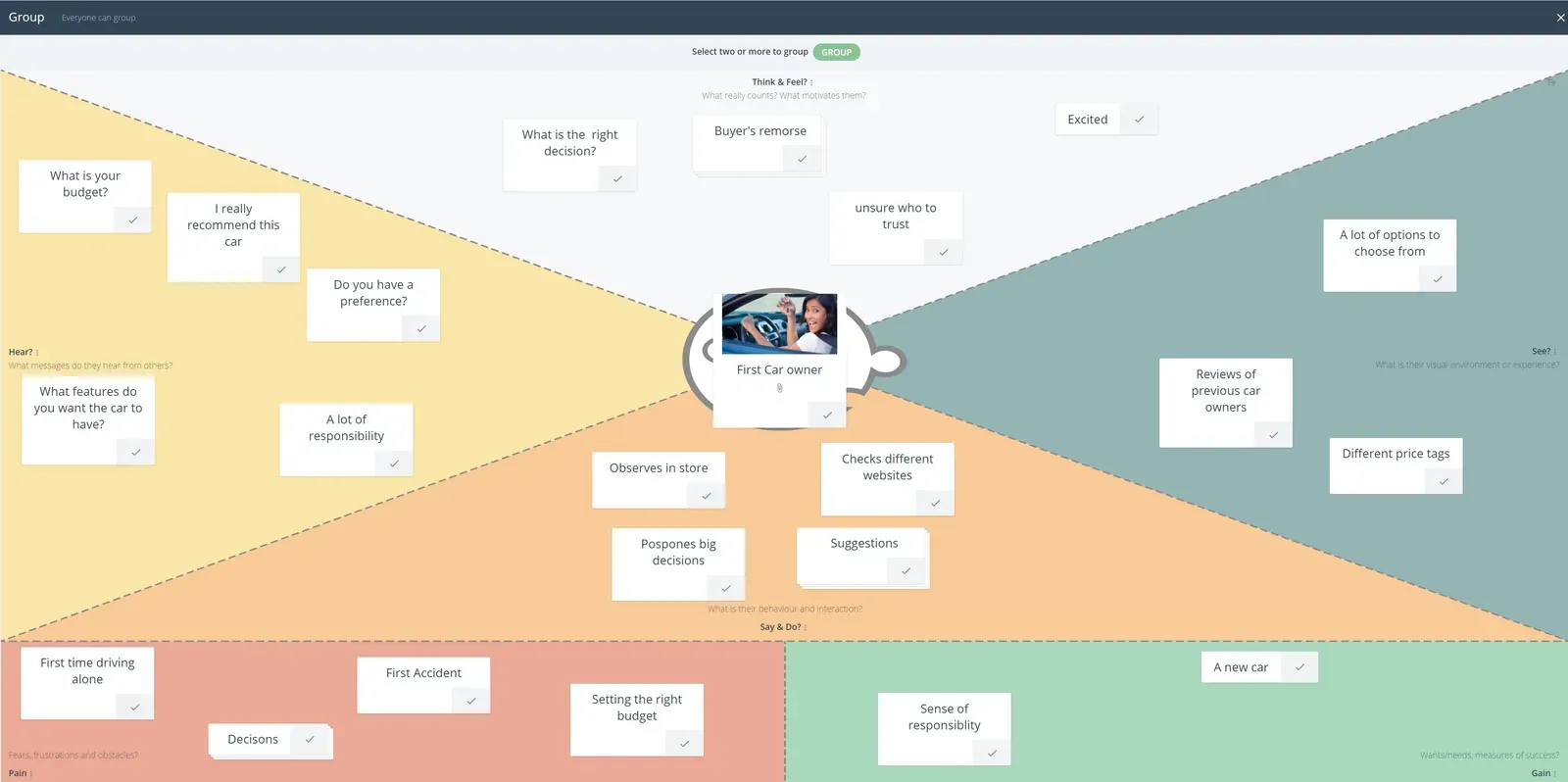
Use the Empathy Map template to capture one customer persona's pains, gains and needs, so a group builds a shared picture before designing for them.
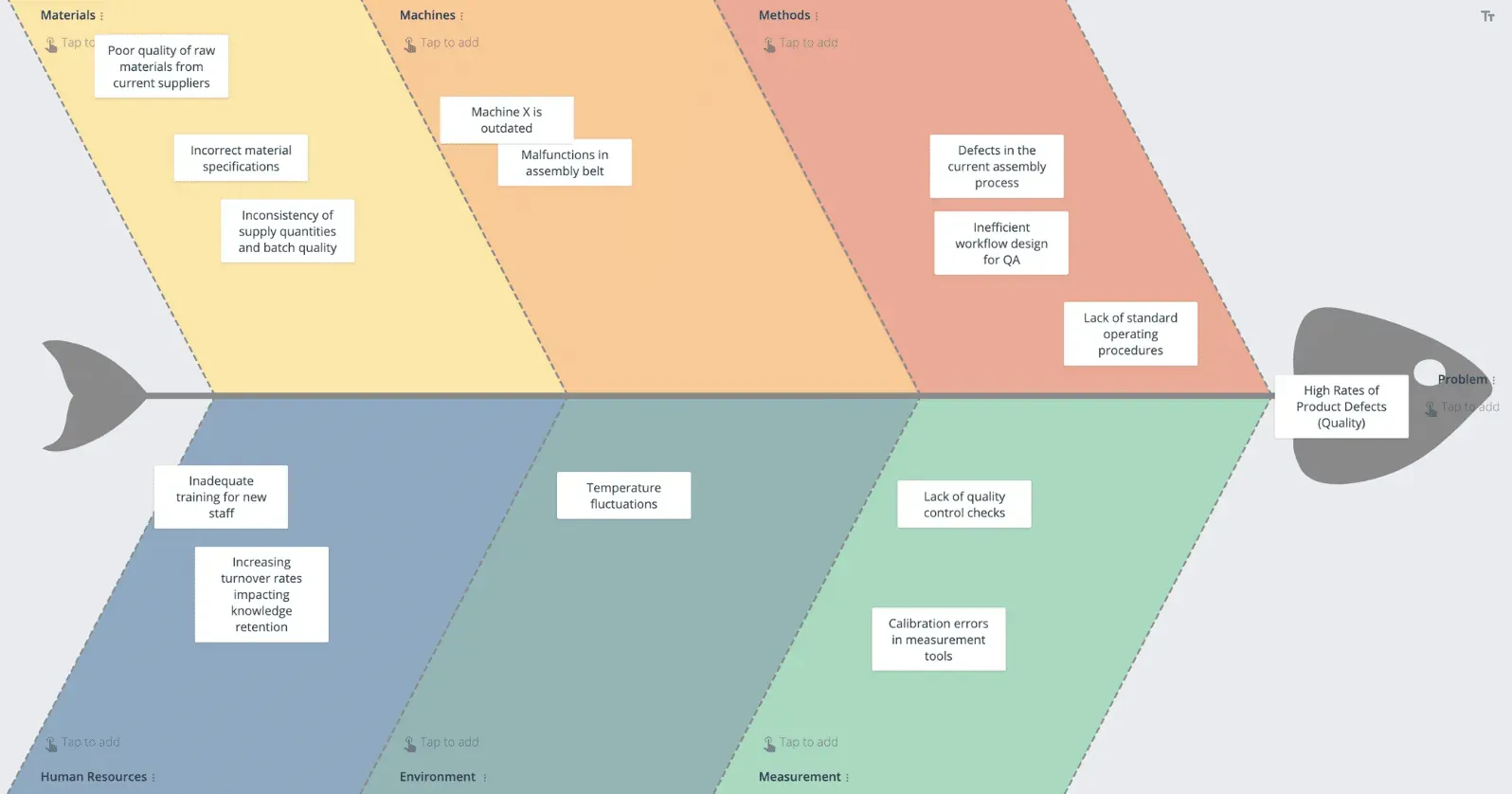
Run a Fishbone (Ishikawa) diagram with a group to sort possible causes into categories, vote on the root causes to tackle, and agree actions with owners.
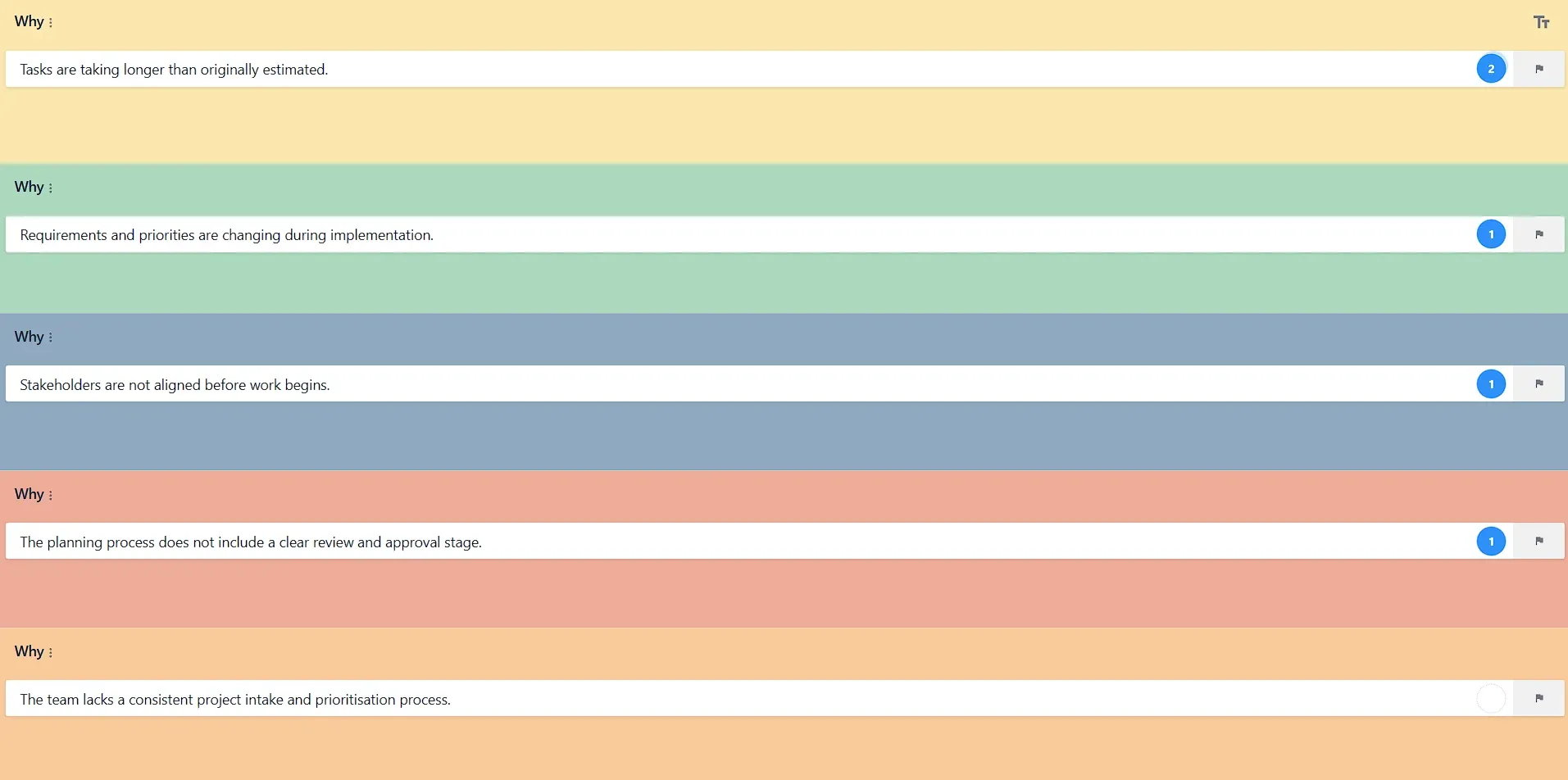
The 5 whys is a root cause analysis technique that asks 'why?' repeatedly to drill past symptoms to the real cause. See a worked example and try our template.
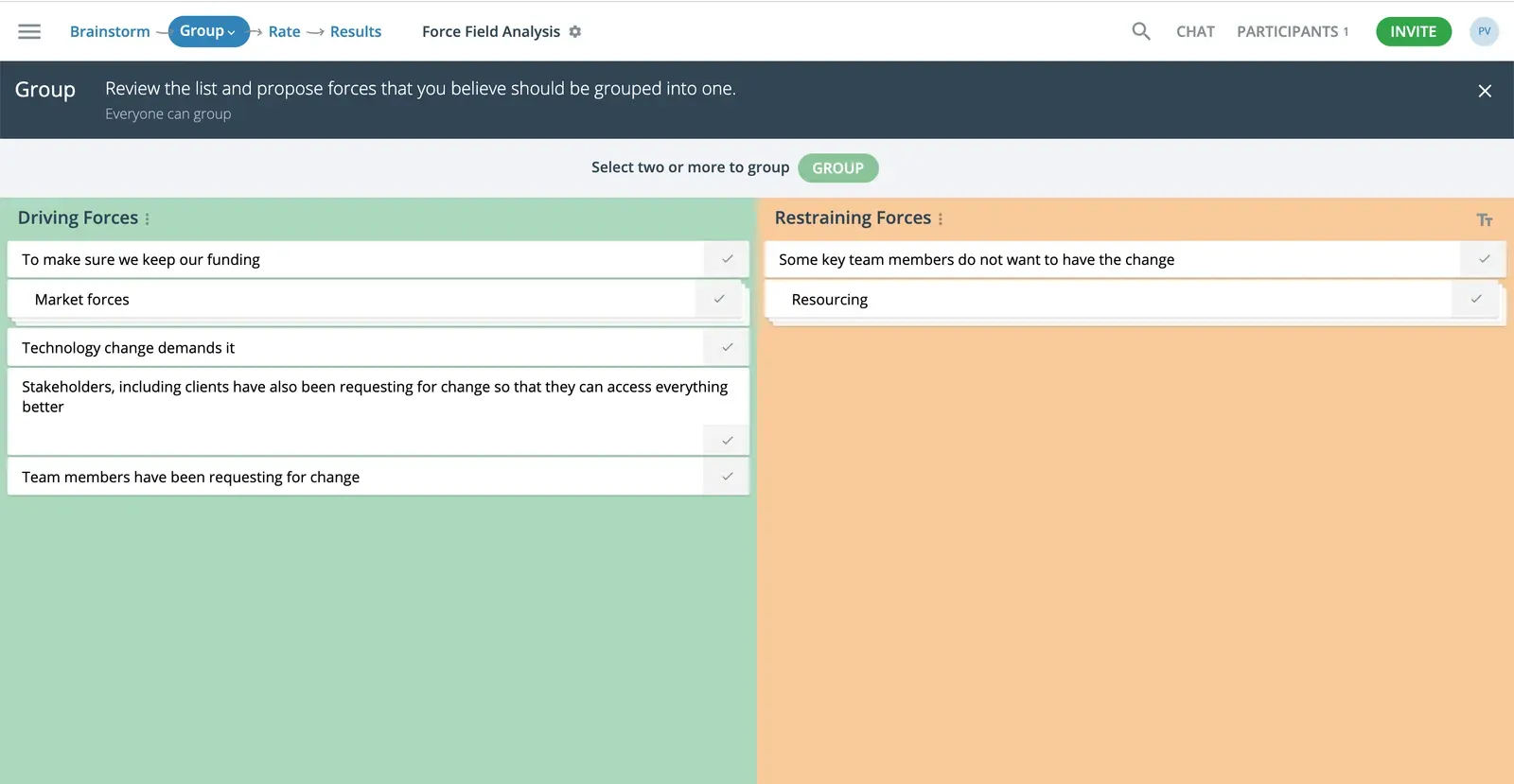
Force Field Analysis, Kurt Lewin's change model, maps the driving and restraining forces behind a decision. Run one live with your team using our template.
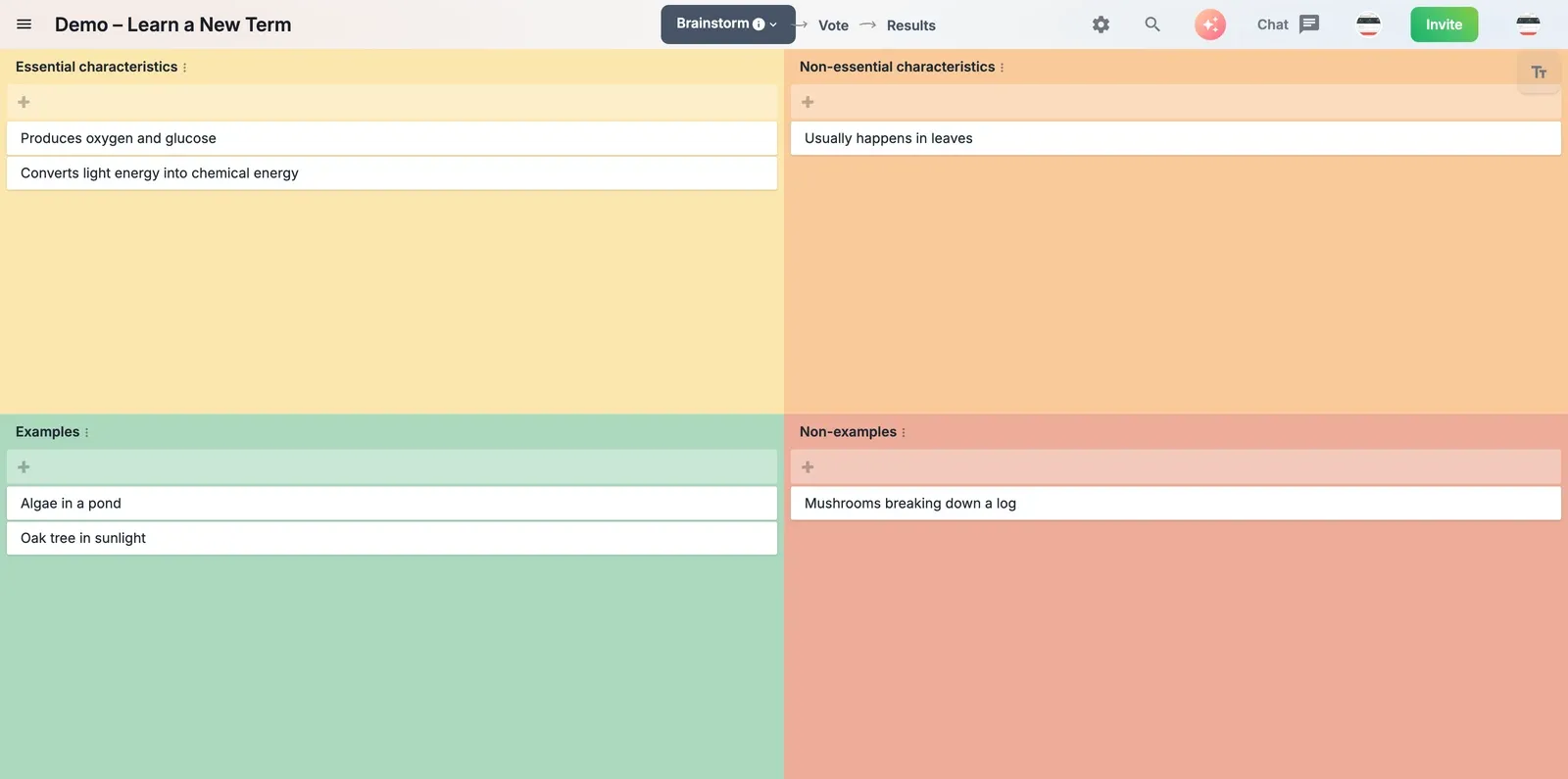
The Frayer model is a four-square vocabulary organizer: definition, characteristics, examples and non-examples around one term. Build one live.
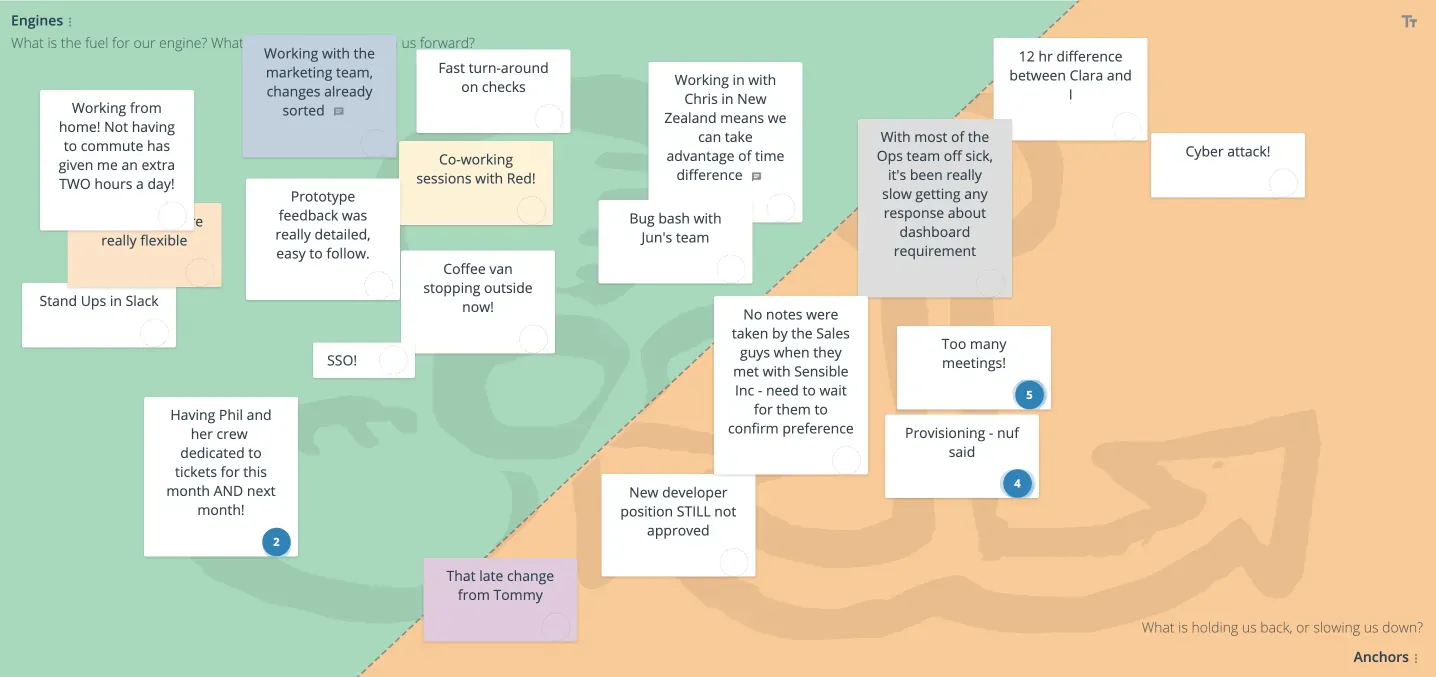
Explore fun agile retrospective alternatives - starfish, hot air balloon, sailboat and anchors - and how each drives your team's continuous improvement.
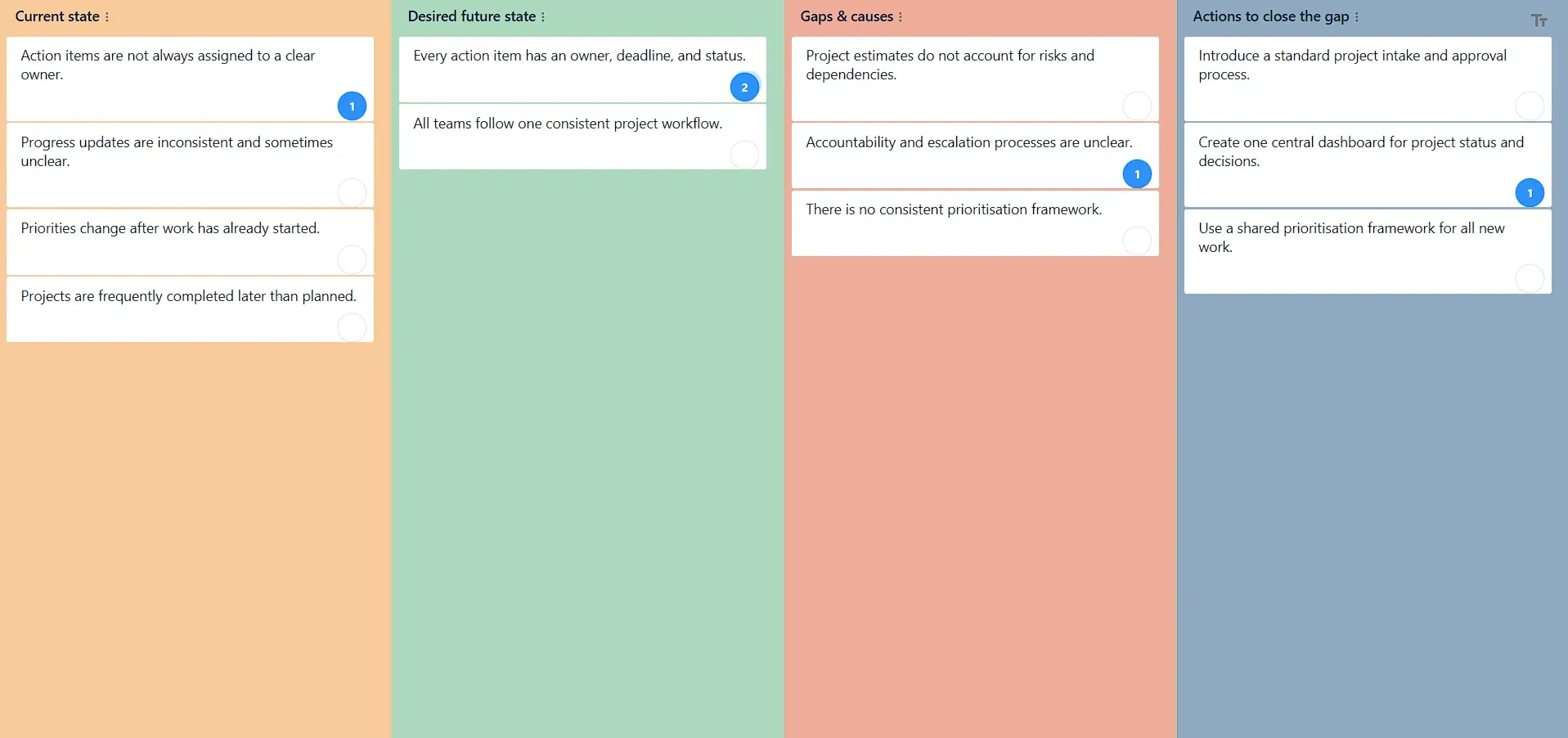
A gap analysis compares your current state with your target state to reveal the gap and the actions to close it. Run one with your team.
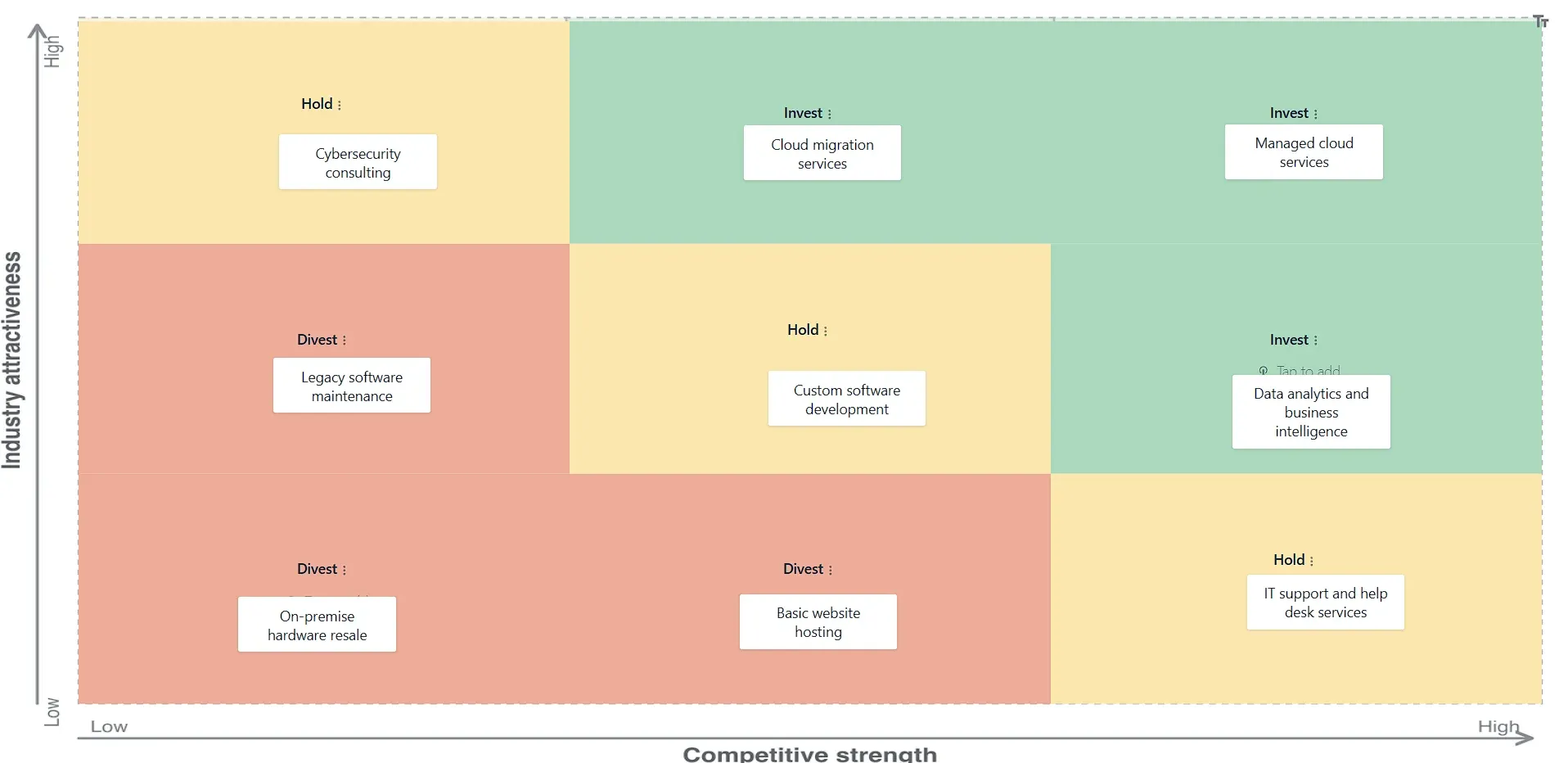
The GE-McKinsey matrix is a nine-box grid that ranks business units by industry attractiveness and competitive strength. See a worked example and build yours.
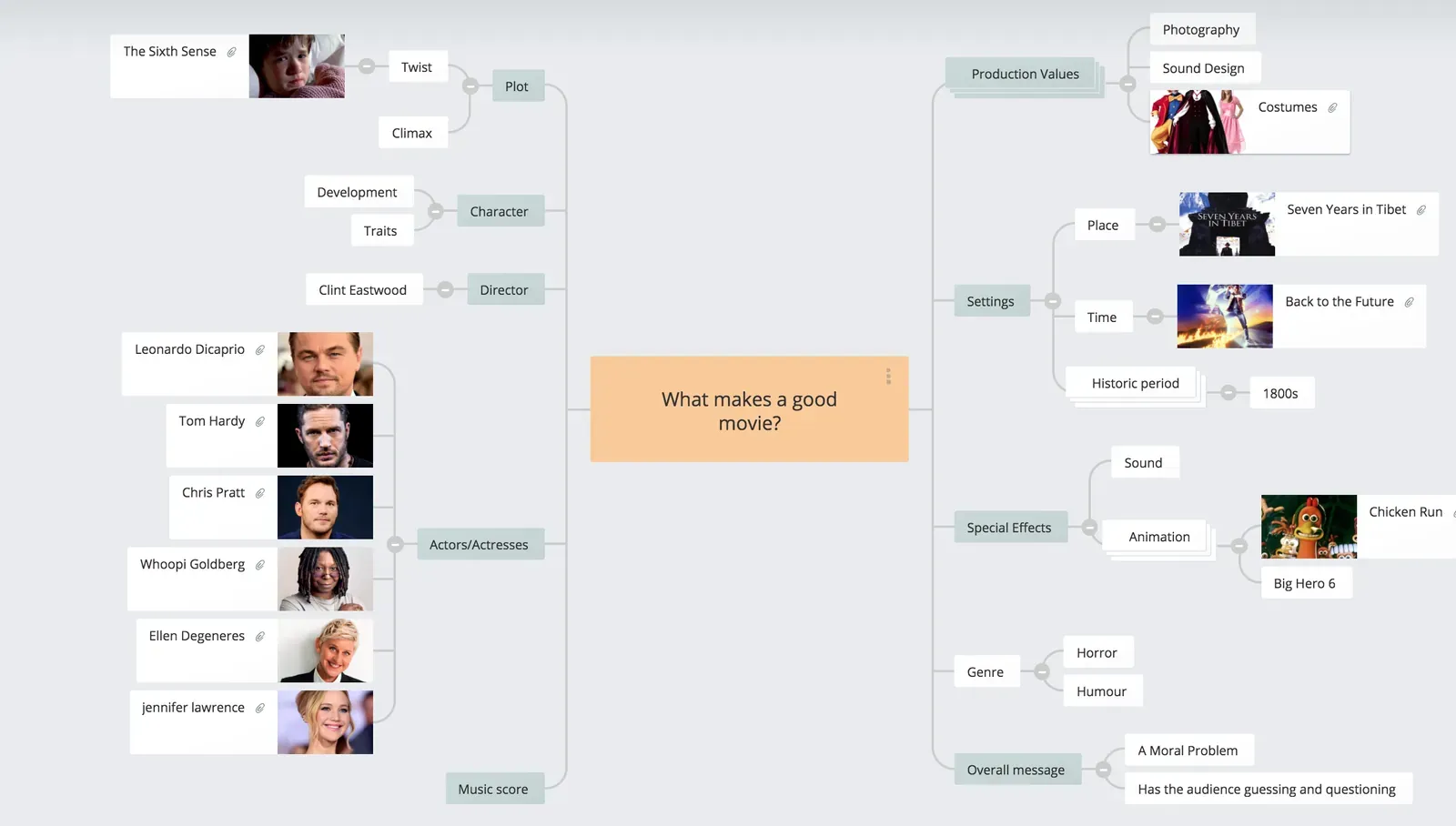
Capture, develop and share your ideas visually using collaborative mind mapping and group mind mapping tools from GroupMap
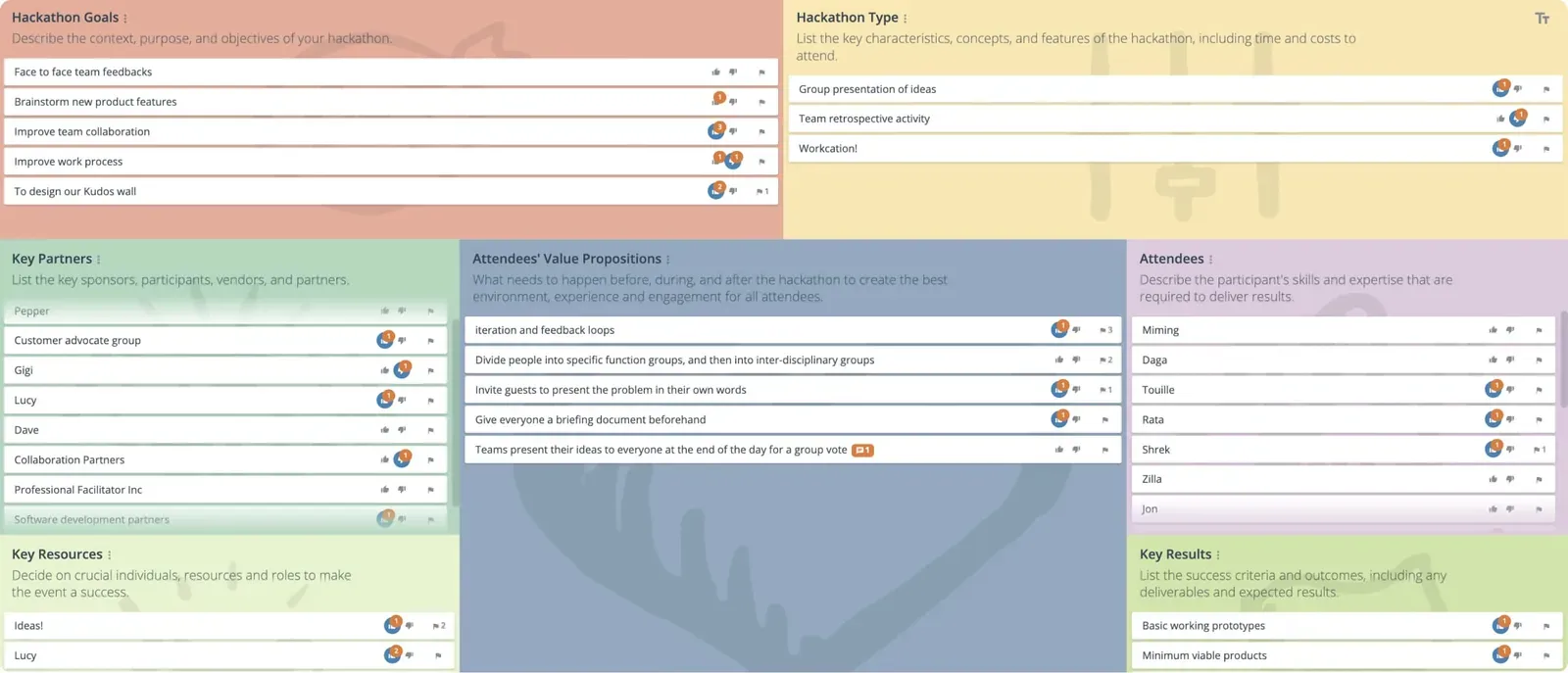
Maximize your hackathon success with our all-in-one canvas, covering ideation to implementation. Plan, organize, and execute your ideas like a pro.
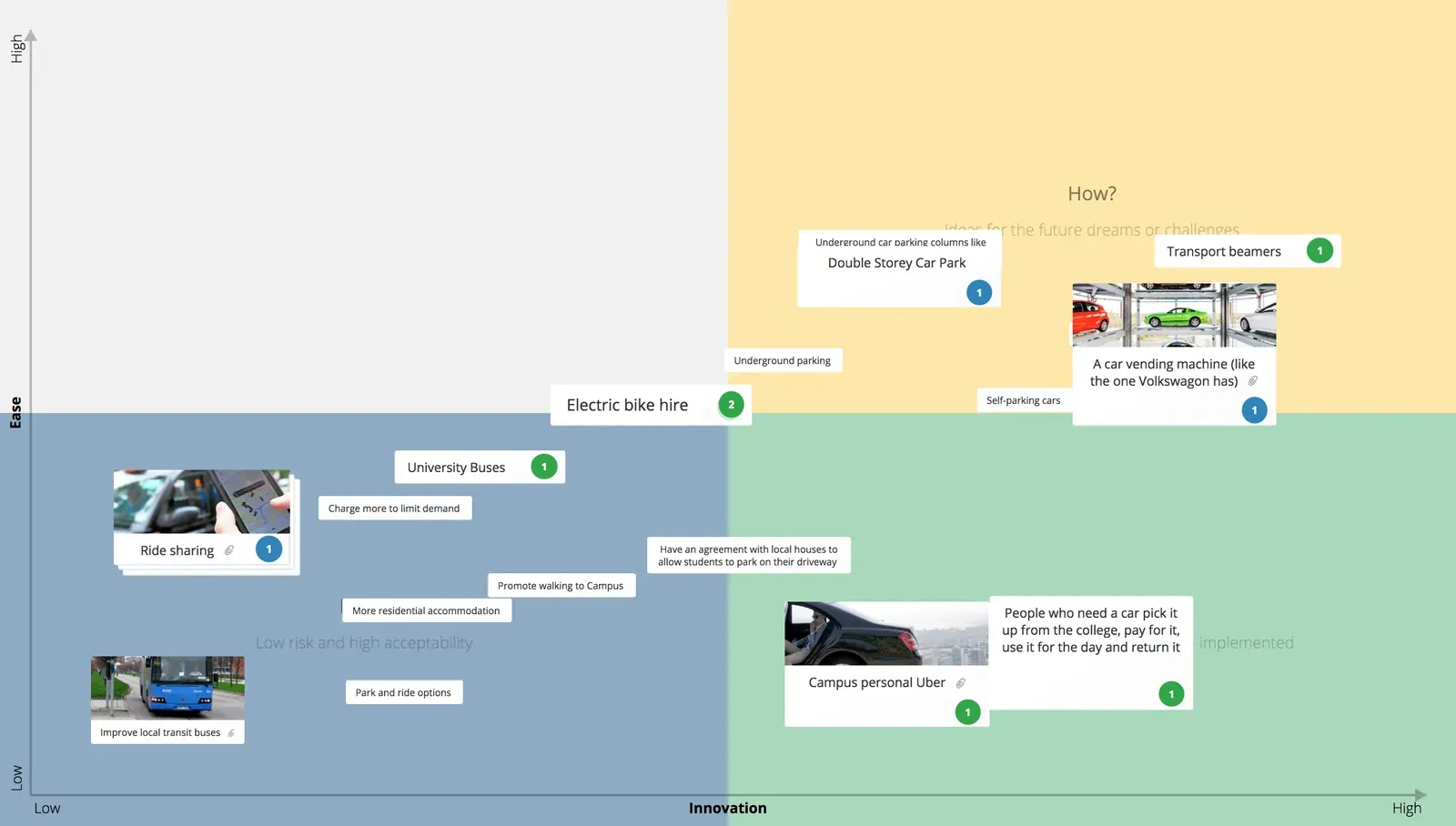
The How Now Wow matrix helps teams organize, collaborate and prioritize the best ideas to take forward. Try the template live with your group.
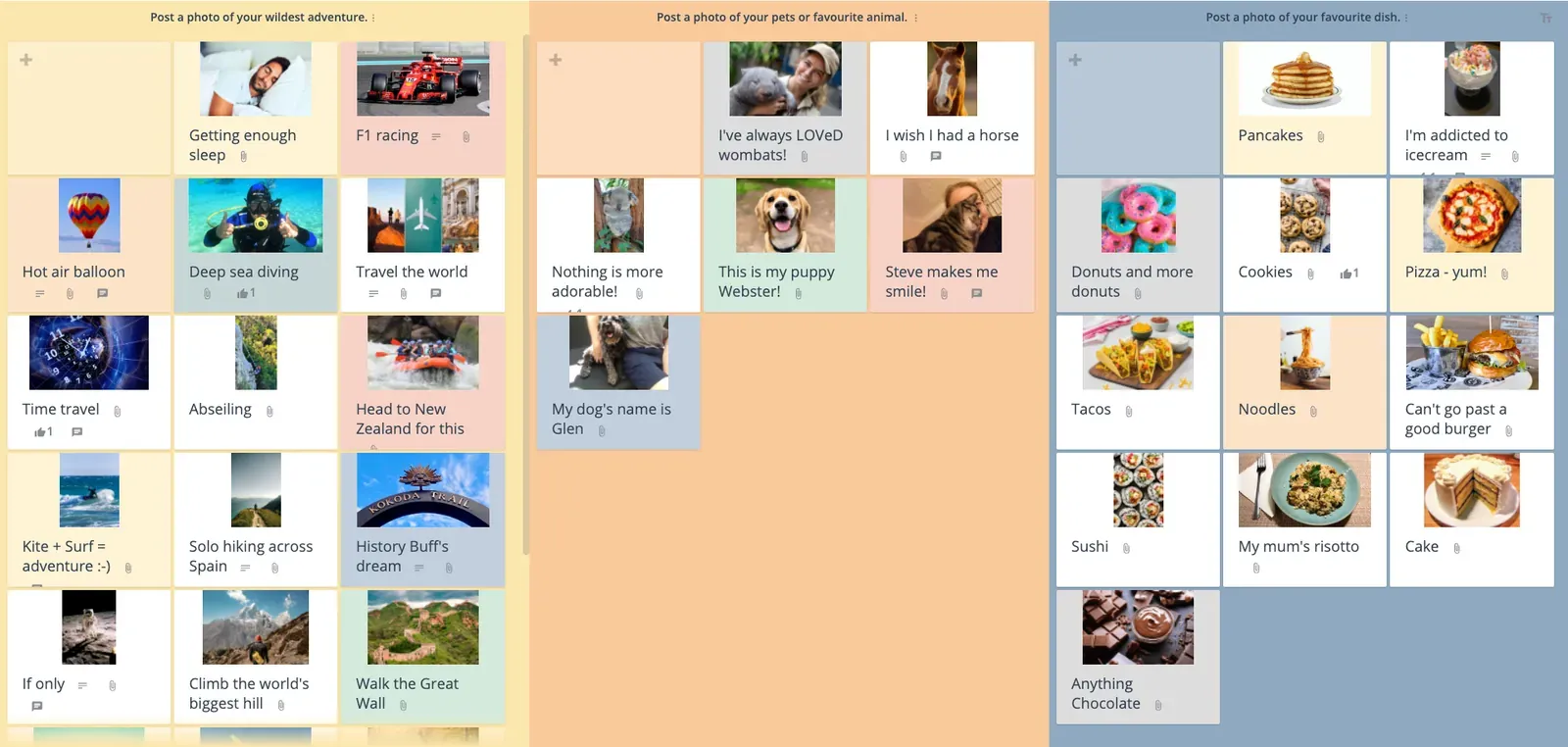
Four ready-to-run icebreaker templates, plus how to pick one for the session you are facilitating, how long to give it, and what to do when nobody answers.
How to open a session with 30, 100 or 300 people. Group-size bands, five icebreakers that scale, and the timing math that decides which one fits your room.
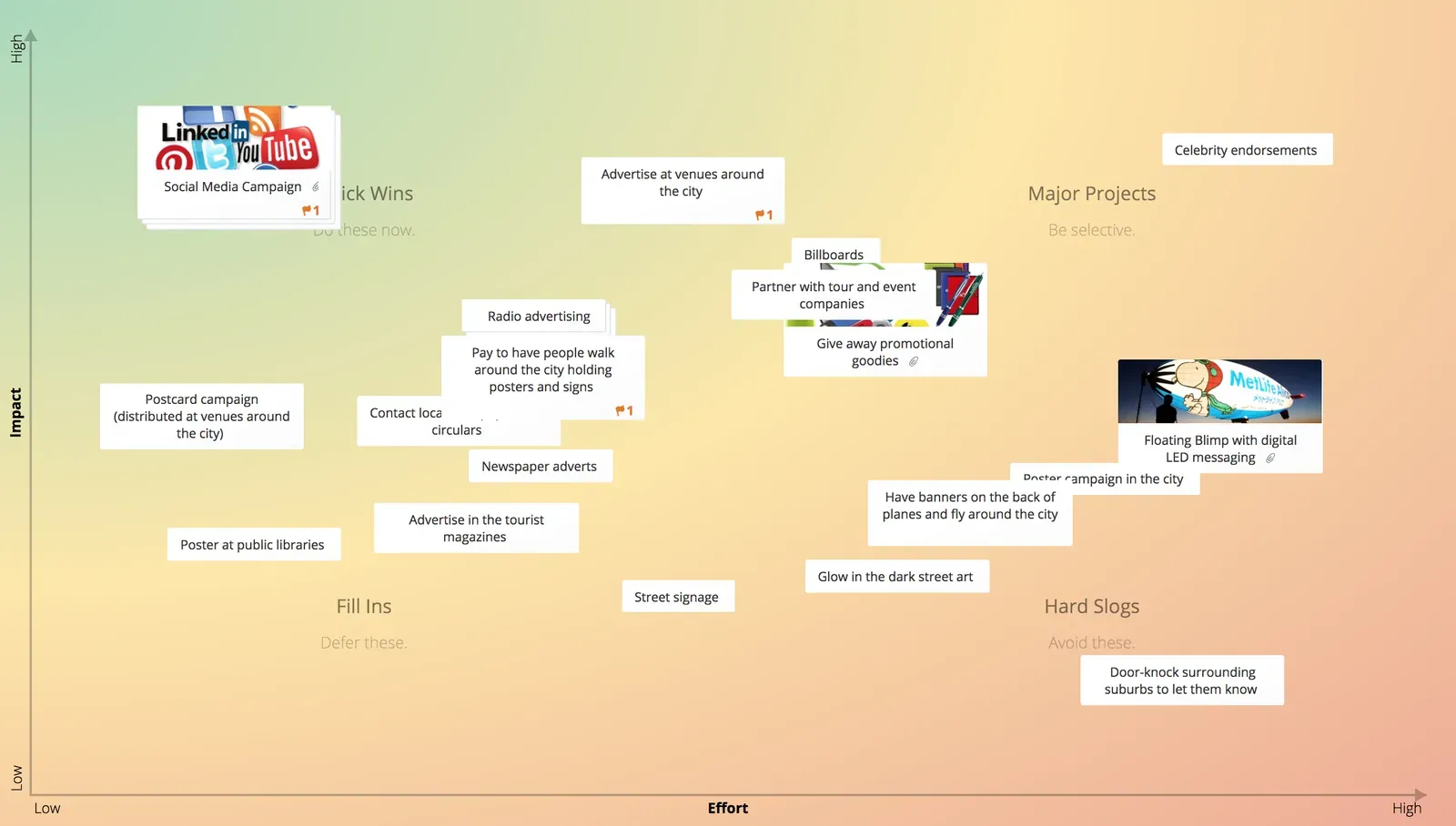
The Impact Effort Matrix (or Action Priority Matrix) helps teams prioritize ideas by impact vs effort to find quick wins. Create one live with your group.
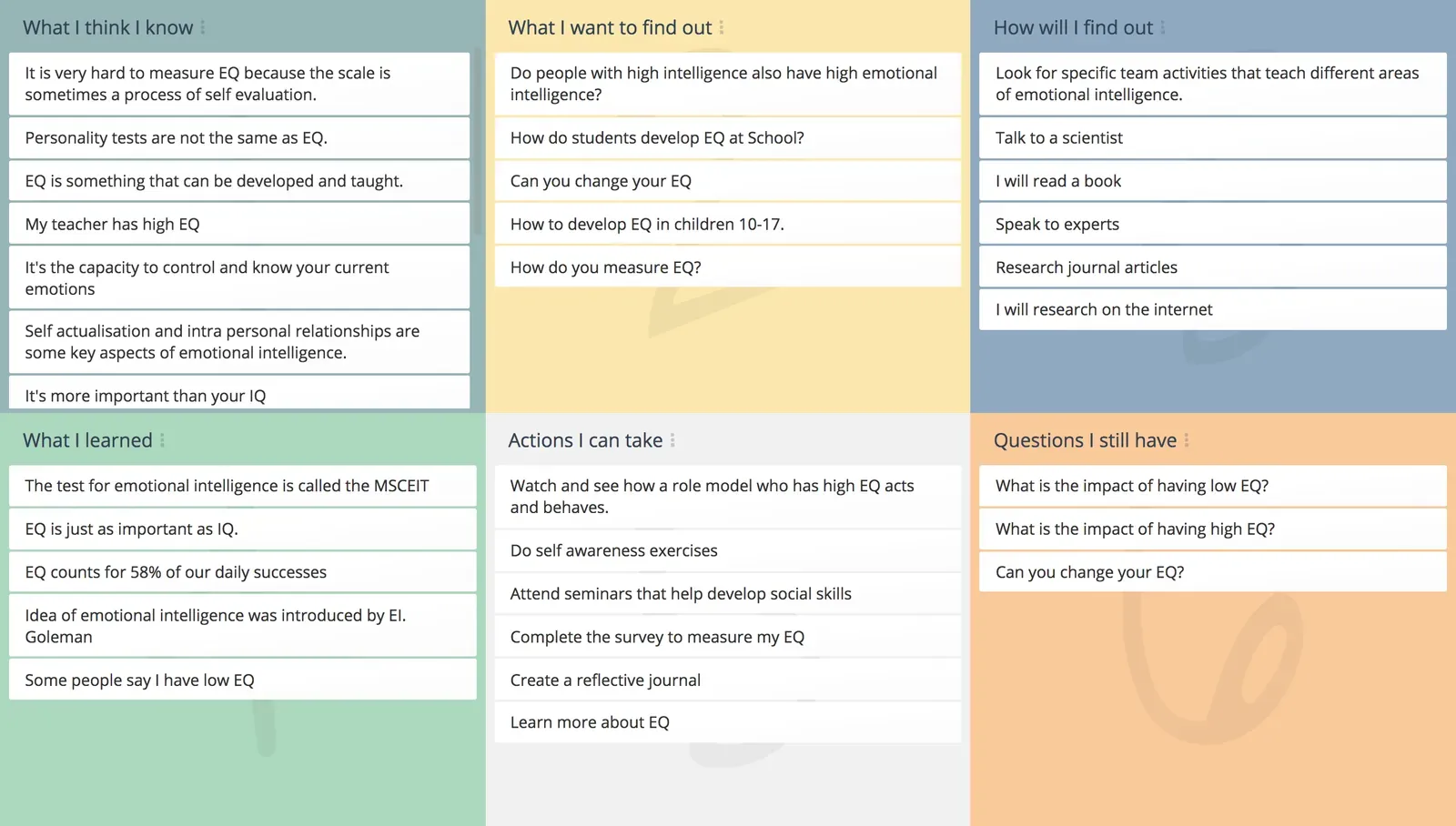
KWHLAQ is a planning and brainstorming tool for helping students take charge of their learning of a new topic - perfect for flipped classrooms.
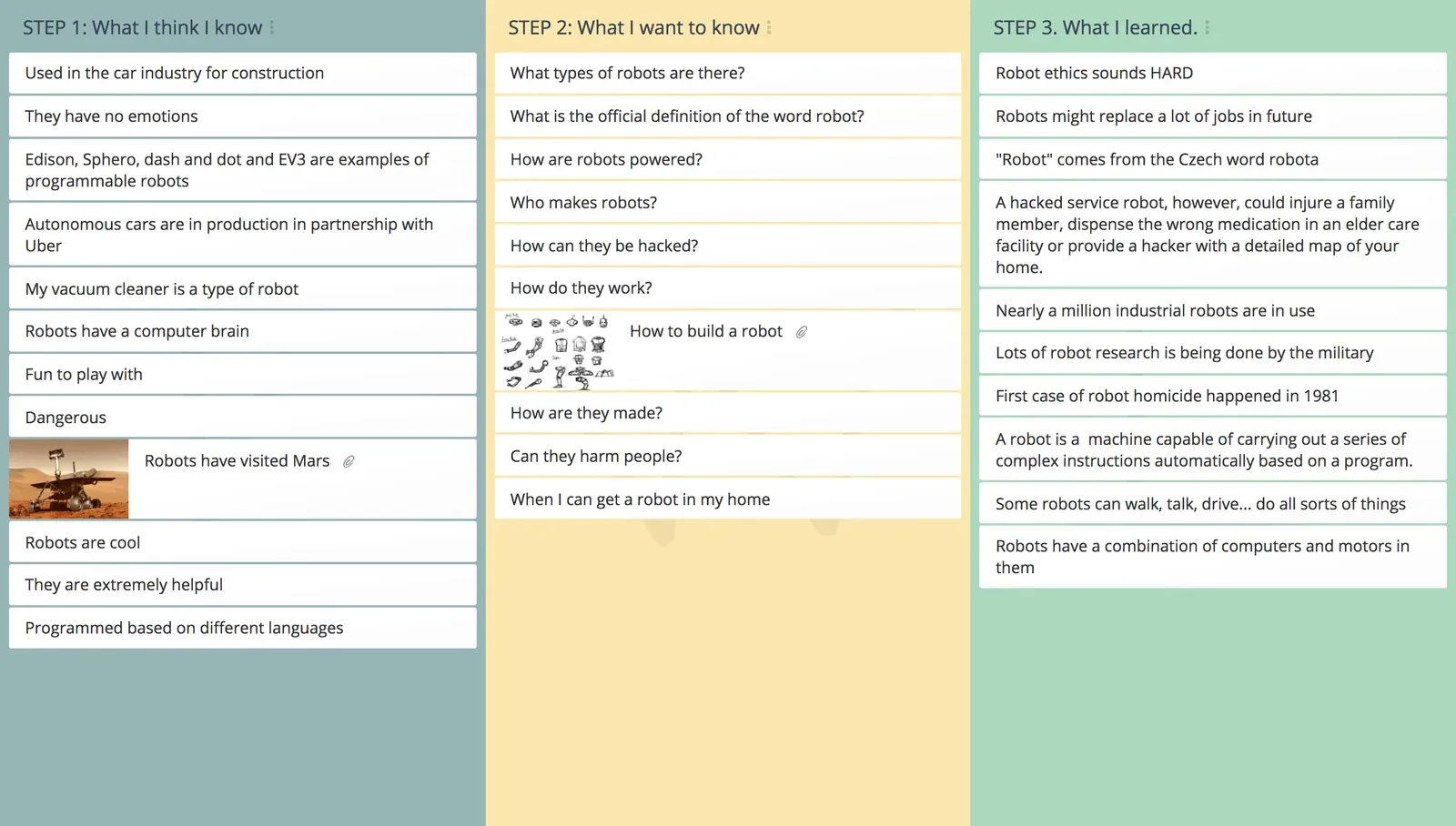
A KWL chart tracks what students Know, Want to know, and have Learned. Download the free printable template, or see examples for science, history and reading.
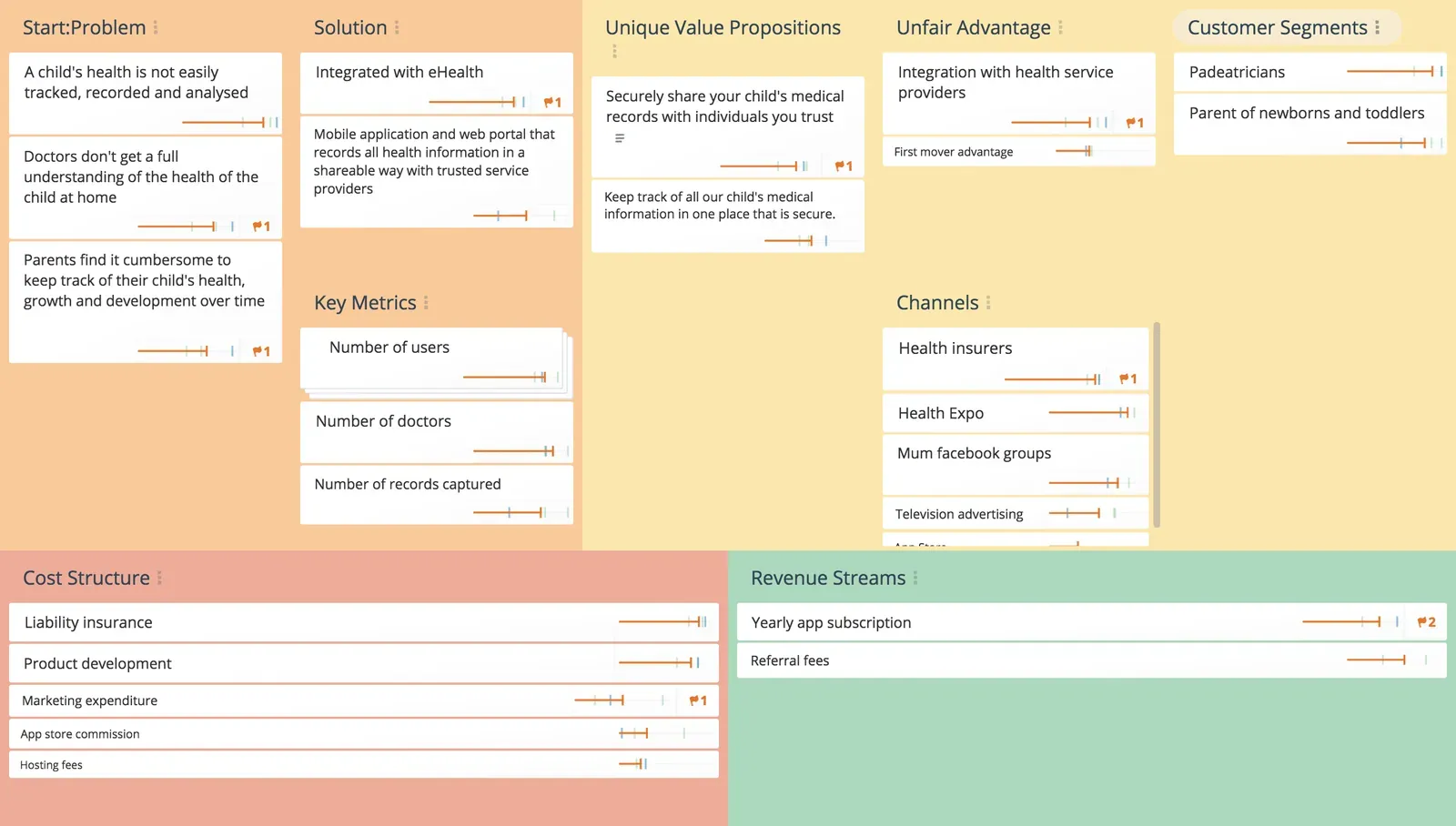
Use a Lean Canvas template to capture problems, solutions, metrics and advantage. Collaborate live and export results into testable plans.
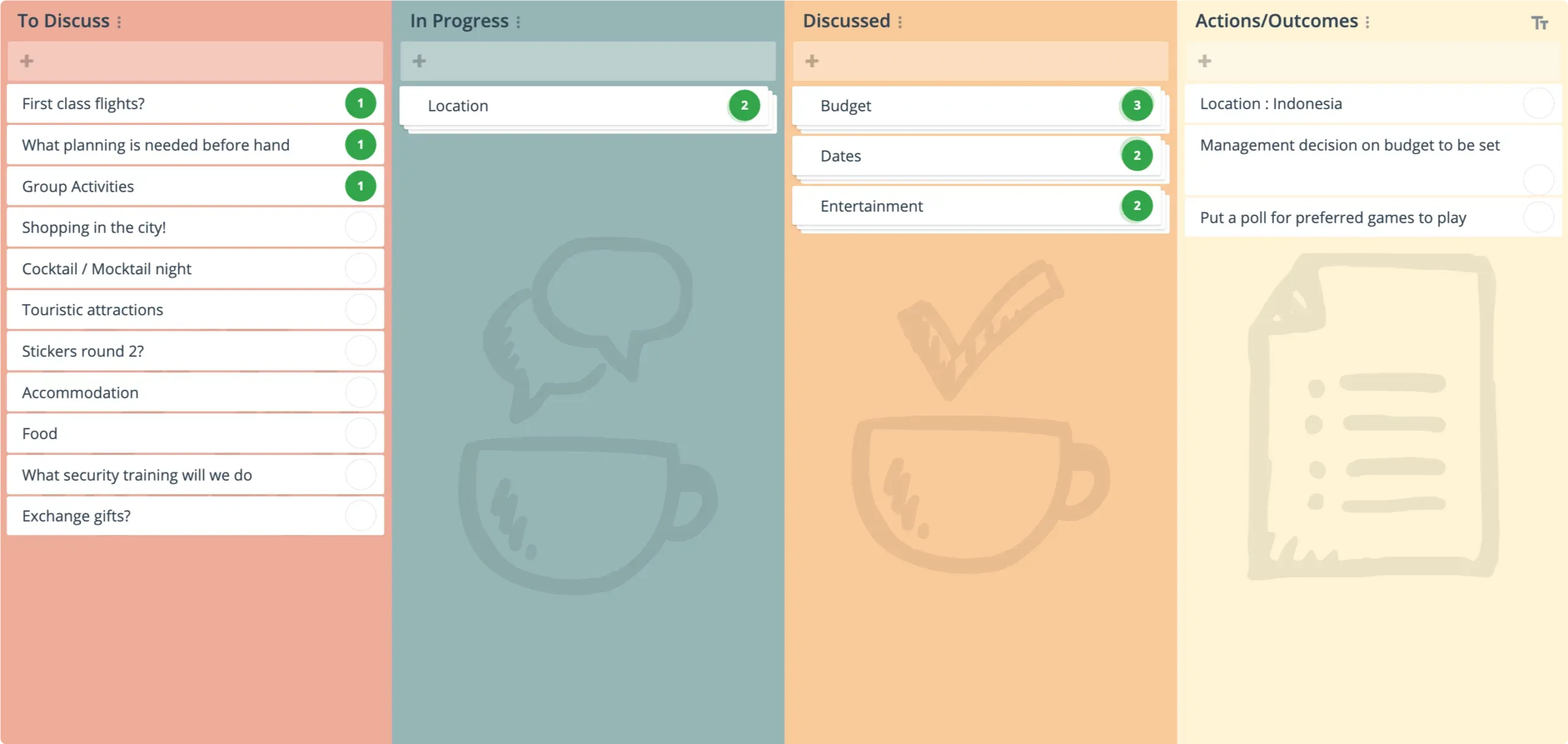
Run a Lean Coffee with this template: participants propose topics, vote on them and discuss each one on a timer, so the agenda comes from the room itself.
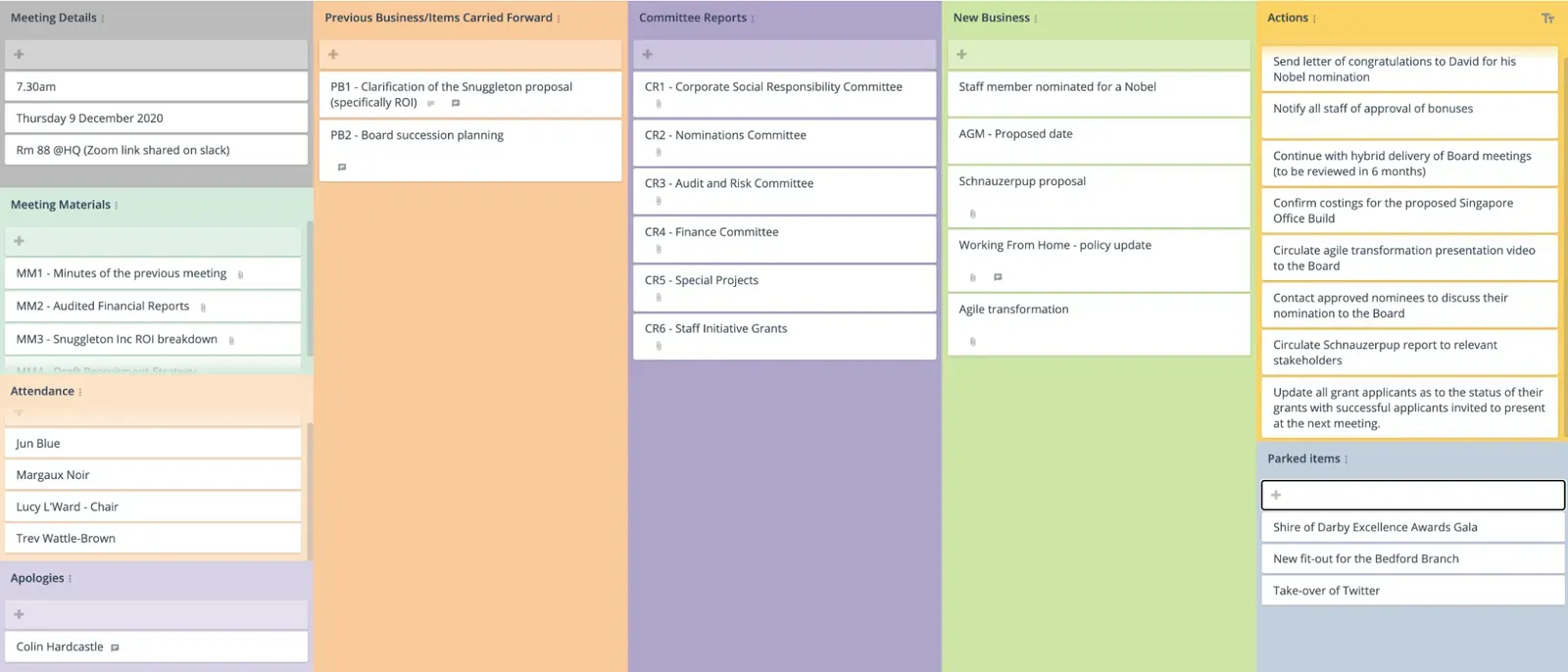
A meeting agenda template with nine key elements, plus worked agenda examples for a weekly team meeting, a board meeting and a project kickoff.
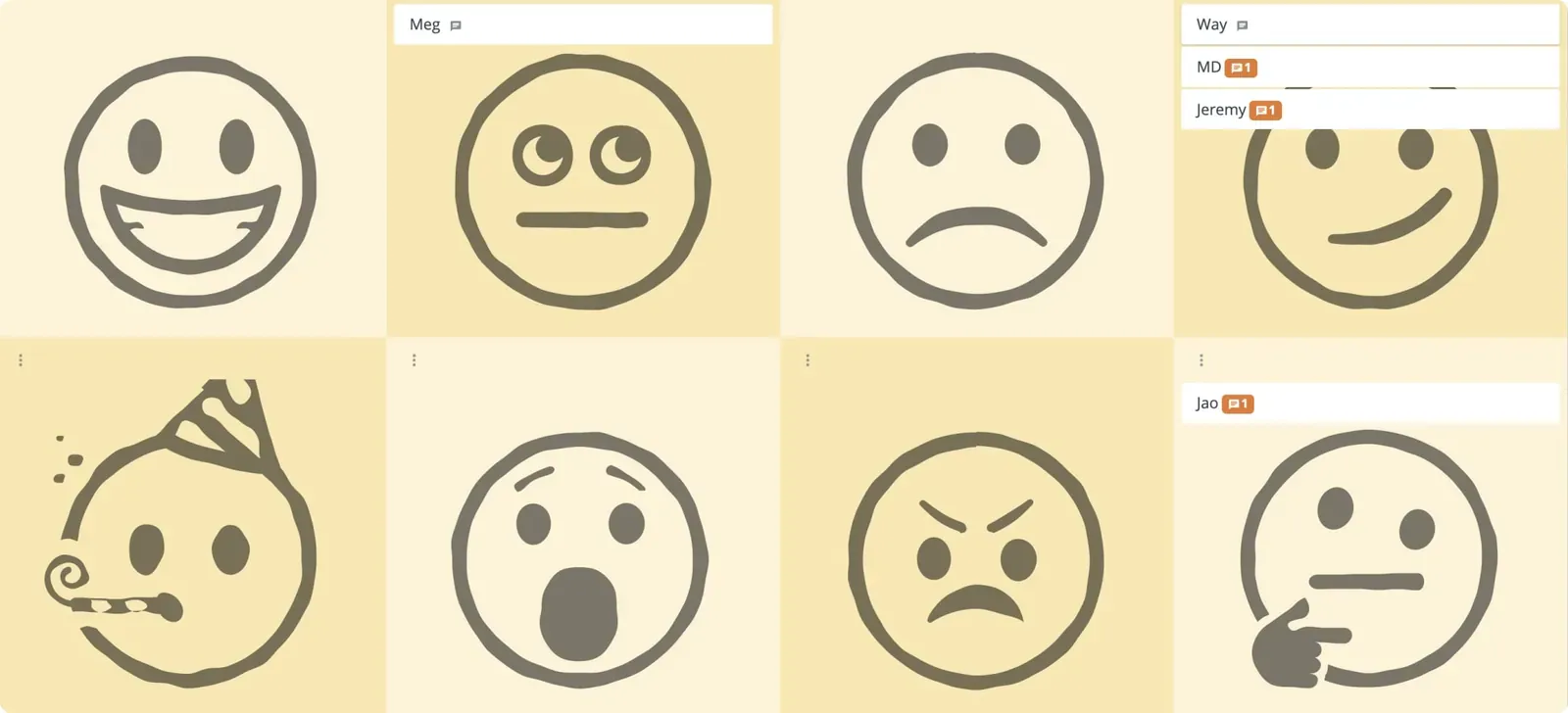
An easy ice breaker that lets people to share their current mood in a non-threatening and inclusive way. Use this Mood Wall template now.
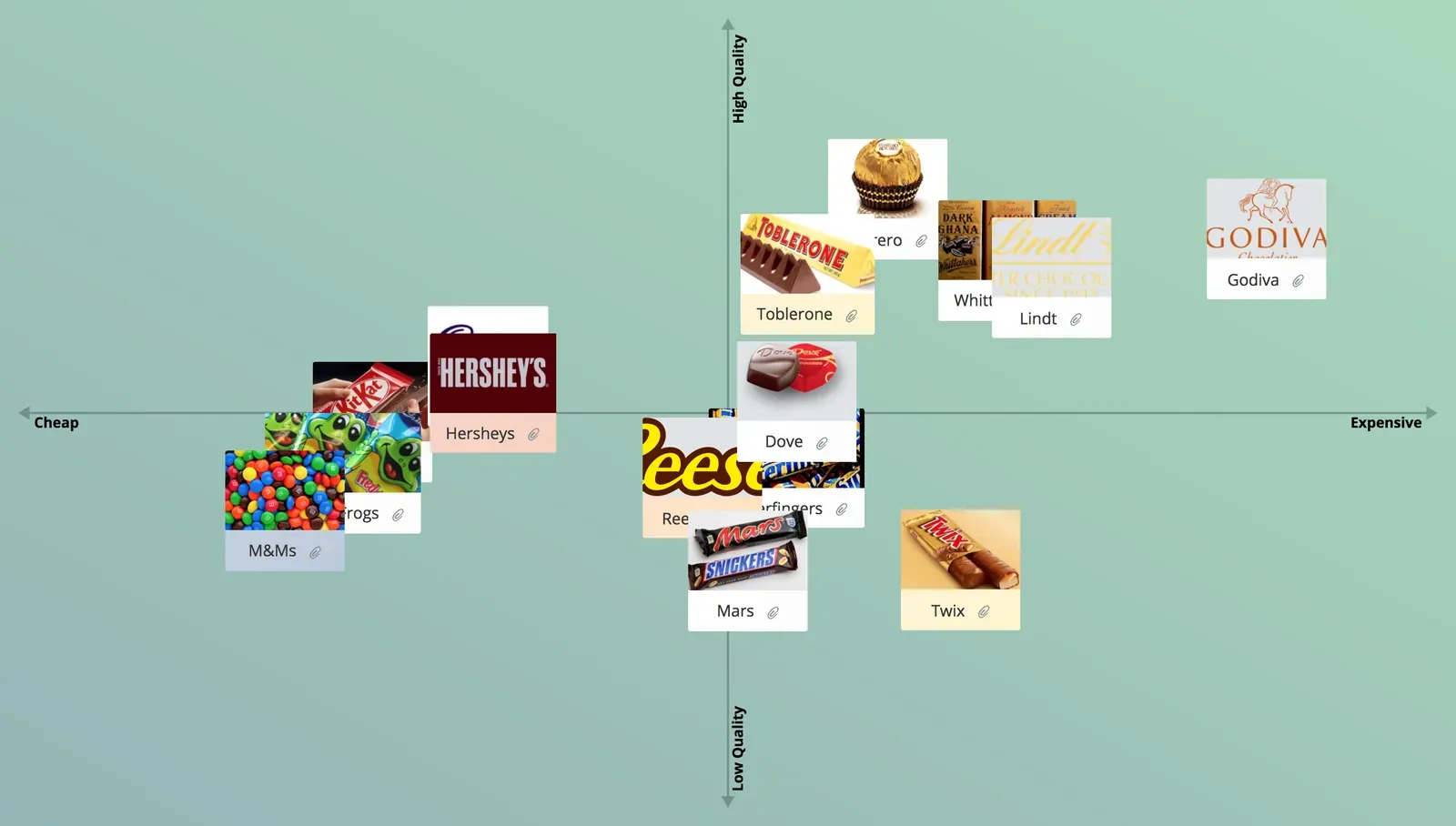
Perceptual Maps are useful focus group tools capturing relative perceptions of brands, products or ideas. Get started with our Perceptual Map Template.
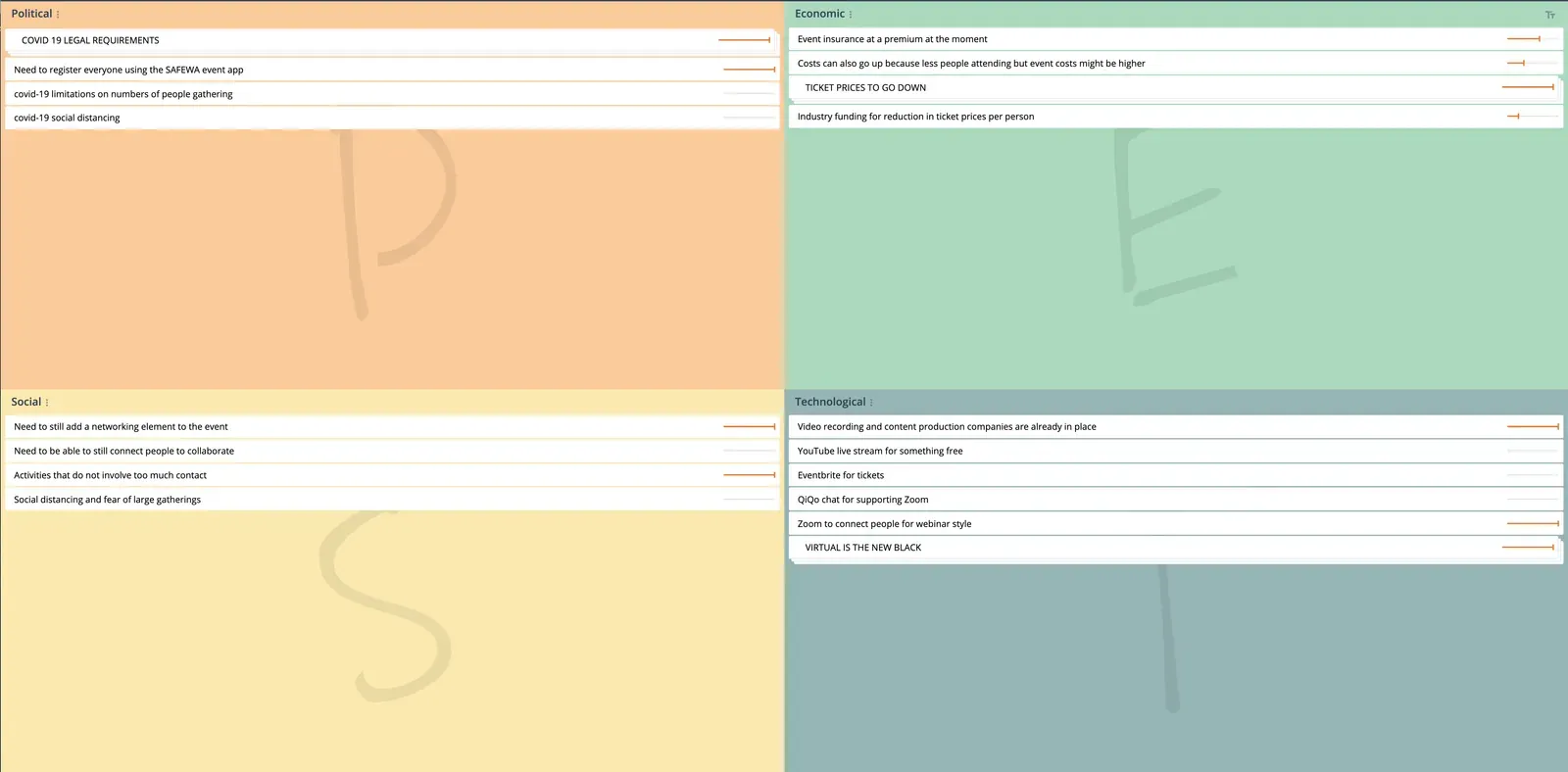
The PEST analysis template is a strategic business tool tracking macro-economic factors which can impacting businesses now and in the future.
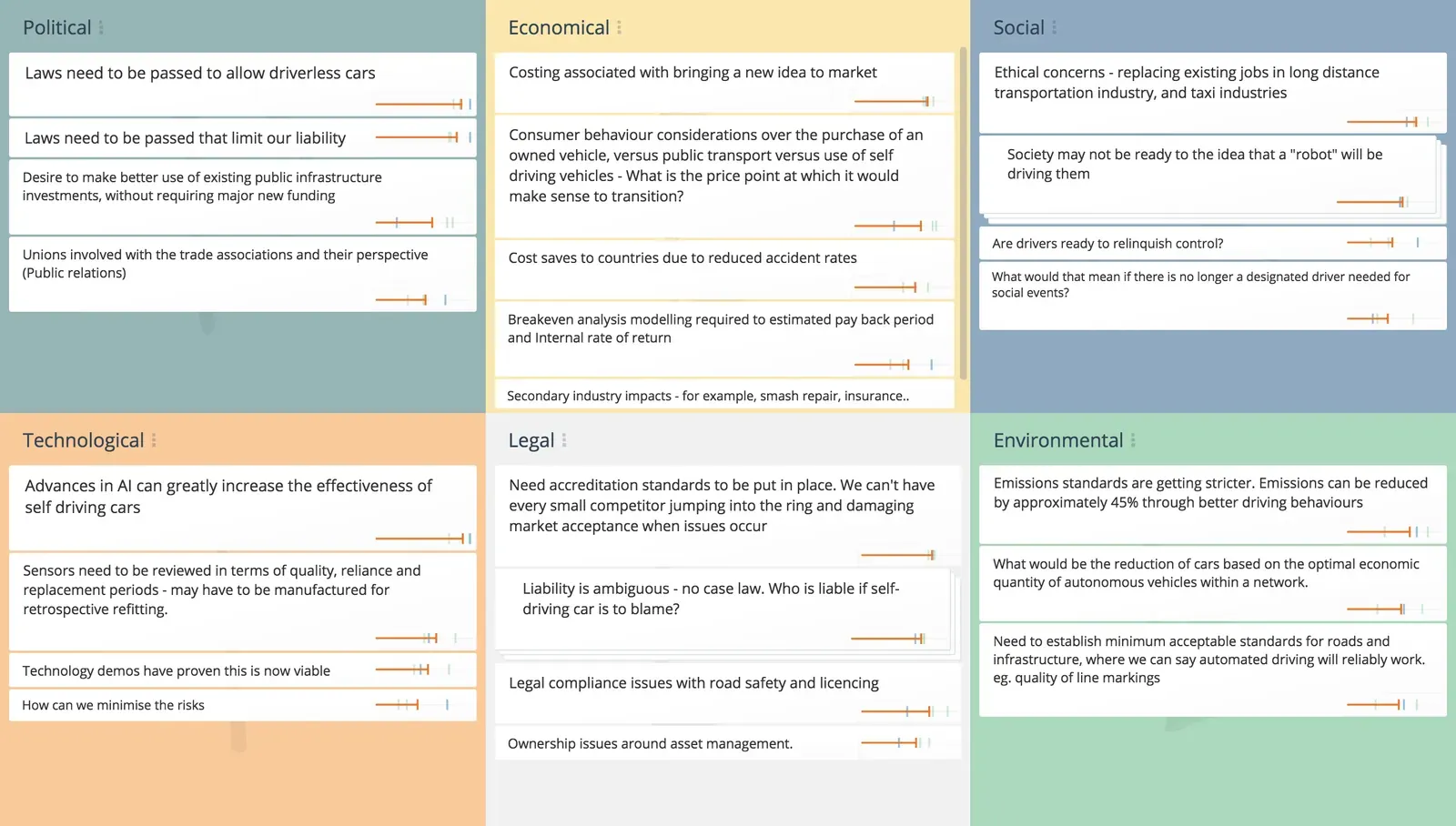
PESTLE analysis examines Political, Economic, Social, Technological, Legal and Environmental factors. See a sample PESTLE analysis and use our free template.
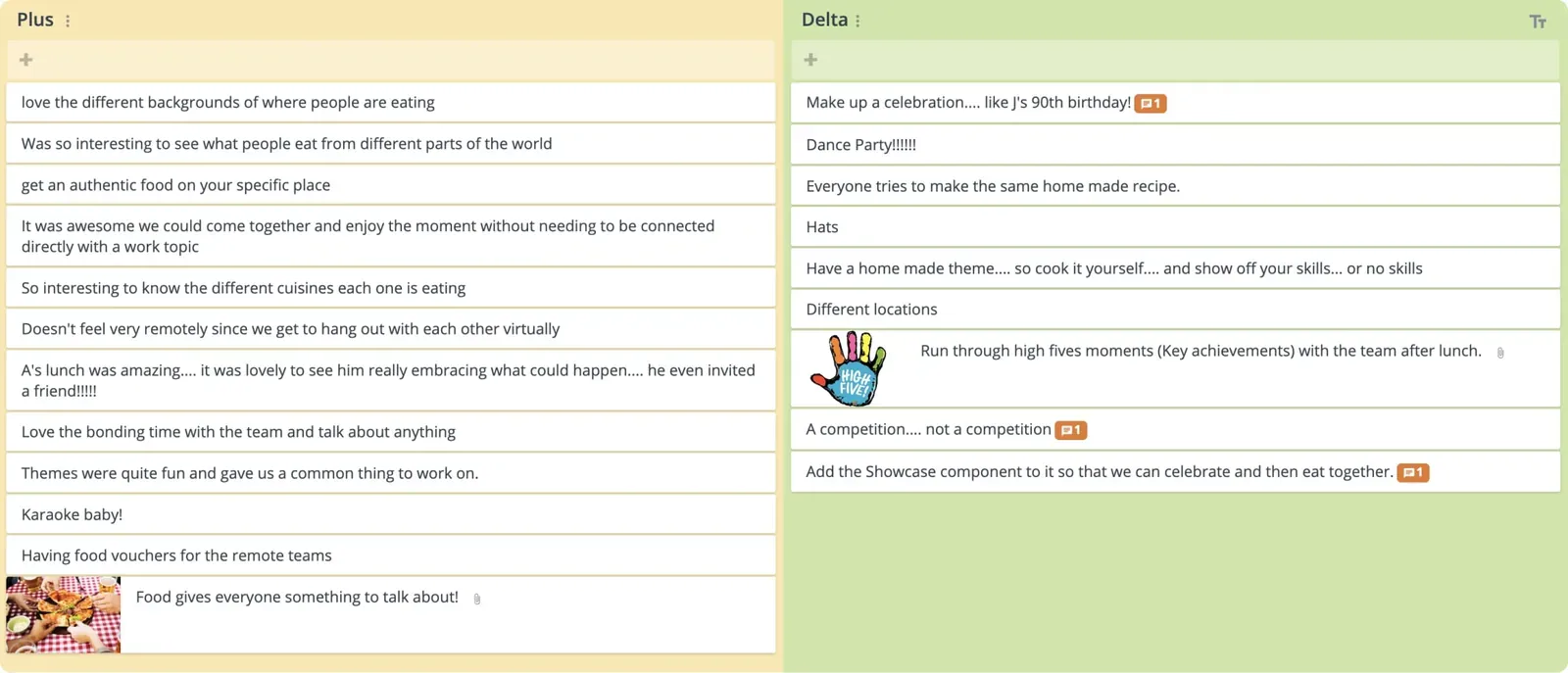
Looking to reflect on your team's recent project or sprint? Consider using the Plus Delta retrospective method!
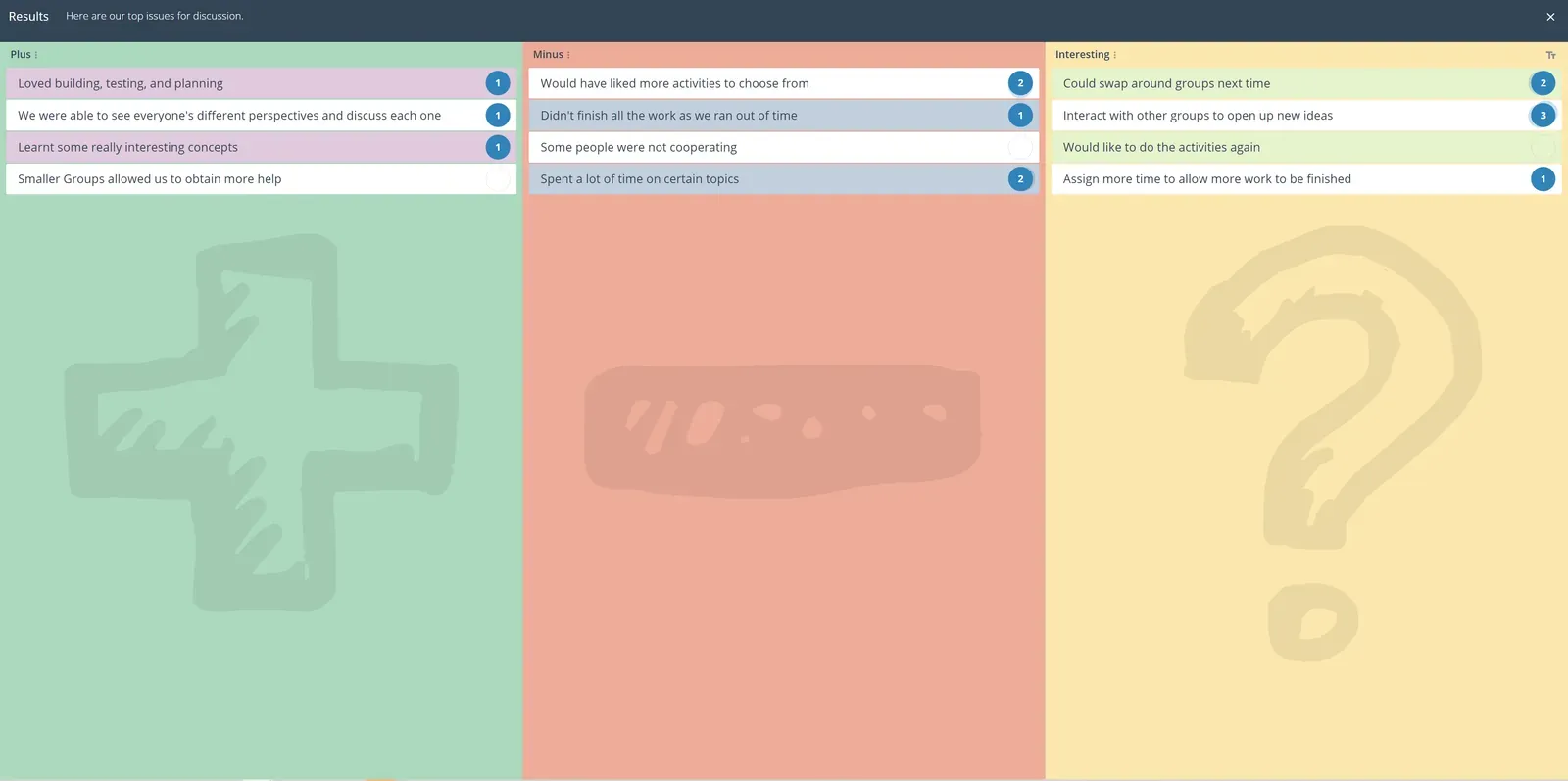
Use the PMI (Plus, Minus, Interesting) template to weigh an idea from three angles. Participants brainstorm individually, then vote and decide together.
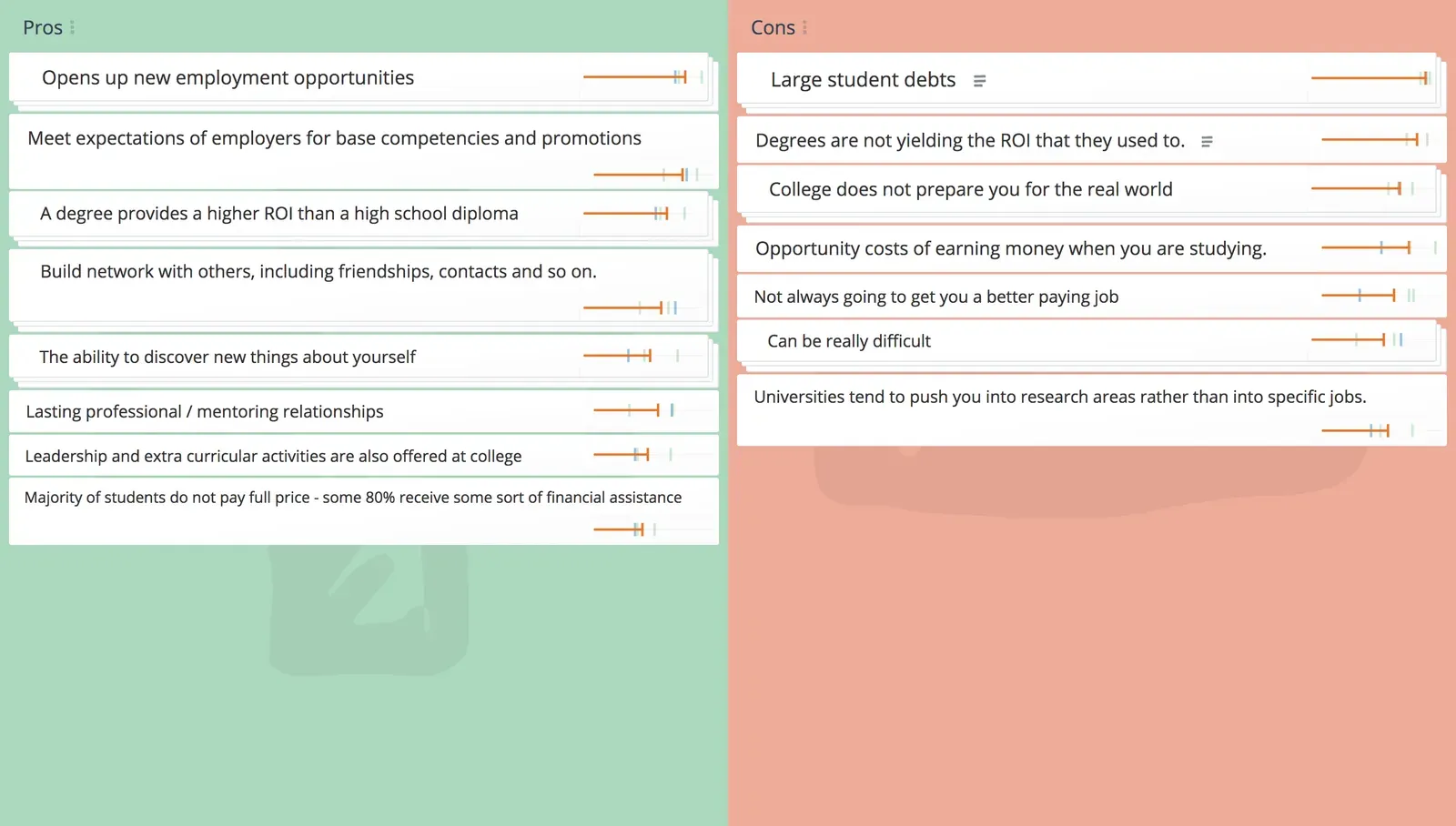
The easiest form of collaborative brainstorming. Should we? Shouldn't we? Decide easily creating a prioritized pros and cons list today.
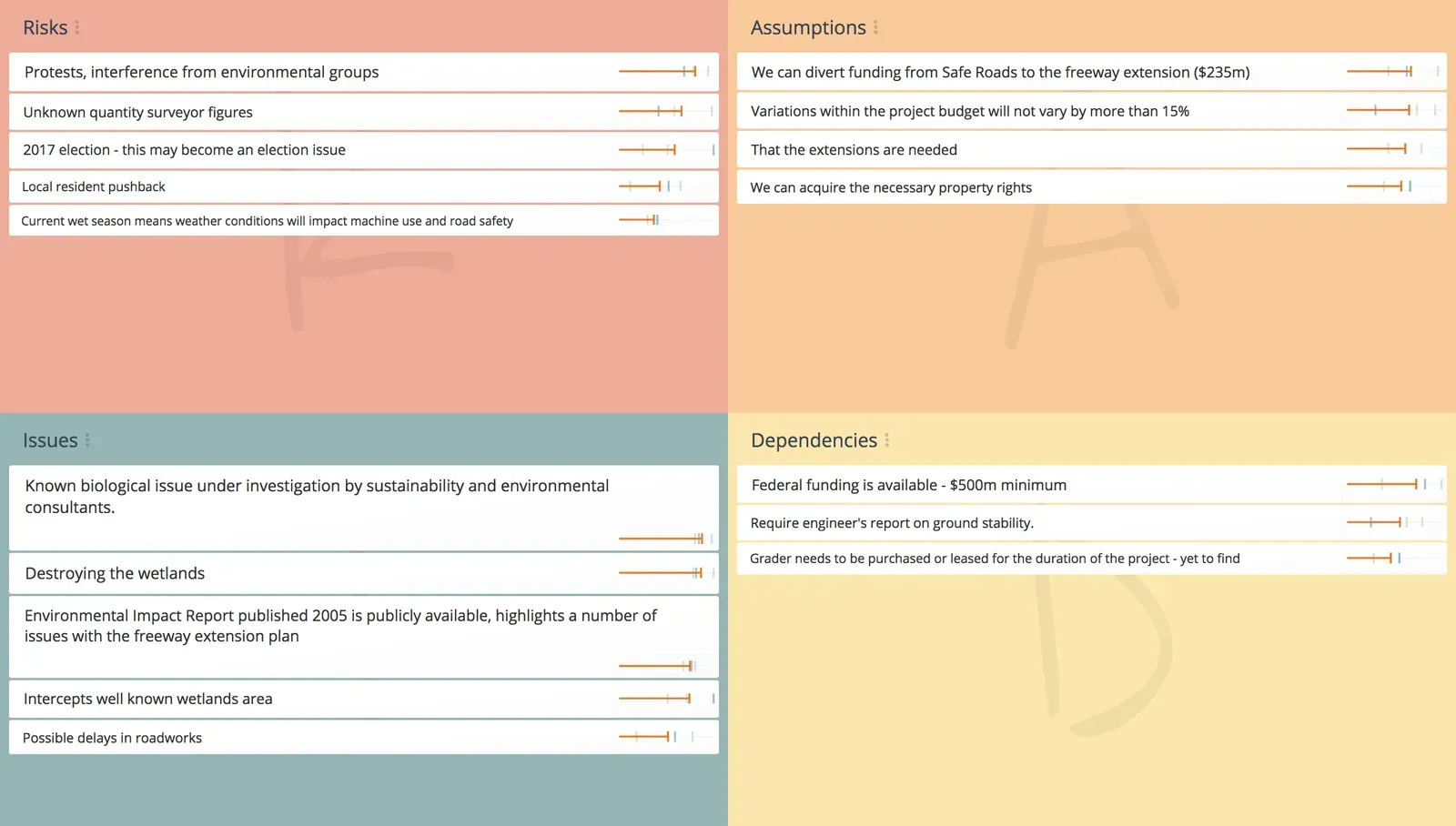
RAID analysis is a project planning technique identifying key project (R)isks, (A)ssumptions, (I)ssues, and (D)ependencies.
Track project risks, assumptions, issues and dependencies in one RAID log. See the standard columns, a worked example, and how to run the session.
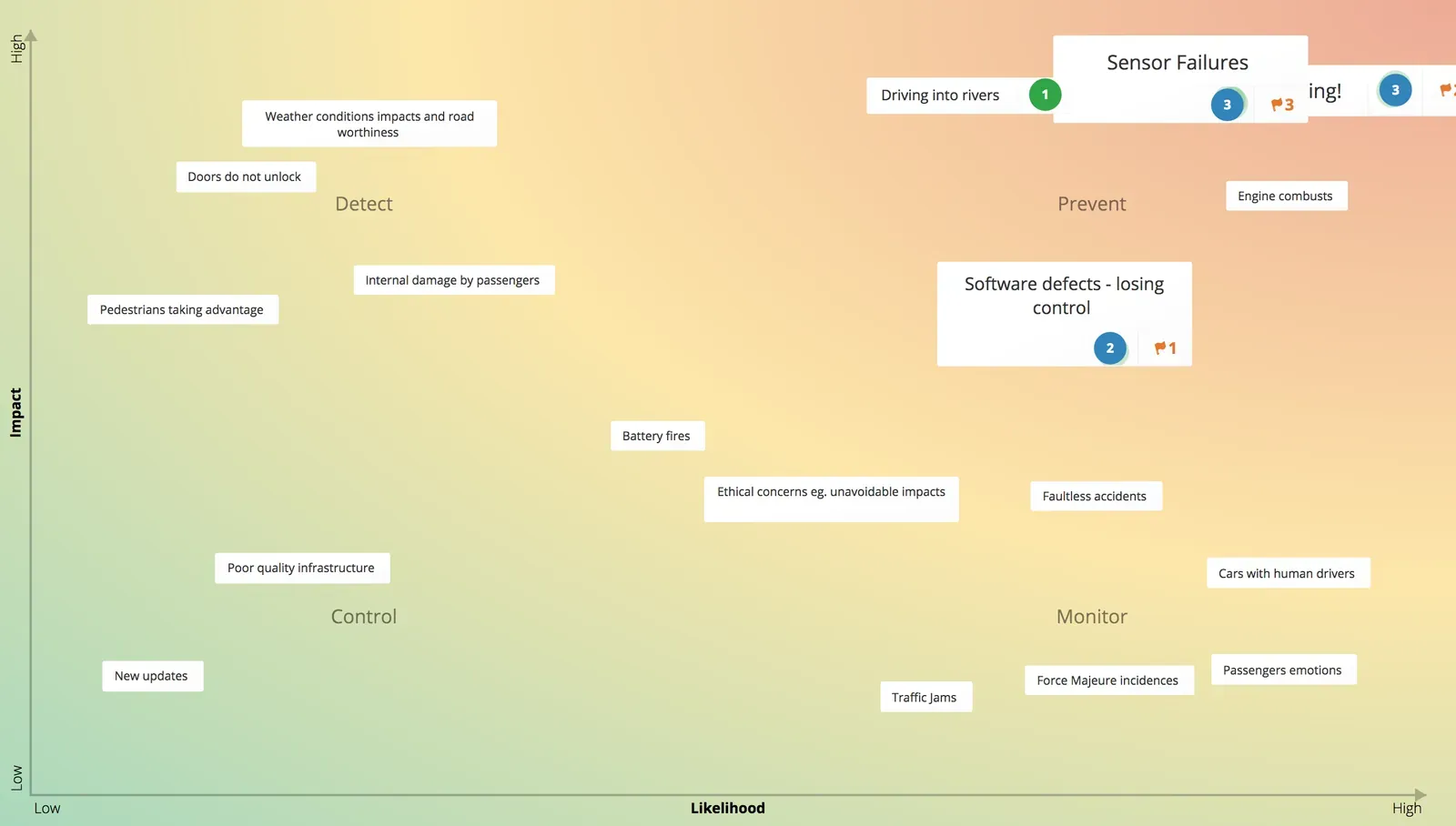
Use our free risk assessment matrix to map risks by likelihood and impact. Run risk mapping live with your team, with a worked example and a ready template.
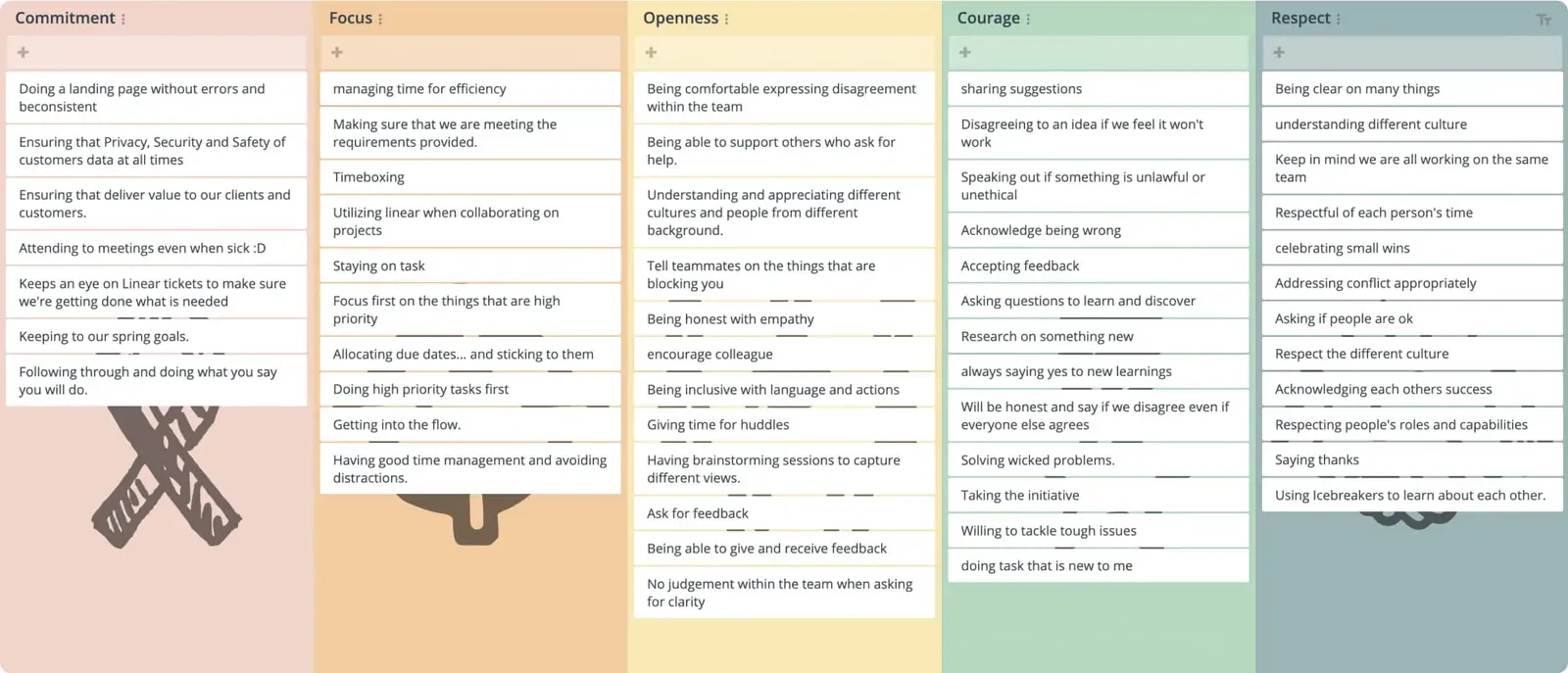
The Scrum Values Ice Breaker and Agile Retrospective template lets your team think and act on behaviors that represent each value. Try it now.
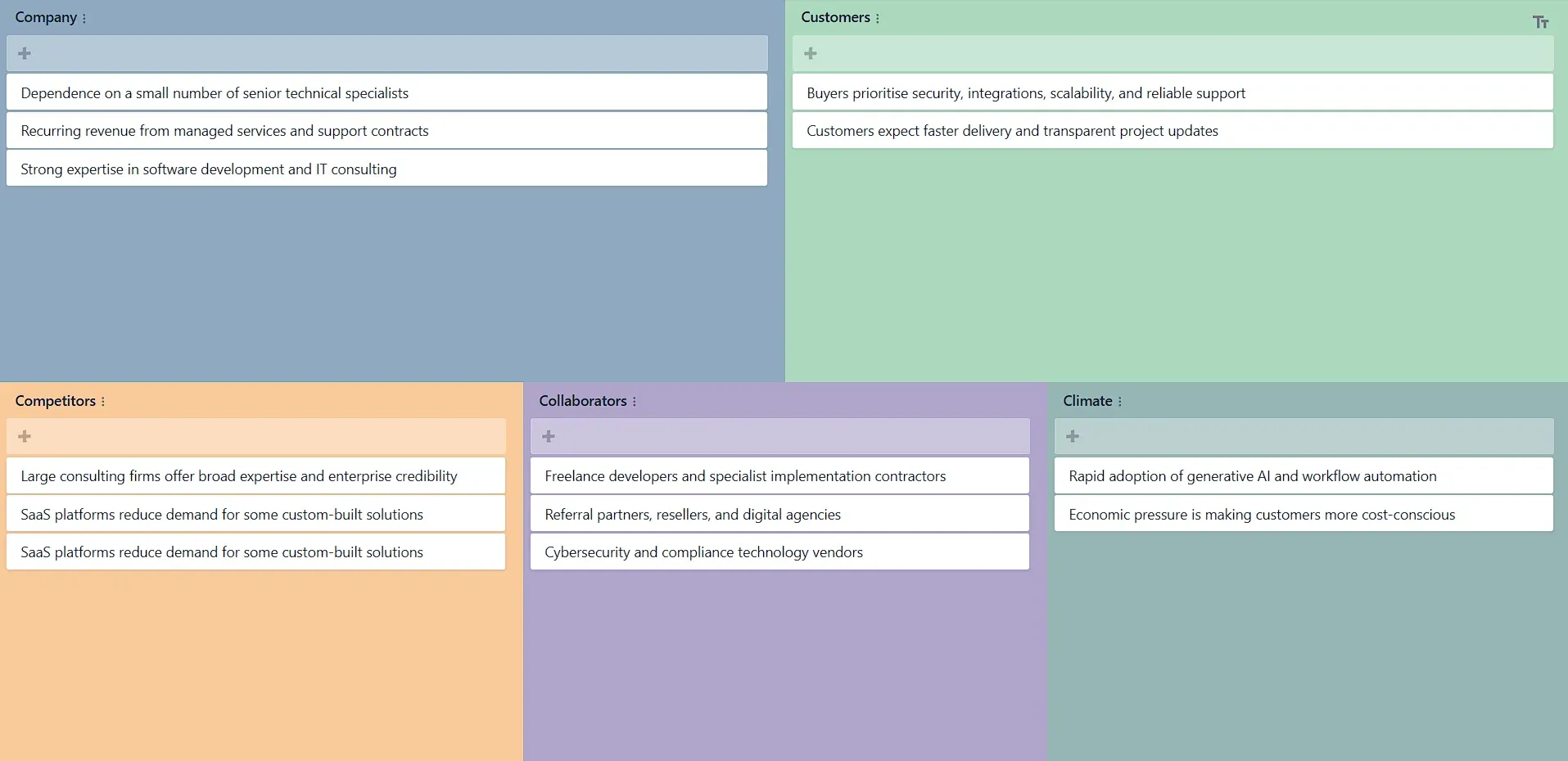
A situational analysis assesses the internal and external factors shaping your business using tools like 5C, SWOT and PEST. See a worked example and template.
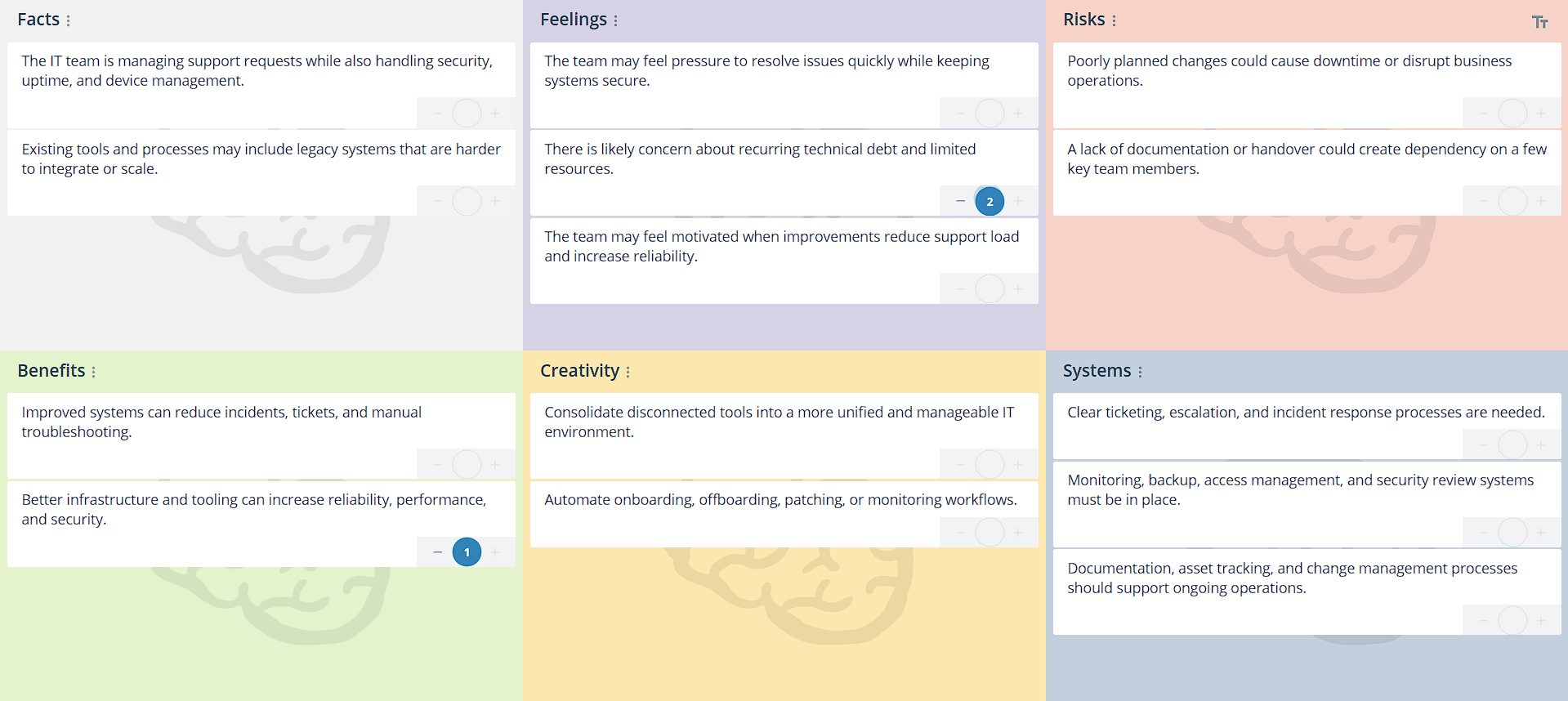
Six Thinking Styles helps teams explore any topic from six angles (facts, feelings, risks, benefits, creativity and systems) structured live in GroupMap.
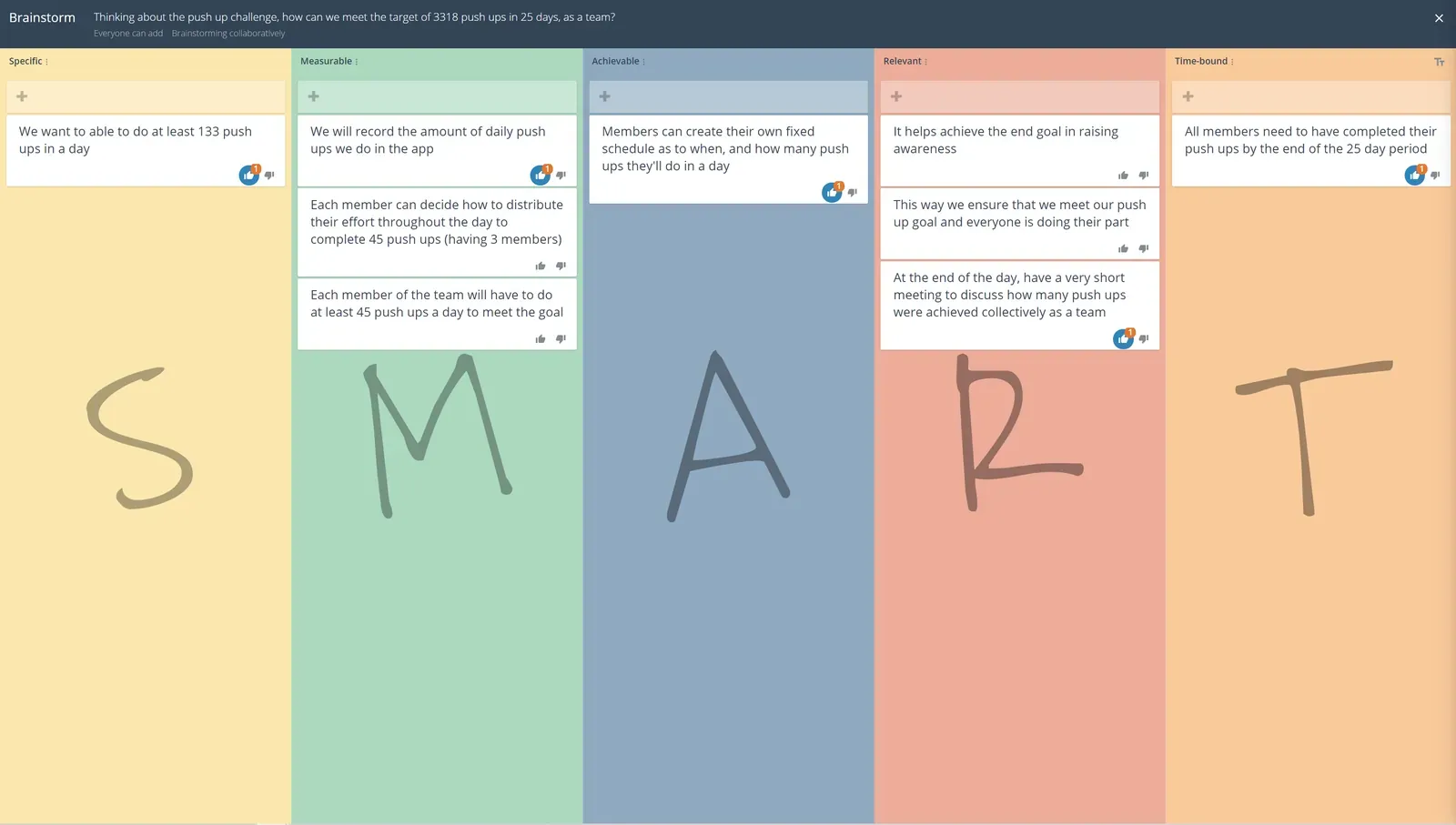
SMART goals template with worked examples and a step-by-step guide to writing Specific, Measurable, Achievable, Relevant and Time-bound goals.
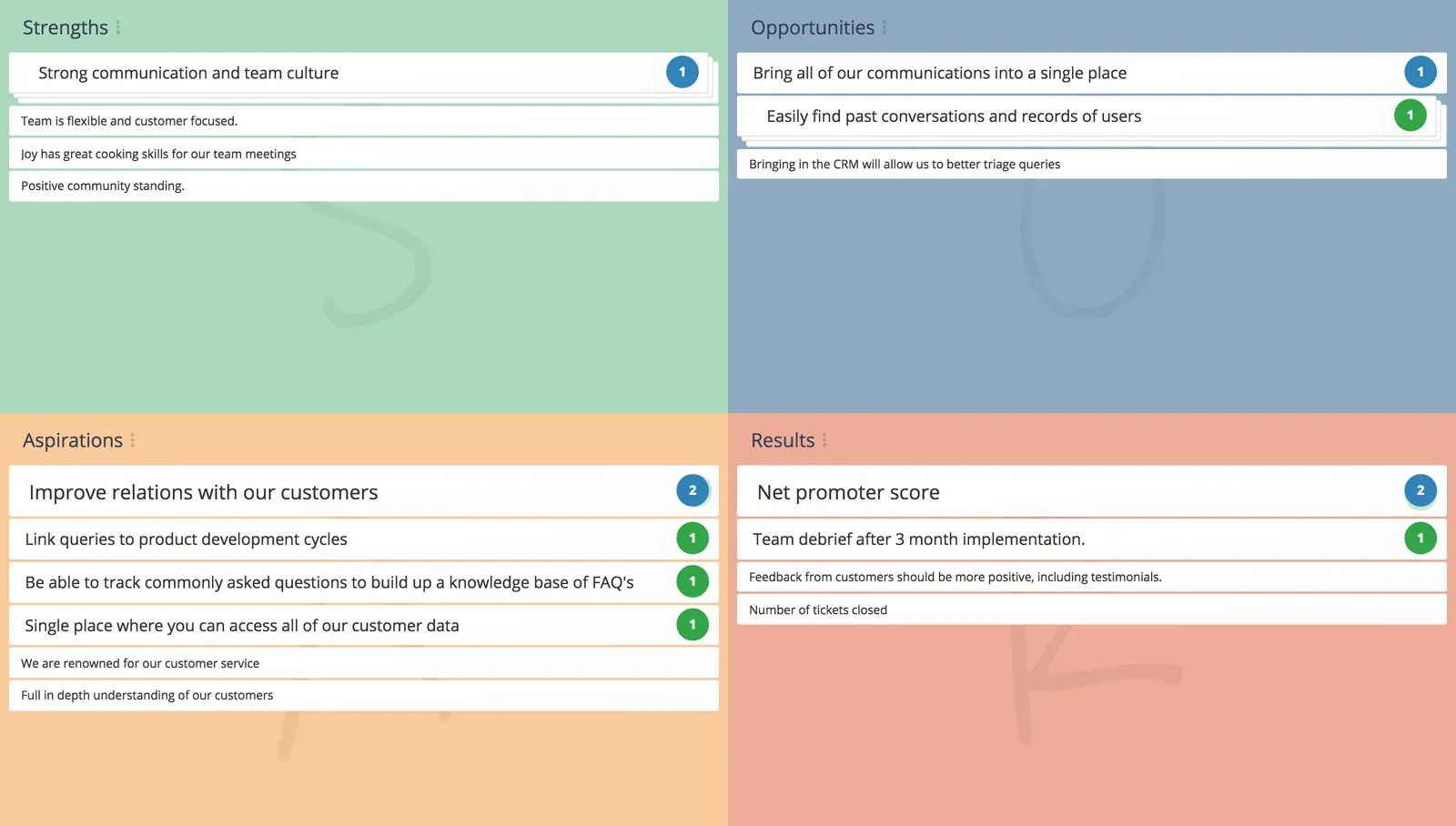
Free SOAR analysis template with a worked example: use the SOAR model (Strengths, Opportunities, Aspirations, Results) to plan strategy live with your team.
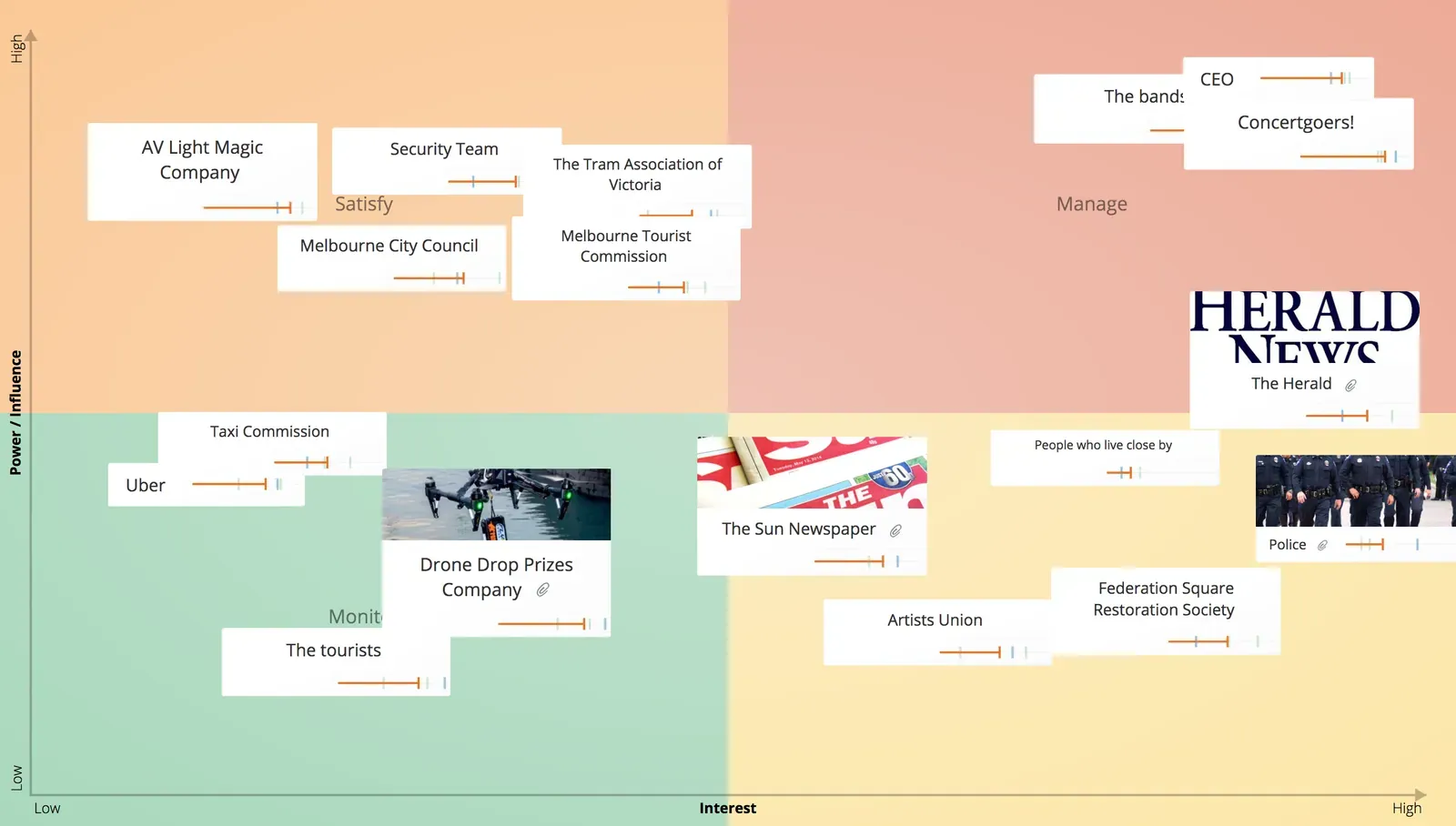
Stakeholder mapping plots who has influence and who has interest, so you know who to manage, satisfy, inform and monitor. Five methods, two worked examples and a free template.
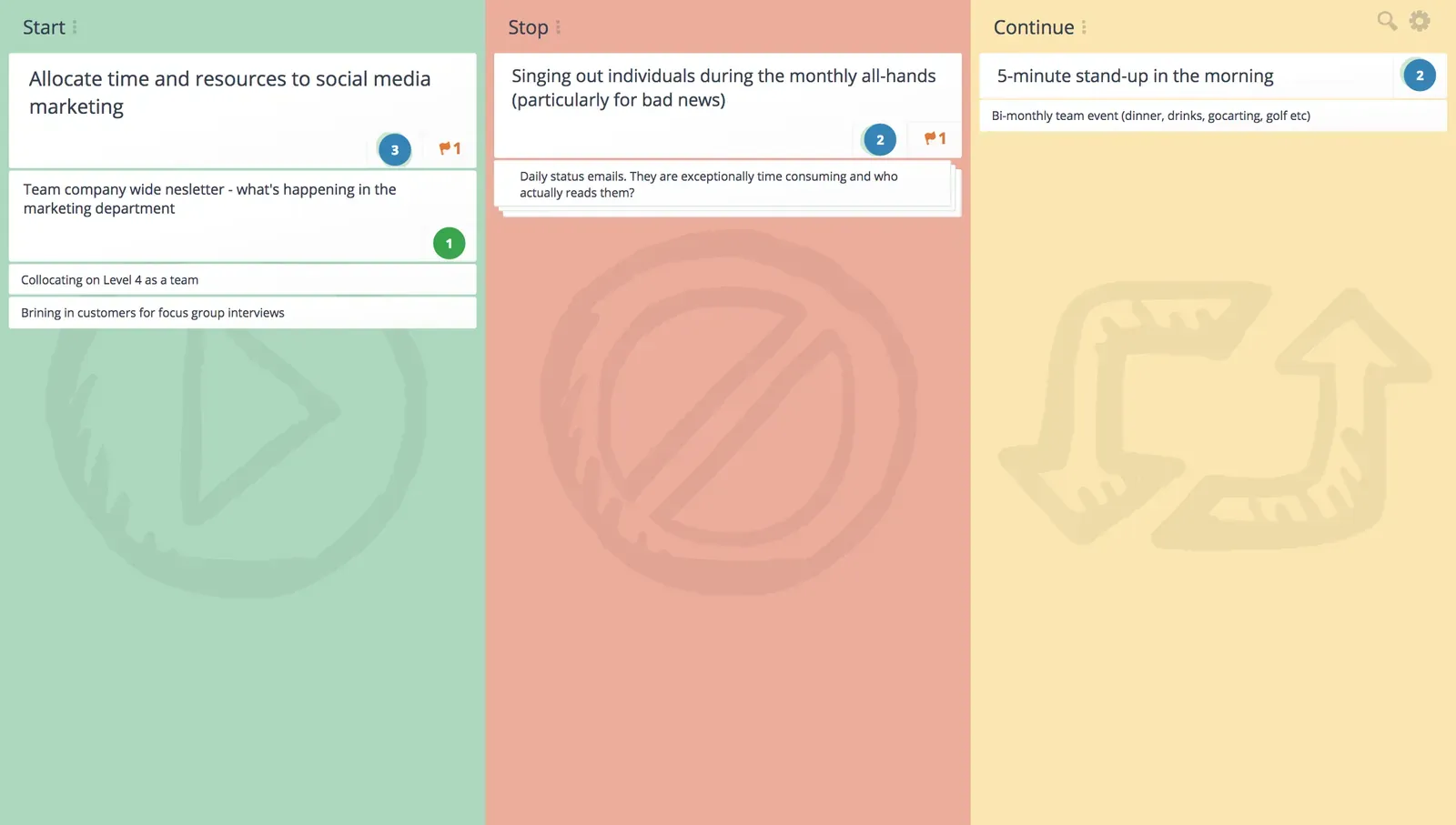
Start Stop Continue Retrospective is a simple way for teams to reflect on their recent experience and decide what they should change moving forward.
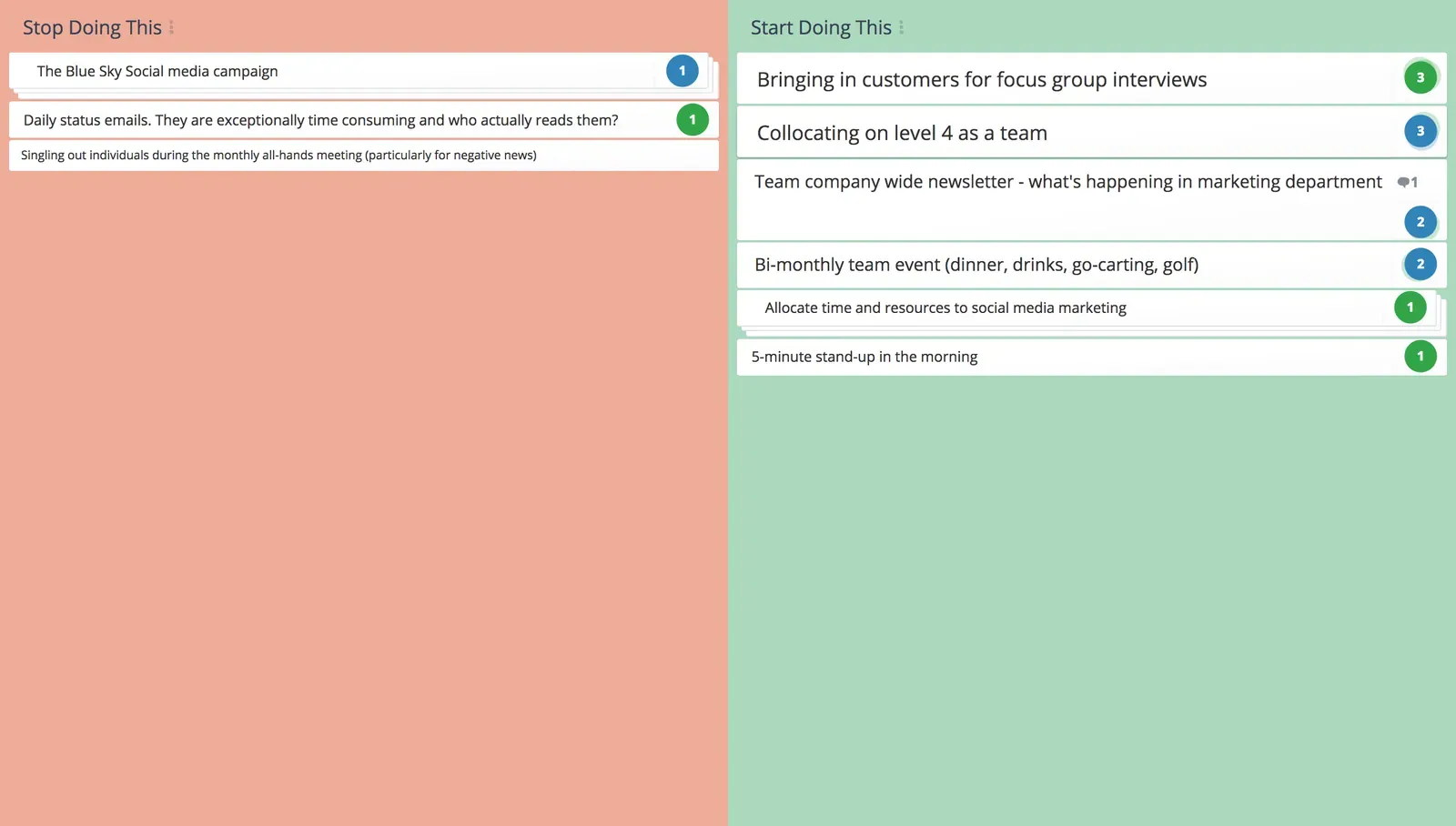
Start Stop Retrospective is an effective way for teams to reflect on their experiences and decide on what things they should change as they move forward.
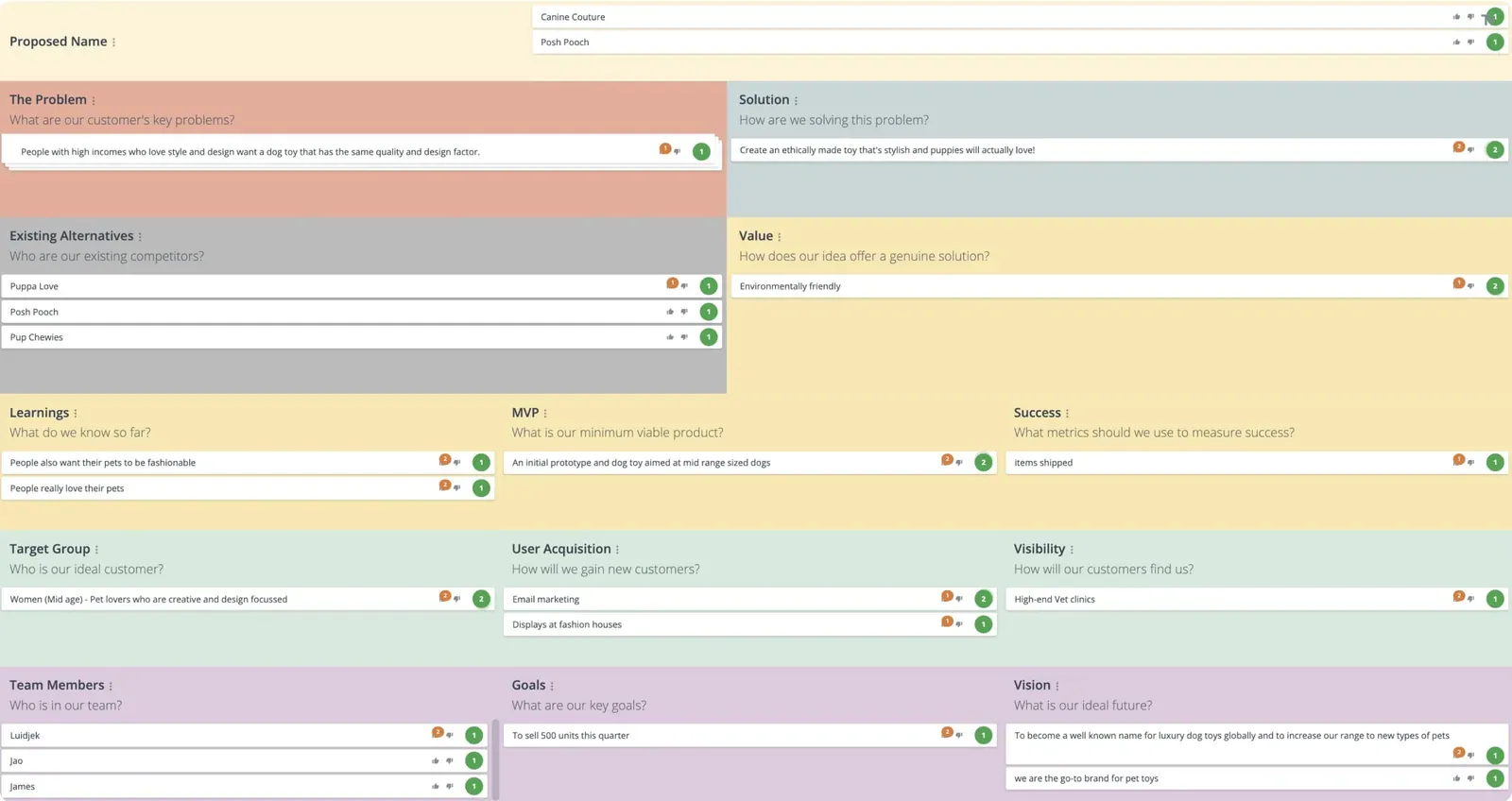
With the Startup Canvas, you'll have all the tools you need to turn your business idea into a thriving startup.
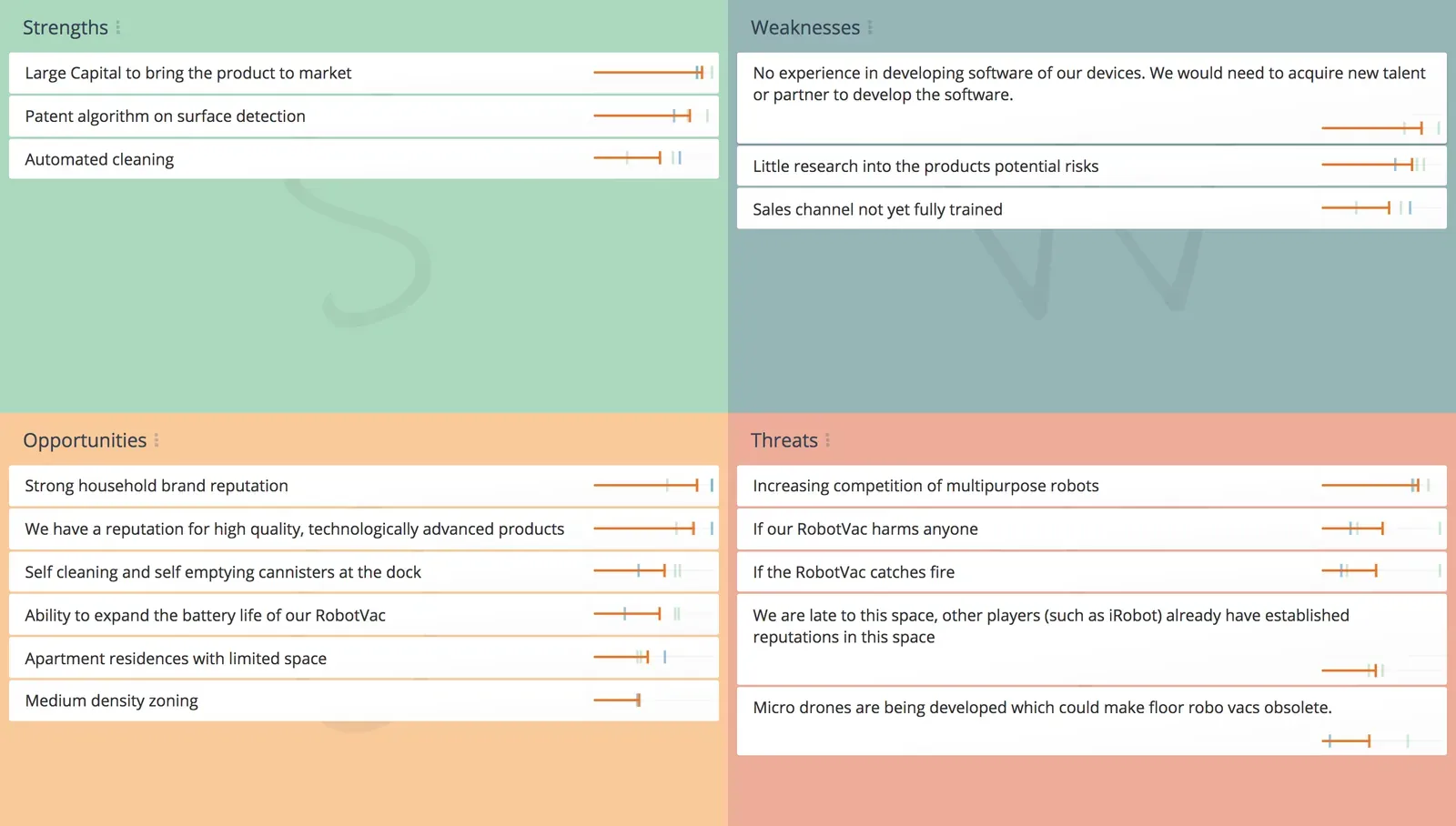
Collaborative SWOT analysis template to map strengths, weaknesses, opportunities and threats. Live input, examples, export-ready results.
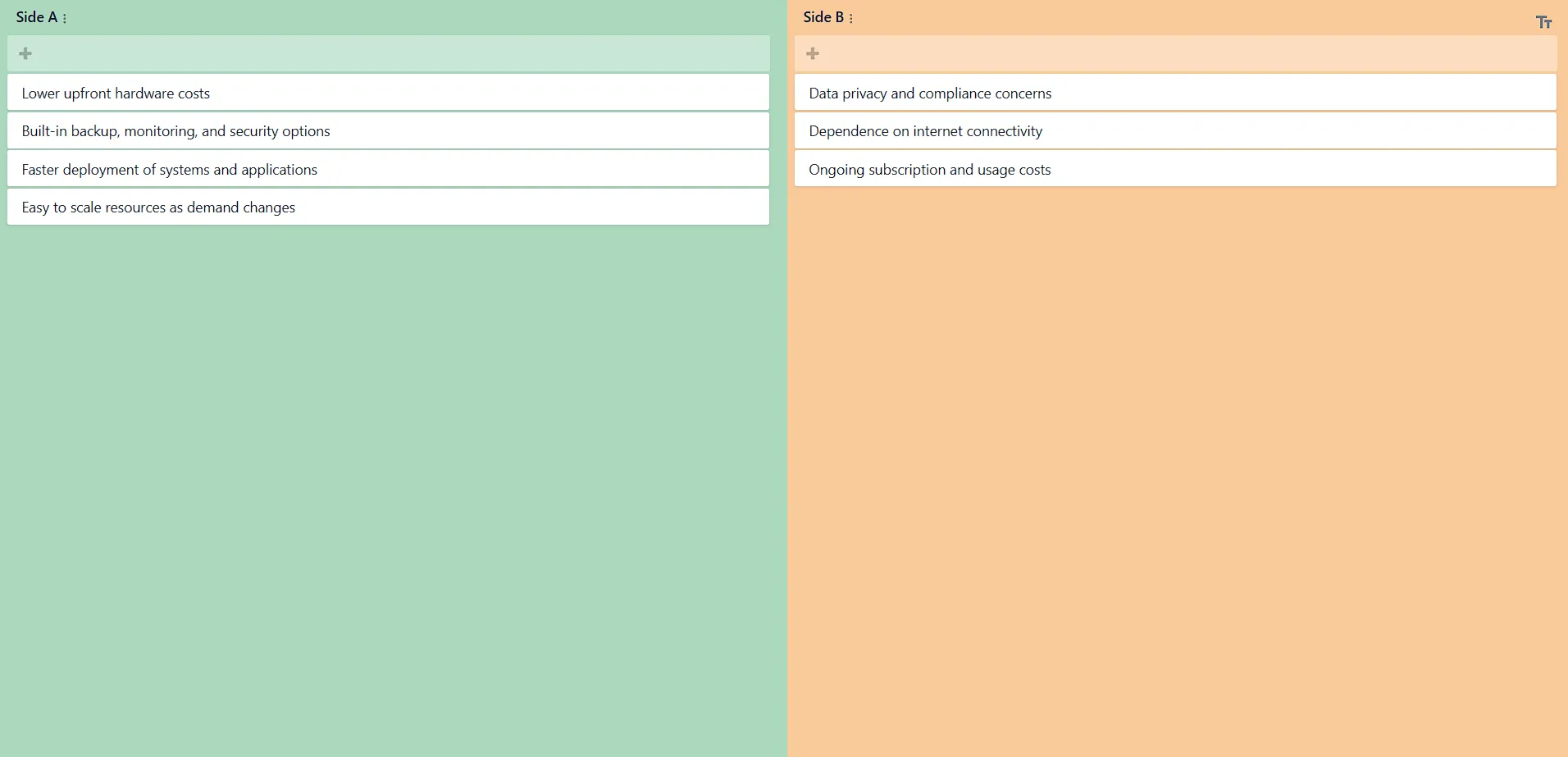
A T-chart is a two-column graphic organizer for comparing two sides: pros and cons, before and after, cause and effect. Build one live with your group.
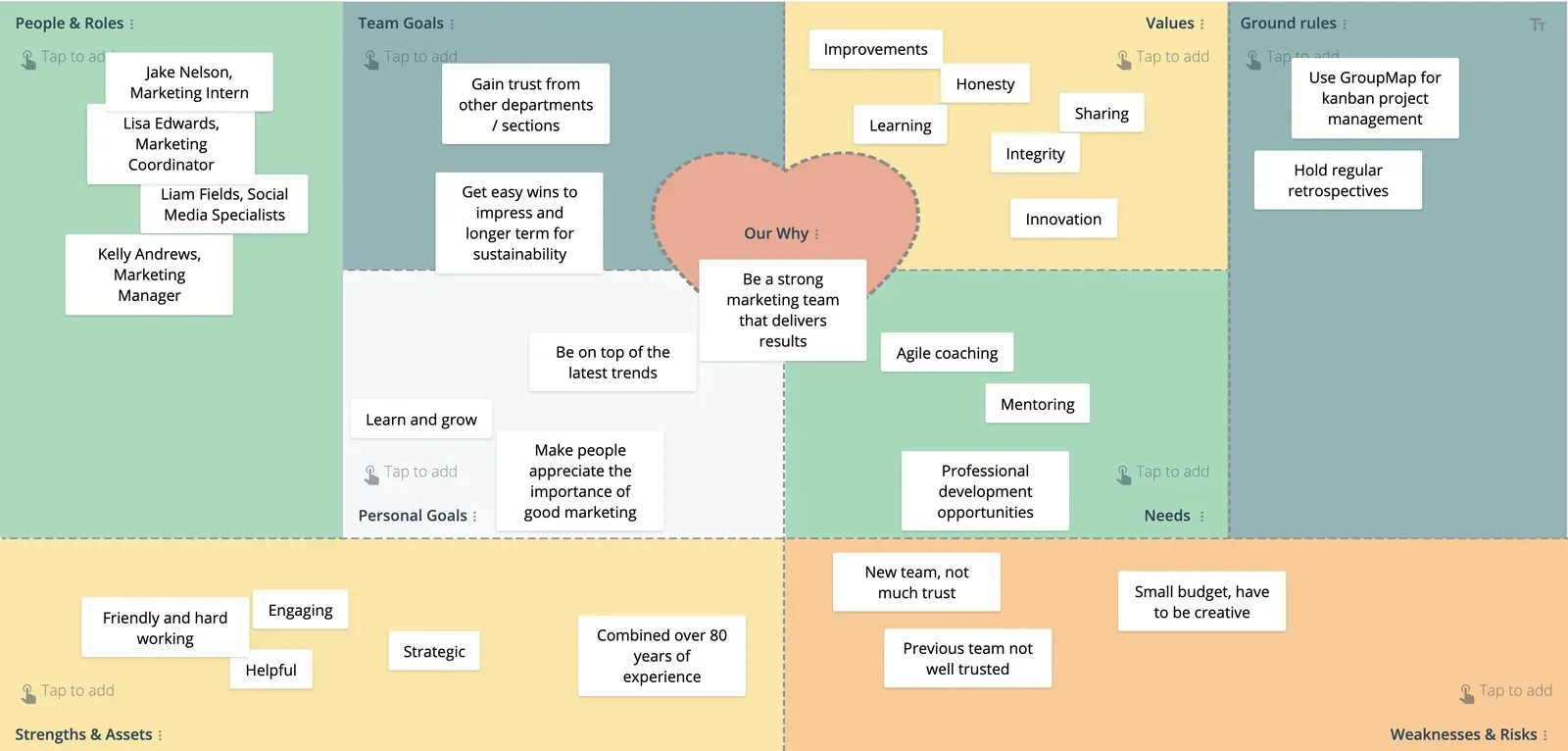
The Team Canvas was firstly developed by Alex Ivanov and is designed to work through with your team to help teams function effectively.
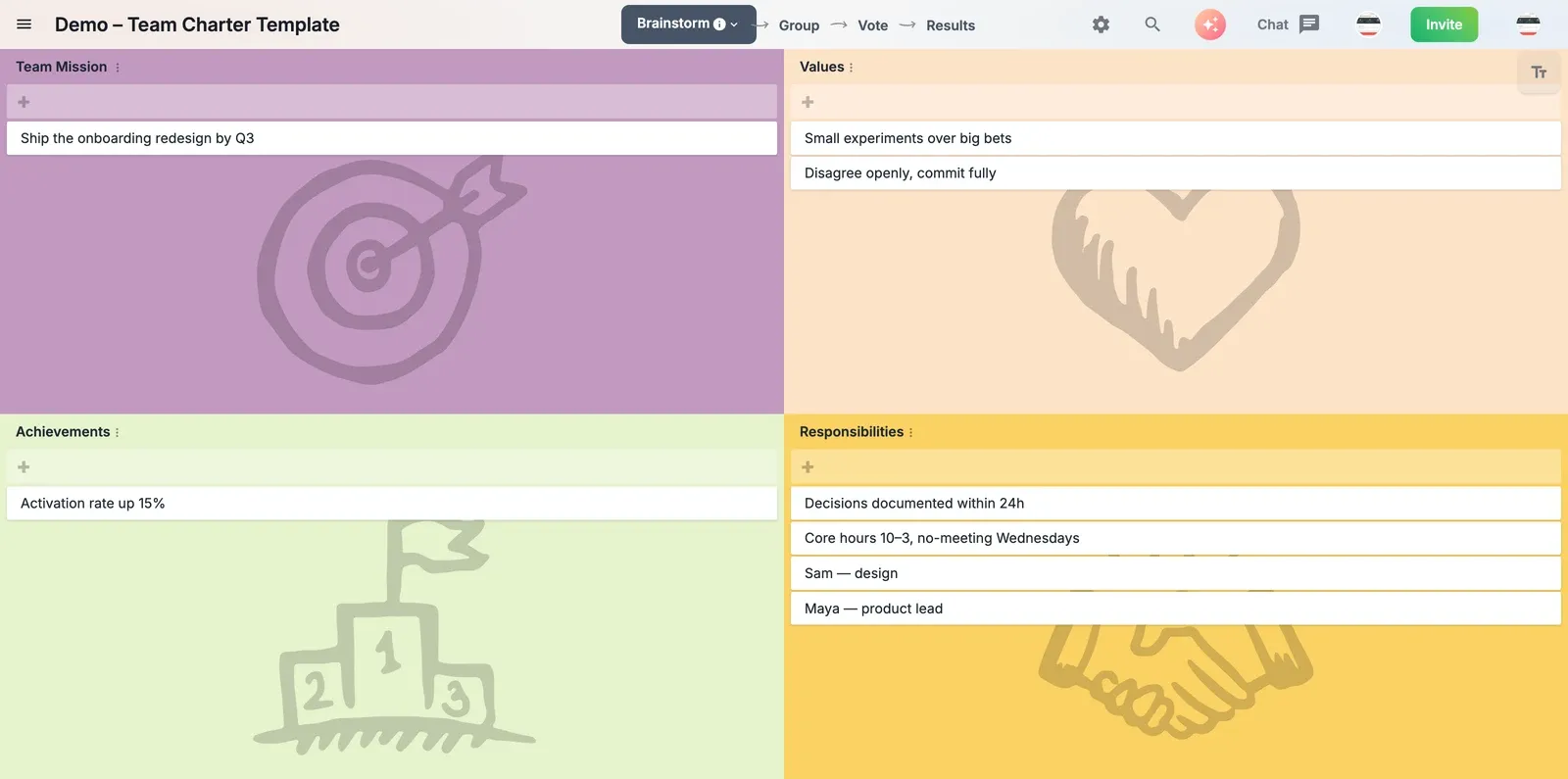
A team charter sets a team's purpose, values, roles, working agreements and success measures. See a worked example and build yours with our template.
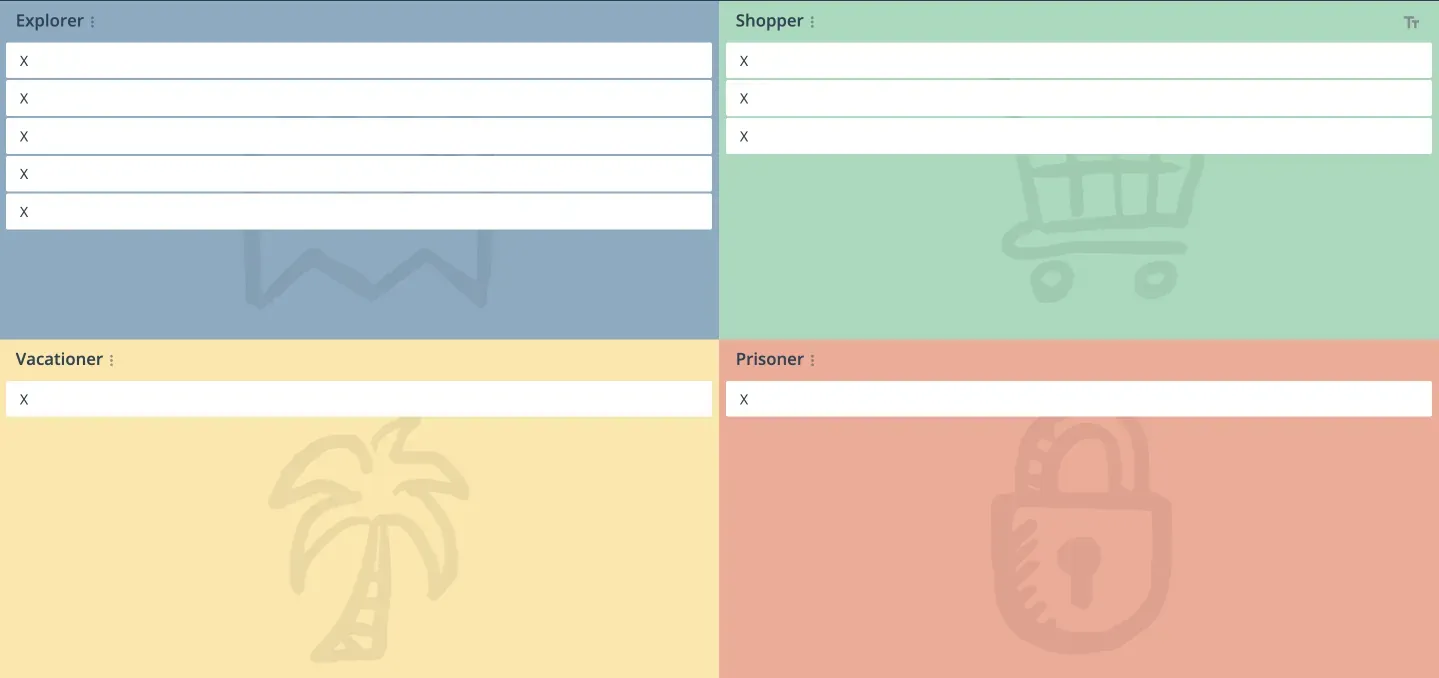
Learn what Derby and Larsen's ESVP retrospective check-in is, how it works, and how to use the ESVP template to understand your team.
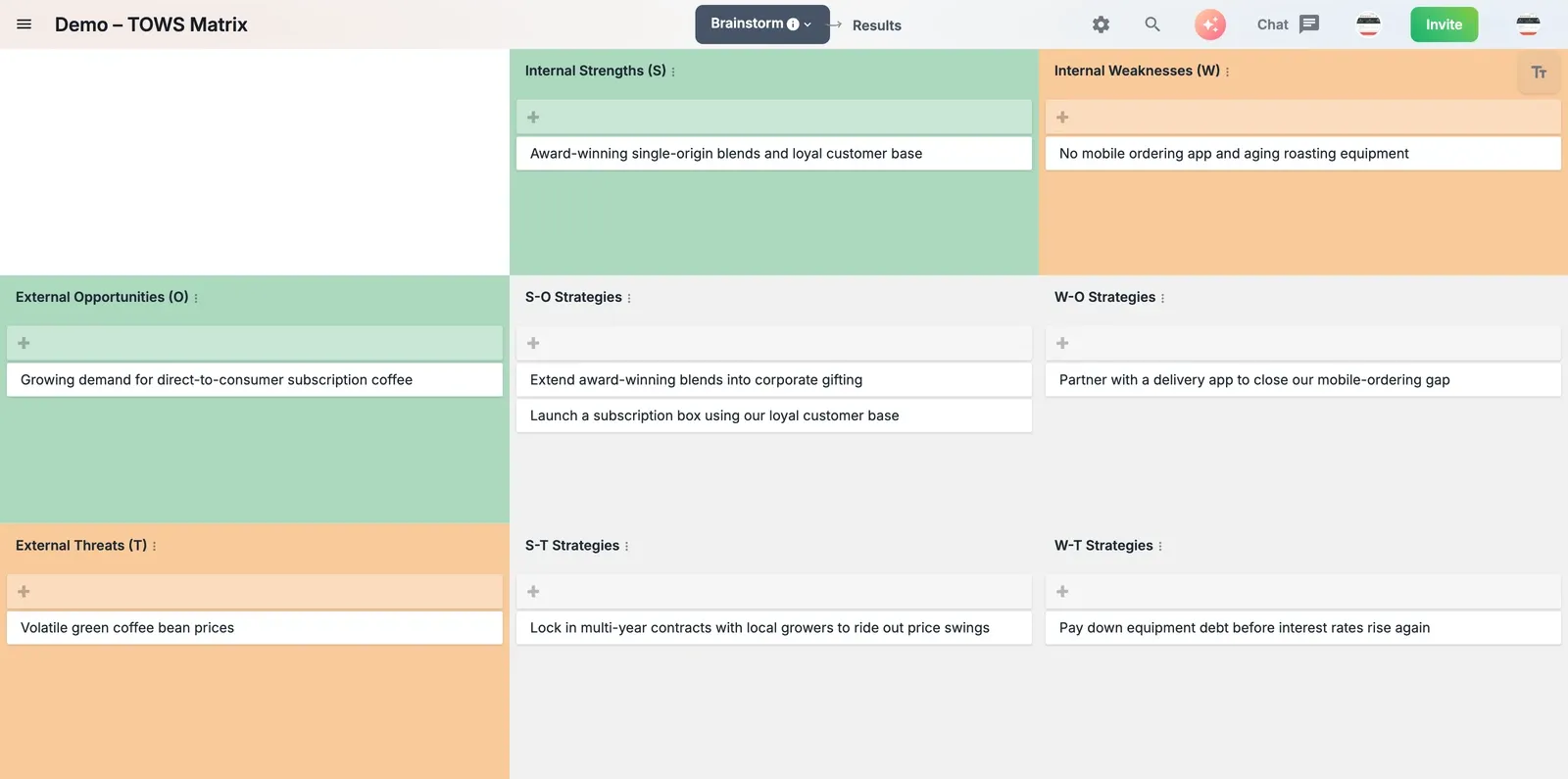
The TOWS matrix turns a SWOT into action by pairing strengths, weaknesses, opportunities and threats into SO, ST, WO and WT strategies. See an example.
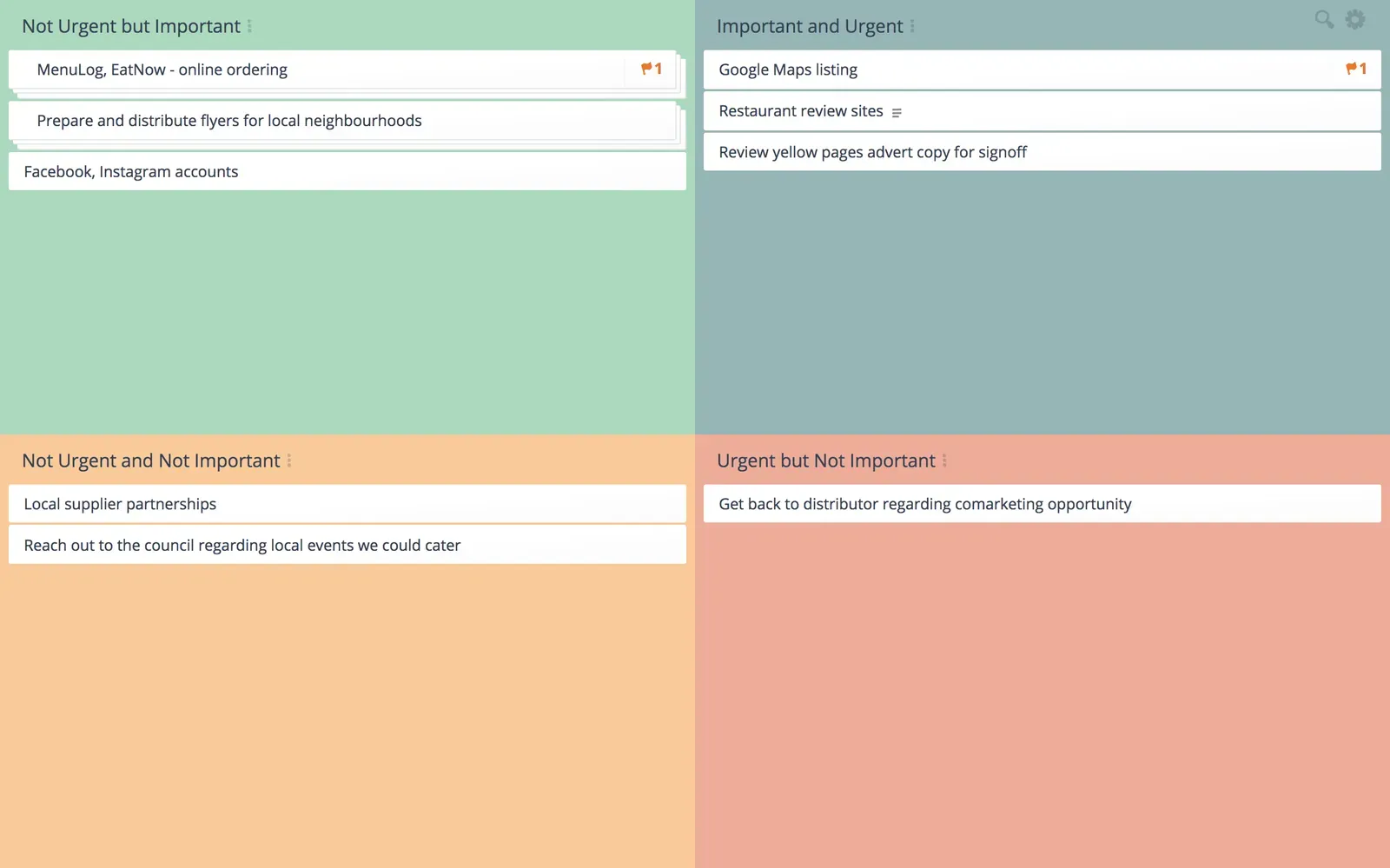
Use the urgent important matrix (the Eisenhower chart) to sort tasks into four quadrants by urgency and importance, live with your team in GroupMap.
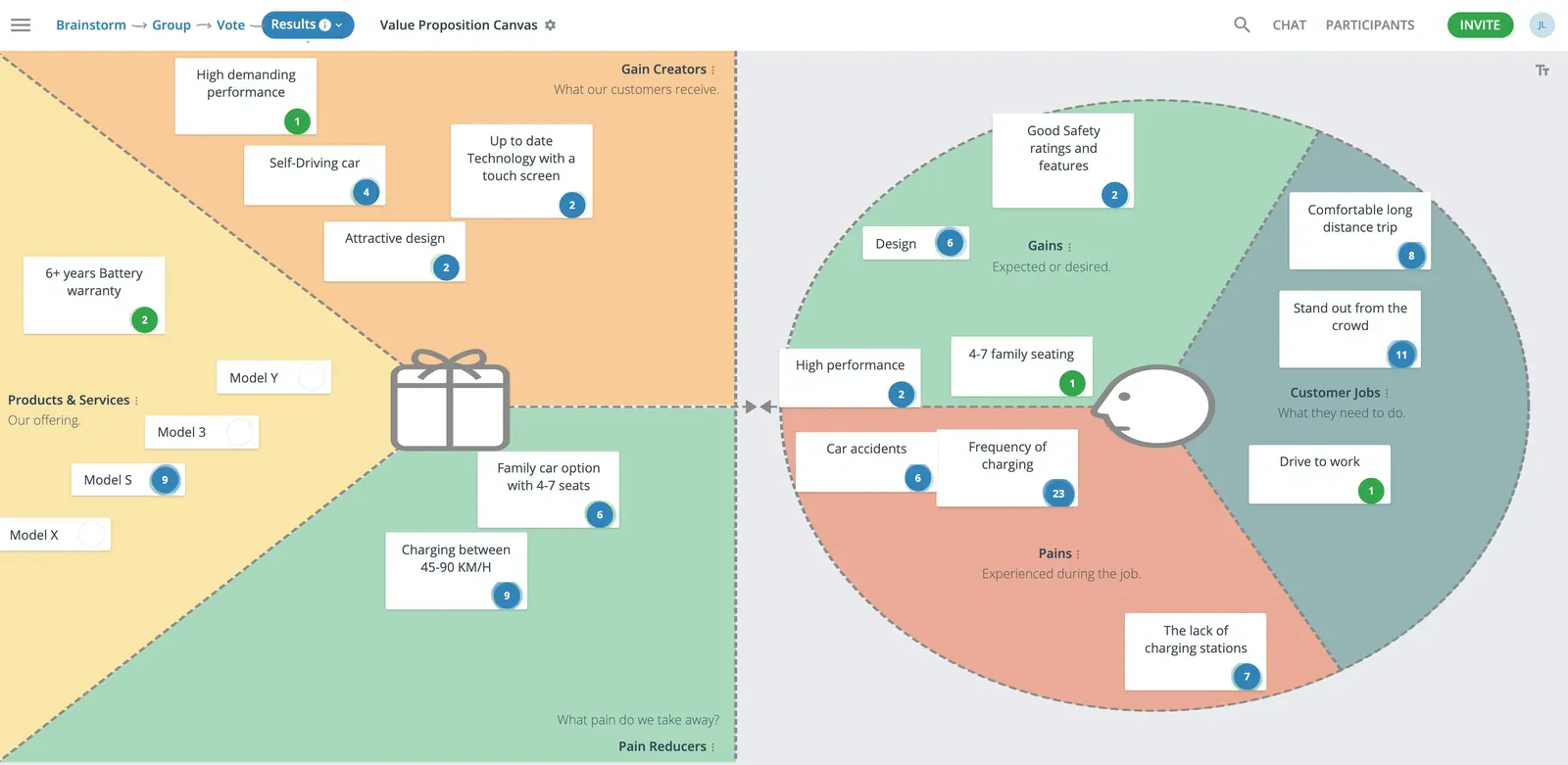
Map customer jobs, pains and gains with a value proposition canvas template. Capture ideas together, align product fit, and export results.
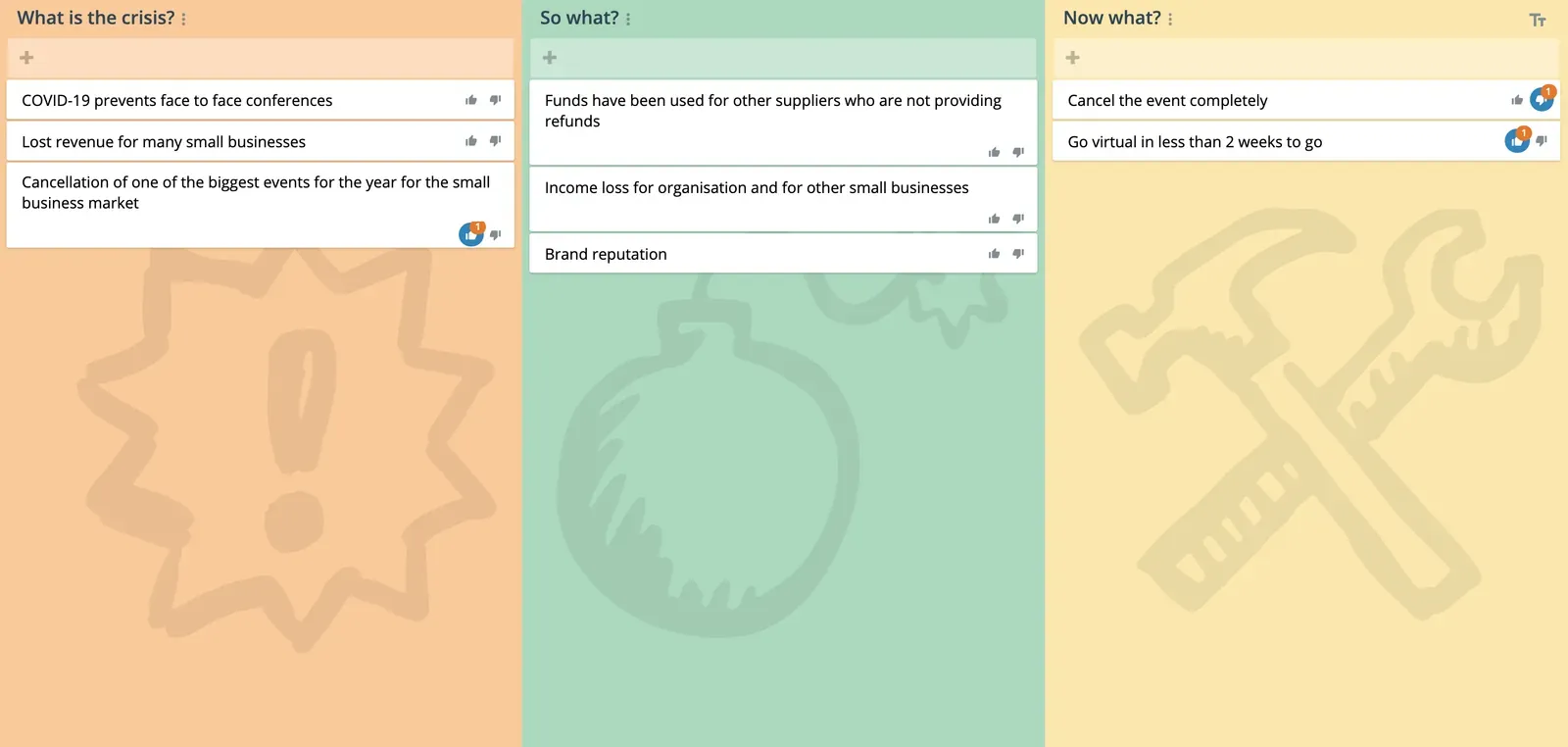
What So What Now What is a reflective model that helps teams evaluate a shared experience or a recent event. GroupMap customizable template.
Ready to get everyone on the same page?
Start a free GroupMap and turn your next discussion into clear, shared decisions.