Gap Analysis
A gap analysis compares your current state with your target state to reveal the gap and the actions to close it. Run one with your team.
What is a gap analysis?
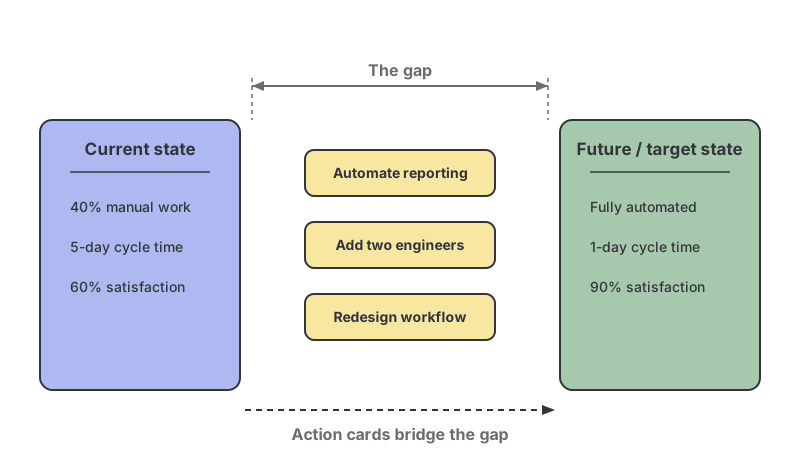
A gap analysis is a structured method for comparing your current state with your desired future state to identify the gap between them and the actions needed to close it. In short: where are we now, where do we want to be, and how do we get there?
It is one of the most versatile tools in planning, used for performance, skills, process, market and compliance questions alike. The power of a gap analysis is that it makes the distance between ambition and reality explicit and measurable, so a team can turn a vague goal into a concrete, prioritized plan.
Key takeaways
- A gap analysis compares current state vs future state to reveal the gap and how to close it.
- Core steps: define the target, assess the current state, identify the gap, find root causes, plan actions.
- It comes in many forms: performance, skills, market, process and compliance gap analysis.
- Its value is turning a goal into specific, owned actions, not just naming the shortfall.
- It works best collaboratively, so the current state is assessed honestly from every angle.
The gap analysis process
A gap analysis follows a simple, repeatable sequence:
| Step | Question it answers |
|---|---|
| 1. Define the future state | Where do we want to be? What does success look like, ideally measurably? |
| 2. Assess the current state | Where are we now, honestly and with evidence? |
| 3. Identify the gap | What is the difference between the two, and how big is it? |
| 4. Analyze root causes | Why does the gap exist? What is holding us back? |
| 5. Plan actions | What specific, owned steps will close the gap, and by when? |
Quantifying the gap wherever possible (a percentage, a number, a date) turns an abstract goal into something a team can actually manage and track.
Why use a gap analysis?
- It makes the distance between goals and reality explicit, so it can be acted on.
- It forces an honest assessment of the current state, not an optimistic one.
- Analyzing root causes prevents treating symptoms instead of the real problem.
- It produces a concrete, prioritized action plan with owners, not just a diagnosis.
Who should use a gap analysis?
Gap analysis is used across almost every function: leadership setting strategy, HR assessing skills, operations improving processes, product teams finding unmet market needs, and compliance teams measuring against standards. It fits anywhere there is a target to reach and a need to plan the route, from an annual strategic plan to a single team’s improvement goal.
Gap analysis example
A customer-support team wants to improve service quality:
- Future state: resolve 90% of tickets within 24 hours, with a customer-satisfaction score of 4.5/5.
- Current state: 62% of tickets resolved within 24 hours, satisfaction at 3.8/5.
- The gap: a 28-point resolution-speed gap and a 0.7-point satisfaction gap.
- Root causes: no triage process, thin coverage at peak hours, and agents lacking product-depth training.
- Actions: introduce ticket triage, adjust shift coverage to peaks, and run a product-training program, each with an owner and a review date.
The exercise converts a general wish (“better support”) into measurable targets and a specific plan to reach them.
How to run a gap analysis in GroupMap
Assessing the current state honestly needs input from the people doing the work, so a gap analysis is far stronger run as a group.
- Set the objective. Define the future/target state and the area under review.
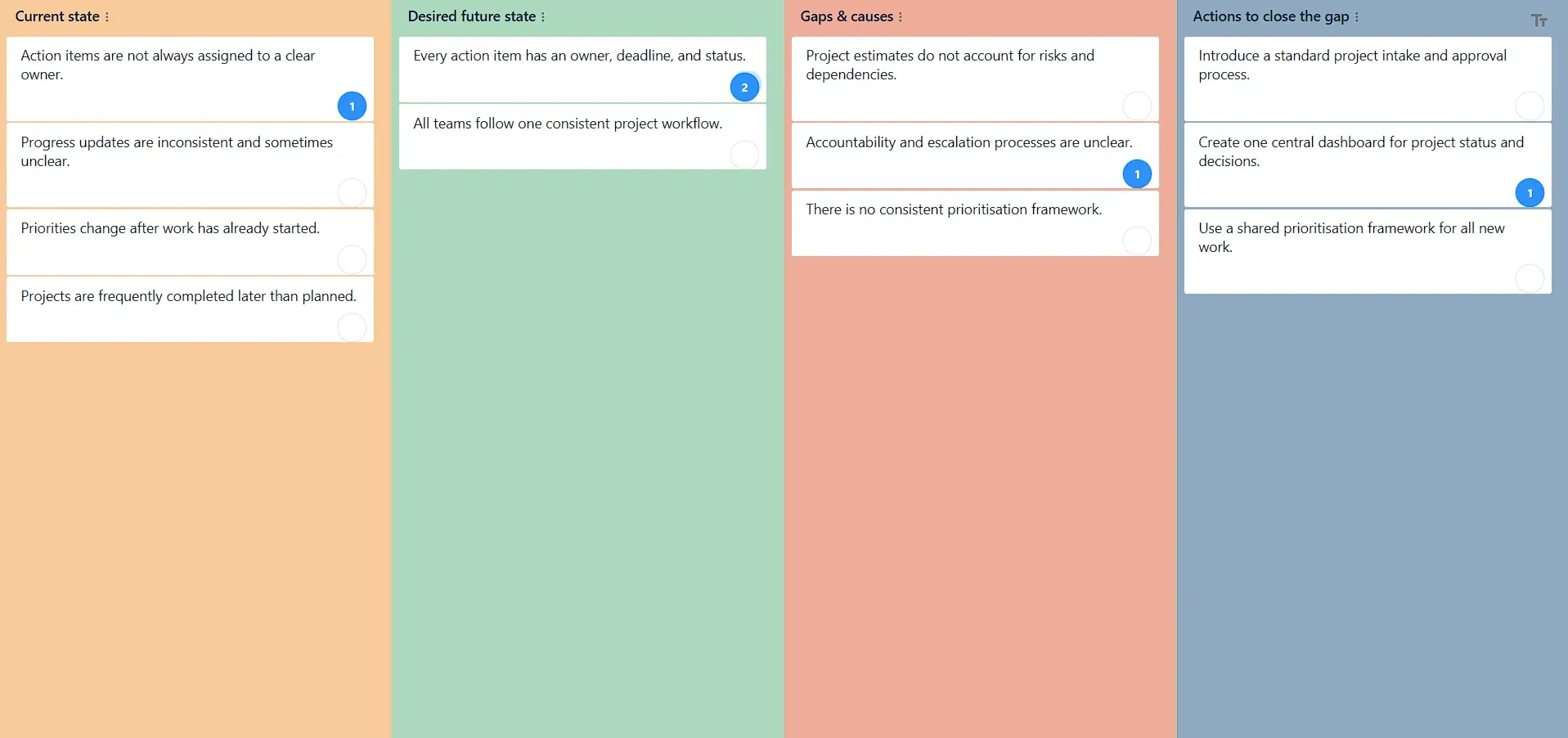
- Describe the current state. Everyone contributes an honest, evidence-based picture of where things stand.
- Identify the gaps. Compare current and future state and, where possible, quantify each gap.
- Group and find causes. Cluster the gaps into themes and dig into the root cause of each.
- Propose actions. Everyone adds the moves that would close each gap, one action per card.
- Vote and review. Vote on the actions you most support, check every priority gap has an owner and a next step, then distribute the plan and track progress.
Limitations of a gap analysis
- It is only as reliable as the honesty of the current-state assessment. Optimism undermines it.
- A vague or unmeasurable future state produces a vague gap and a weak plan.
- It is a snapshot; targets and conditions move, so it needs periodic review.
- Without root-cause analysis it risks planning actions that treat symptoms, not causes.
Related templates
References
Close the gap together with GroupMap
A gap analysis depends on an honest, shared view of where you really are, and GroupMap makes that possible. Everyone can describe the current state, name gaps and propose actions at once, while private input keeps the assessment candid and free of groupthink. Live grouping and voting turn scattered observations into agreed priorities, and customizable workflows keep the session moving from diagnosis to an owned, trackable plan for closing the gap.
Frequently asked questions
What is a gap analysis?
What are the steps of a gap analysis?
What is the difference between a gap analysis and a SWOT analysis?
What are common types of gap analysis?
What tools are used for gap analysis?
How to run it in GroupMap

Objective
Define the target or future state you are measuring against, and the area the analysis covers.

Brainstorm
Capture the current state honestly, describe the desired future state, name the gaps between them, and propose the actions that close each one.

Group
Cluster the gaps into themes and identify the root causes behind each one.

Vote
Vote on the actions you most support, so the plan carries the group's backing rather than one person's view.

Results
Review the plan end to end: every priority gap should leave the session with an owner and a next step.
Ready to get everyone on the same page?
Start a free GroupMap and turn your next discussion into clear, shared decisions.