Strategy frameworks
A guide to the essential strategy and analysis frameworks (SWOT, GE-McKinsey, TOWS, 3Cs, gap analysis and more) with when to use each and how to run them.
Strategy frameworks for analyzing and deciding together
Strategy frameworks are structured models that help a team understand its situation and make better strategic decisions. Each one brings discipline and a shared language to a particular question: where we stand, what forces act on us, where our advantage lies, and where to invest. Used well, they replace the loudest opinion with a reasoned, shared view.
No single framework does everything. The strongest strategy work combines a few: an external scan, an internal audit, and a tool to turn the analysis into action. And whichever you choose, the real value comes from running it live with the group, so the analysis reflects many perspectives and the decision has genuine buy-in. Below are the frameworks we see teams reach for most.

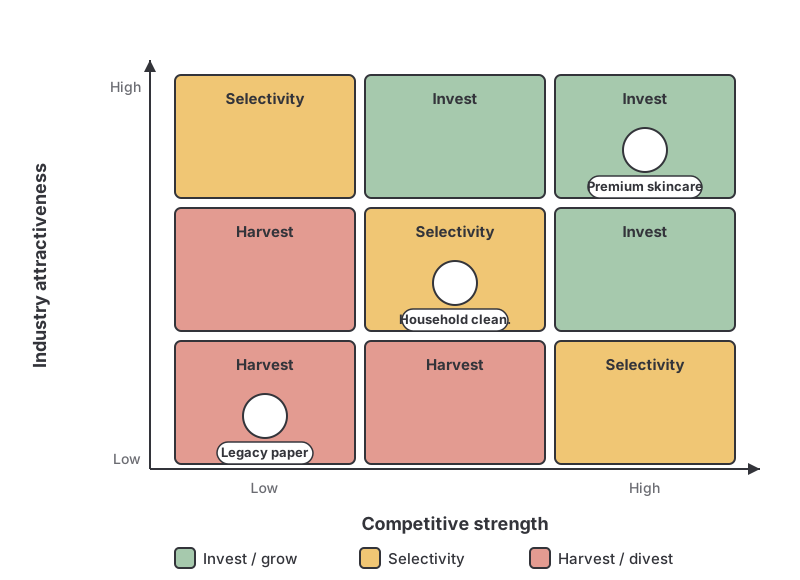
Allocate the portfolio with matrices
When you run several products or business units, portfolio matrices show where to invest. The GE-McKinsey matrix is a nine-box grid crossing industry attractiveness with competitive strength, while the BCG matrix is a simpler 2×2 based on market growth and share.
Use them to decide, as a leadership group, which units to grow, hold, harvest or divest, and to make those allocation trade-offs explicit.
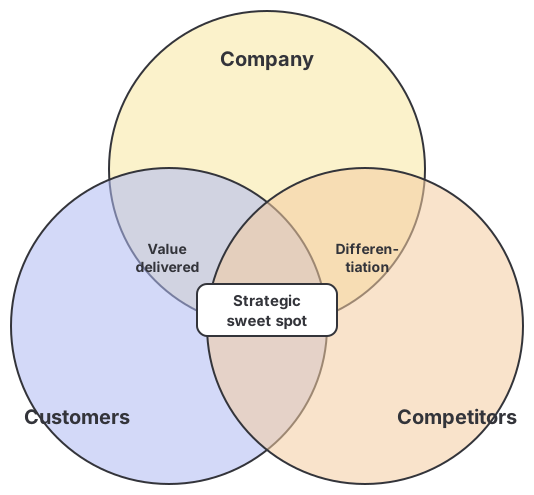
Position where you can win
The 3Cs framework (Company, Customers, Competitors) finds the sweet spot where your strengths meet a real customer need better than rivals can. For a wider view, a situational analysis extends this into a full 5C, SWOT and PEST scan of your context.
These are the diagnostics that ground positioning and market decisions in evidence rather than assumption.
Turn analysis into a plan
Analysis only matters if it changes what you do. Two frameworks bridge that gap:
- TOWS matrix — takes the factors from a SWOT analysis and pairs them into concrete SO, ST, WO and WT strategies, turning a static list into action.
- Gap analysis — compares your current state with your target state, quantifies the gap, and plans the specific steps to close it.
For a strengths-based alternative to SWOT, the SOAR analysis reframes the conversation around strengths, opportunities, aspirations and results. The Ansoff matrix then helps map the growth options (market penetration, development, product development and diversification) that your strategy might pursue.
Which strategy framework should you use?
Match the tool to the decision. Use a situational analysis or 3Cs framework to understand your position, PEST or PESTLE to scan the macro-environment, the GE-McKinsey or BCG matrix for portfolio choices, TOWS to convert a SWOT into strategy, and a gap analysis to plan the route to a target. Most teams combine a few — and whichever you pick, running it live with the group is what turns analysis into an agreed decision.
Ready to get everyone on the same page?
Start a free GroupMap and turn your next discussion into clear, shared decisions.