Situational analysis (5Cs)
A situational analysis assesses the internal and external factors shaping your business using tools like 5C, SWOT and PEST. See a worked example and template.
What is a situational analysis?
A situational analysis is a structured assessment of the internal and external factors shaping an organization, used to understand its current position before setting strategy. It answers the question where are we now? by drawing on frameworks such as the 5C analysis, SWOT and PEST to build a complete picture of the business environment.
Rather than a single tool, a situational analysis is an approach: you deliberately scan the company, its customers, its competitors and the wider market so that goals and plans rest on evidence instead of assumptions. It is the diagnostic first step of almost every strategic or marketing planning cycle.
Key takeaways
- A situational analysis assesses internal and external factors to establish where you stand today.
- It typically combines frameworks (5C, SWOT and PEST/PESTLE) for full coverage.
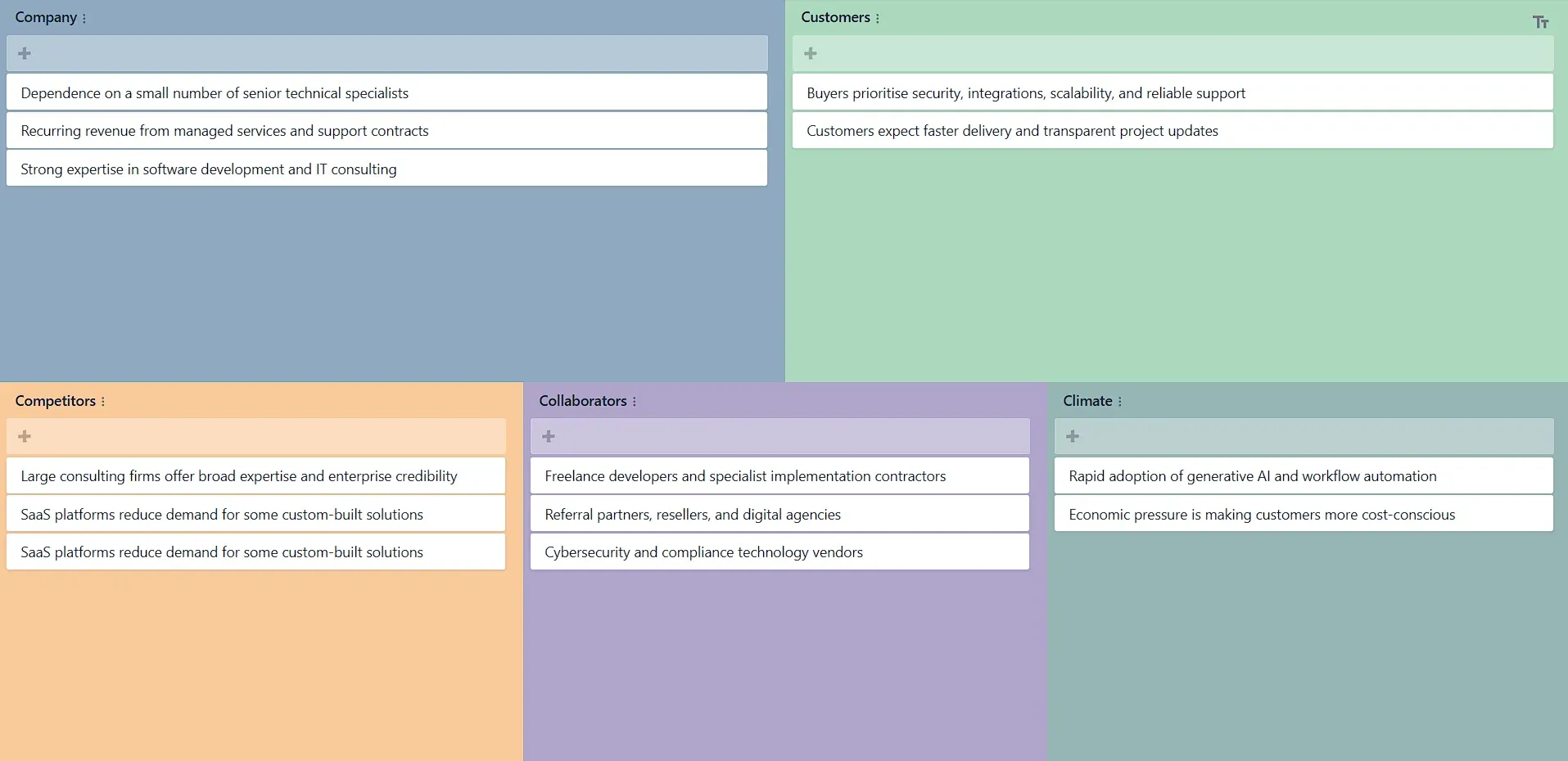
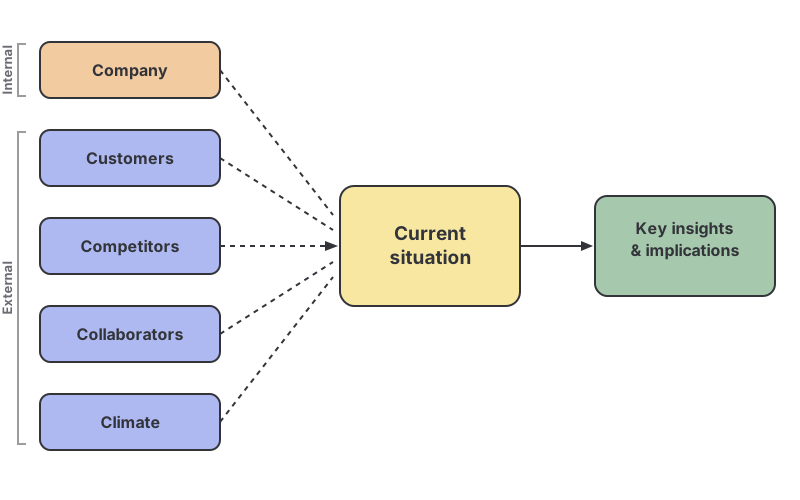
- The 5Cs are Company, Customers, Competitors, Collaborators and Climate.
- Its purpose is diagnosis: surface opportunities, risks and gaps before you set strategy.
- It works best as a group exercise so the picture reflects many vantage points.
The building blocks of a situational analysis
Most situational analyses combine a few complementary lenses:
| Lens | What it covers | Common framework |
|---|---|---|
| Internal | Resources, capabilities, performance, culture | SWOT (strengths, weaknesses), 5C (Company) |
| Customer & market | Needs, segments, size, growth, trends | 5C (Customers), market research |
| Competition | Rivals, positioning, share, substitutes | 5C (Competitors), perceptual map |
| Partners | Suppliers, channels, alliances | 5C (Collaborators) |
| Macro-environment | Political, economic, social, technological forces | PEST / PESTLE |
The 5C framework (Company, Customers, Competitors, Collaborators, Climate) is the most common single checklist because it spans all of these in one pass.
Why use a situational analysis?
- It replaces gut feel with a shared, evidence-based view of the current position.
- It surfaces opportunities and risks early, before goals and budgets are locked in.
- It reveals gaps between where the organization is and where it wants to be.
- It creates alignment: everyone starts strategy work from the same understanding of reality.
Who should use a situational analysis?
Situational analysis is used by strategy teams, marketers, product managers and business owners at the planning stage. Marketing plans, business plans, market-entry decisions and annual strategy reviews all begin with one. It is equally useful for a startup validating its market and an established company reassessing after a disruption.
Situational analysis example
A regional gym chain runs a 5C situational analysis before its annual plan:
- Company: strong local brand and loyal members, but ageing equipment and a weak digital offering.
- Customers: growing demand for flexible, app-based and hybrid home/gym fitness among younger members.
- Competitors: budget chains expanding fast on price; boutique studios winning on experience.
- Collaborators: good relationships with local physios and corporate wellness programs to build on.
- Climate: rising health awareness (positive) but cost-of-living pressure squeezing discretionary spend (negative).
The implications write themselves: invest in a digital/app experience to meet customer trends and defend against boutiques, lean on corporate and physio partnerships for stable revenue, and protect value perception against budget rivals.
How to run a situational analysis in GroupMap
A good situational analysis pulls knowledge from across the organization, so it is far richer when run as a group. The GroupMap template is the 5Cs situational analysis: Company, Customers, Competitors, Collaborators and Climate.
- Set the objective. State the decision or plan the analysis must inform so people gather relevant context.
- Choose your lenses. Decide which frameworks to use (5C, SWOT, PEST) based on the question.
- Brainstorm factors. Everyone adds internal and external factors under each heading.
- Group into themes. Cluster related points so patterns and implications emerge.
- Draw implications. Discuss what each theme means for strategy, and capture the key insights.
- Agree next steps and share. Turn insights into owned actions with dates, then distribute the summary.
Limitations of a situational analysis
- It can become a data-collection exercise that never converts into decisions, so always end on implications.
- It is a snapshot; the situation changes, so revisit it each planning cycle.
- Coverage depends on the frameworks chosen; a narrow set can miss important factors.
- Without diverse input it inherits the blind spots of whoever runs it, which is why group facilitation matters.
Related templates
References
Build a shared picture with GroupMap
A situational analysis is only as complete as the perspectives that feed it, and GroupMap brings them all onto one board. Sales, marketing, operations and leadership can add factors under every lens at once, cluster them into themes together, and reach a shared read on where the organization stands. Private brainstorming reduces groupthink and customizable workflows keep the session moving from raw factors to the insights that shape your strategy.
Frequently asked questions
What is a situational analysis?
What frameworks are used in a situational analysis?
What are the 5Cs of a situational analysis?
Why is a situational analysis important?
When should you do a situational analysis?
How to run it in GroupMap

Objective
Frame the decision or question the analysis must inform, so the group gathers the right context.

Brainstorm
Gather internal and external factors across the chosen lenses: company, customers, competitors, market and macro trends.

Group
Cluster the factors into themes so patterns and implications become clear.

Results
Agree the key insights and implications for strategy, then share them with stakeholders.

Action
Turn the implications into next steps, with an owner and a date against each one.
Ready to get everyone on the same page?
Start a free GroupMap and turn your next discussion into clear, shared decisions.