Decision-making frameworks
A guide to the best decision-making frameworks — decision matrix, decision tree, affinity diagram, pros and cons — with templates to run each with your team.
Decision-making frameworks that help teams choose well
A decision-making framework is a structured method for making a choice — a repeatable way to lay out the options, the criteria that matter, and the trade-offs between them so the decision is transparent and defensible rather than a matter of who spoke loudest.
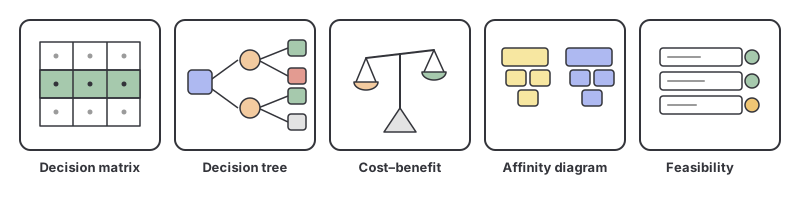
The right framework depends on the decision. Comparing several options against competing criteria calls for a decision matrix; weighing uncertain outcomes suits a decision tree; making sense of a wall of ideas needs an affinity diagram; and the simplest case for and against fits a pros and cons list. Below are the frameworks worth knowing, each with a template you can run live with your team.
Frameworks matter most when a group decides together. Run well — with everyone contributing independently before the discussion opens up — they turn a room full of opinions into a shared, well-reasoned choice. Run in GroupMap, that structure is built in.
Score and compare options
When you have several credible options and several things that matter, scoring frameworks make the trade-offs explicit and the choice defensible.
- Decision matrix — score each option against weighted criteria and total them to reveal the strongest choice. The go-to for vendor selection, hiring, and feature prioritization.
- Pros and cons list — the simplest structured comparison, laying the case for and against side by side.
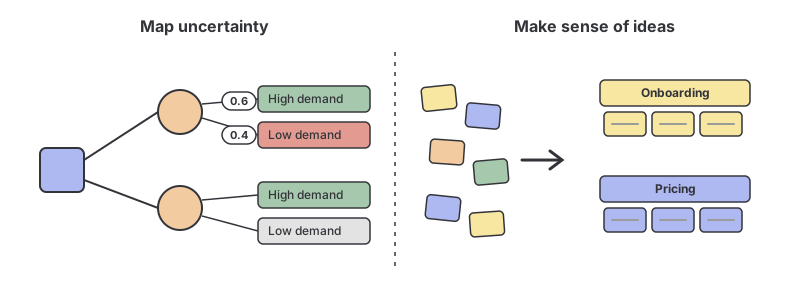
Find the themes in what the room says
Some decisions are less about scoring options and more about making sense of everything the room has put on the table.
- Affinity diagram — cluster a large number of ideas or observations into natural themes so patterns become clear and priorities emerge.
Analyze the wider picture
Bigger decisions benefit from frameworks that map the forces, positions, and priorities around a choice before you make it.
- SWOT analysis — weigh strengths, weaknesses, opportunities, and threats to ground a strategic decision.
- Force field analysis — map the forces driving and resisting a change to judge whether it will stick.
- Impact effort matrix — plot options by impact against effort to find the quick wins and the big bets.
Why run decision frameworks with your team in GroupMap
A framework is only as good as the thinking that goes into it — and the biggest threat to good group decisions is not a lack of structure but bias: anchoring on the first idea, deferring to the most senior voice, and quietly settling for consensus. GroupMap is built to counter that. Everyone contributes independently before the discussion opens, so every option, score, and idea is on the table before influence sets in. The framework aggregates the group’s input live, keeps the reasoning visible, and turns the outcome straight into agreed actions, whether your team is in one room or spread across the world.
Ready to get everyone on the same page?
Start a free GroupMap and turn your next discussion into clear, shared decisions.