Fishbone (Ishikawa) Root Cause Analysis
Run a Fishbone (Ishikawa) diagram with a group to sort possible causes into categories, vote on the root causes to tackle, and agree actions with owners.
What is a Fishbone (Ishikawa) Root Cause Analysis?
The Fishbone (Ishikawa) Root Cause Analysis is a collaborative tool used to systematically identify and analyze the potential causes of a specific problem or challenge.
Named for its resemblance to a fish’s skeleton, this diagram visually organizes potential causes into categories to pinpoint the root issue more effectively.
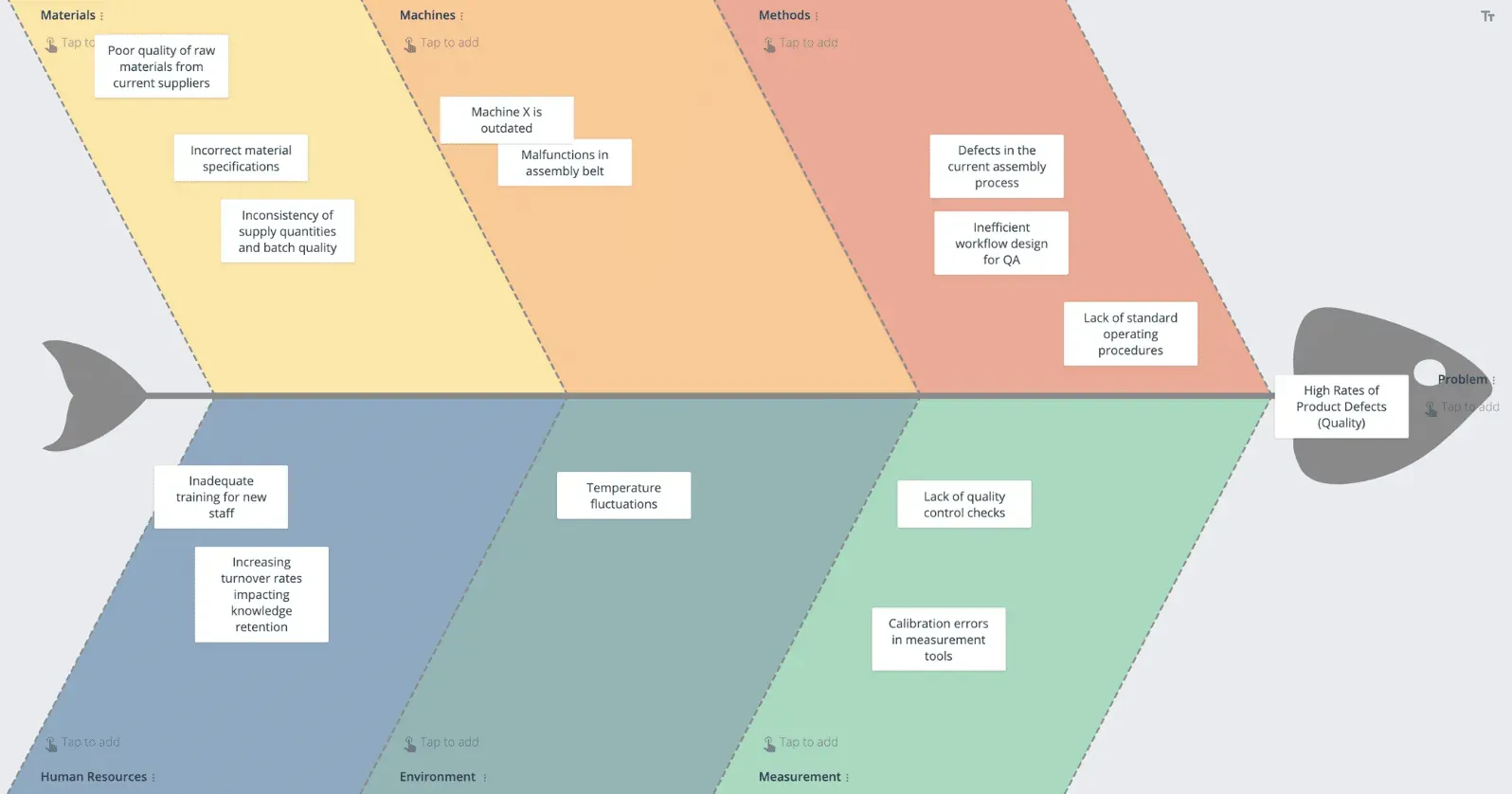
The key components of the Fishbone Root Cause Analysis are:
The fish head: This is the main problem or issue you want the group to analyze.
The spine and main bones: The spine runs back from the head, and the main bones branching off it are the categories or broad areas where causes might lie. These can either be created as a standard in advance, or determined when different issues are raised. Causes can then be sorted under the bone they belong to.
The smaller bones: These are the specific issues that are creating the problem that need to be addressed.
Why do a Fishbone (Ishikawa) Root Cause Analysis?
- It provides a structured yet creative way to identify the root causes of a problem.
- Teams can visually break down complex problems into manageable and actionable pieces.
- It encourages diverse perspectives and input, ensuring that all potential factors are considered.
- With an in-built timer, discussions remain focused and time-efficient.
- Rather than addressing the symptoms of an issue or challenge, you can drill down towards a cause. This means that the action you take is more targeted and effective.
Tips for facilitating an effective Fishbone Root Cause Analysis
- Clearly define the problem or challenge you want the team to analyze. This ensures focus and avoids irrelevant discussions.
- Enable anonymity if possible, to encourage open and honest contributions, especially for sensitive or challenging topics.
- Guide the discussion to dig deeper into why a particular issue is occurring, rather than just identifying surface-level symptoms. Use the 5 Why approach.
- If multiple causes are identified, have participants vote to prioritize and figure out which root causes to address first.
- For each identified root cause, assign actionable solutions to prevent or mitigate the issue in the future.
Who should do a Fishbone (Ishikawa) Root Cause Analysis?
A Fishbone Root Cause Analysis is ideal for teams looking to solve complex problems collaboratively such as:
- Quality assurance and control teams identifying and addressing defects or errors in products or processes.
- Cross functional teams that have a shared problem.
- Agile teams aiming to resolve blockers and bottlenecks.
- Operational teams looking to improve operational efficiency and minimizing downtime.
- Customer service teams trying to identify the root causes of customer complaints or low satisfaction scores.
- Product development teams enhancing product design and resolving issues for new product launches.
- Health and safety teams investigating workplace accidents or health hazards.
- IT security teams troubleshooting system failures or security vulnerabilities.
- Education teams looking for gaps in training programs or student performance.
- Health care teams addressing patient care issues or inefficiencies in medical procedures.
Common Fishbone analysis formats
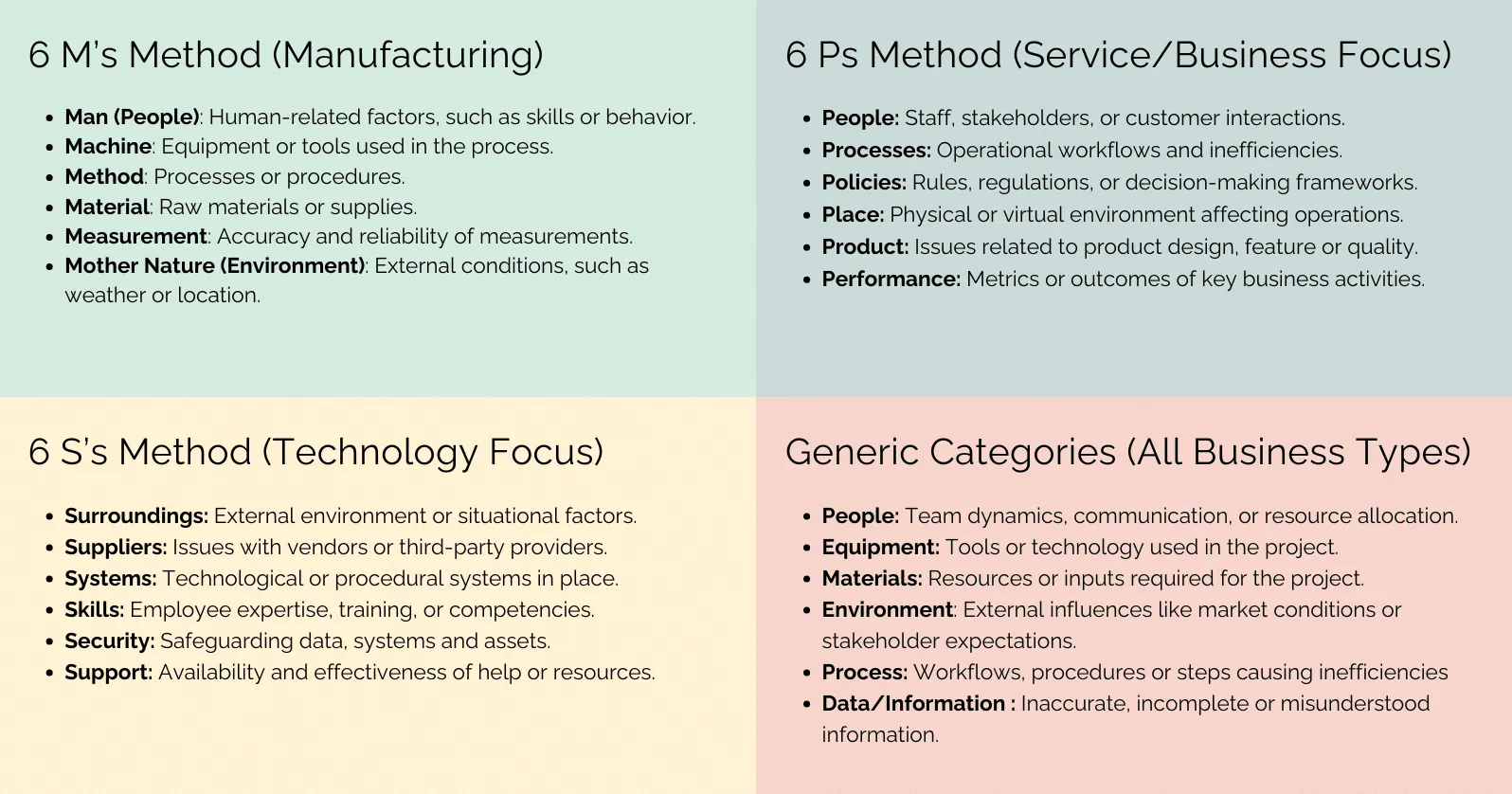
How to run a Fishbone (Ishikawa) Root Cause Analysis
Firstly, identify and describe the key issue that you want the team to consider. This now becomes the head of the Fish.
If you have already selected a common format (as explained above) or have created your own, add these categories as the main bones branching off the spine. Otherwise, you can simply ask participants to brainstorm freely on any section, and then sort and categorize these later.
Describe the problem to the team and ensure that they understand the issue and have asked any questions they need to clarify.
Have the team brainstorm as many potential causes (one cause per card) and add them to the Ishikawa Diagram. Once the time has passed or there are clear causes identified, have the group review and categorize them as needed. You can use votes to see where people believe the root causes lie.
Finally, based on the identified root cause (or root causes), ask the group to create potential action items that can be put in place to address each cause. Discuss each action in turn and then assign importance and ownership. You have now completed a root cause analysis.
Related templates
References
- Using Fishbone Diagrams to Solve Problems
- Determining Cause and Effect
- Kaoru Ishikawa
- Problem-Solving Made Easy
Save effort, time and money with GroupMap
GroupMap offers more than just an online digital whiteboard. Its innovative platform is designed to enhance the quality of your team’s decisions. With features that prevent bias and keep facilitation simple, GroupMap makes sure no single voice dominates and keeps conversations productive and inclusive. Its intuitive interface is easy for anyone to use, and its scalable design supports small teams and large groups whether they are face to face or around the globe. Customizable templates and workflows keep discussions focused on objectives, helping you drive actionable outcomes each and every time.
Frequently asked questions
What is a fishbone (Ishikawa) diagram?
Why is it called a fishbone or Ishikawa diagram?
What are the categories in a fishbone diagram?
How is a fishbone diagram different from the 5 Whys?
Who should use a fishbone root cause analysis?
How to run it in GroupMap

Scene setting
Clearly define the problem to be addressed. Add categories if desired.

Brainstorm
List causes, one per card, under the category they belong to.

Group
Discuss and group any common causes for each category.

Vote
Have the team vote on the root causes of the problem that need to be addressed.

Action plan
Identify actions for each cause. Assign owners and due dates.

Share
Share the outcomes of the session, including the action plan.
Ready to get everyone on the same page?
Start a free GroupMap and turn your next discussion into clear, shared decisions.